


By Olawumi Oyehan
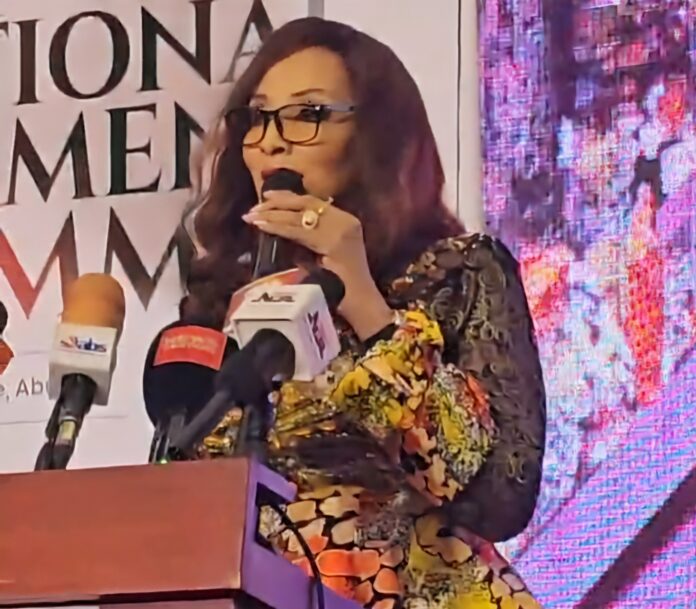
Minister of Foreign Affairs, Ambassador Bianca Odumegwu-Ojukwu, has urged the National Assembly and political parties to take deliberate steps to protect women participating in politics and remove barriers limiting their involvement in governance.
She made the appeal at the maiden National Women’s Summit organised by the All Progressives Grand Alliance (APGA) in Abuja.
The minister said political inclusion extends beyond legislation and requires sustained commitment from all stakeholders.
The summit, themed ‘Inclusion in politics and governance: Addressing barriers to women’s participation and representation,’ focused on strategies for improving women’s representation in Nigeria’s political landscape.
Odumegwu-Ojukwu described the gathering as more than a political event, saying it was a national conversation centred on development, democracy and justice.
She lamented that despite constituting nearly half of Nigeria’s population, women remain significantly underrepresented in both the executive and legislative arms of government at all levels.
According to her, Nigeria’s democracy cannot achieve its full potential while a large segment of its population remains excluded from decision-making institutions.
The minister noted that Nigerian women have distinguished themselves in governance, diplomacy, business, academia, agriculture, science and civil society, yet their achievements have not translated into adequate political representation
She attributed the imbalance to persistent structural and systemic challenges, including the high cost of political participation, cultural stereotypes, electoral violence and intimidation, unequal access to party structures, inadequate political financing and entrenched social norms that discourage women from contesting elective offices.
Odumegwu-Ojukwu said the exclusion of women from politics weakens Nigeria’s democratic development and economic progress.
Drawing from her international engagements, she said countries that have deliberately promoted women’s political participation have strengthened their democratic institutions and improved economic performance.
She cited Tanzania and Namibia as examples of African nations where affirmative measures, constitutional guarantees and political commitment have significantly increased women’s representation in leadership.
The minister also urged lawmakers to support the Reserved Seats for Women Bill before the National Assembly, describing it as a democratic corrective rather than a concession to women.
She stressed that expanding women’s participation in governance is a shared responsibility for both men and women and called for special measures to create more opportunities for women in politics.
Odumegwu-Ojukwu further challenged political parties to become more inclusive by adopting transparent nomination processes, reducing nomination fees, providing mentorship and leadership development programmes, and protecting female politicians from political violence.
She commended APGA for organising the summit and encouraging national dialogue on women’s political inclusion, urging political stakeholders across party lines to provide capable women with meaningful opportunities to contribute to national development.