


By Ahmed Akanbi
The Chairman/CEO of the National Hajj Commission of Nigeria, NAHCON, Ambassador Ismail Abba Yusuf, has pledged continued reforms to improve Hajj operations and announced a refund on feeding costs for pilgrims in Madinah.
This is as the Governor of Borno State, Professor Babagana Umara Zulum, has approved the provision of Hadaya, sacrificial rams, for 1,725 indigent pilgrims from the state currently performing the 2026 Hajj in Saudi Arabia.
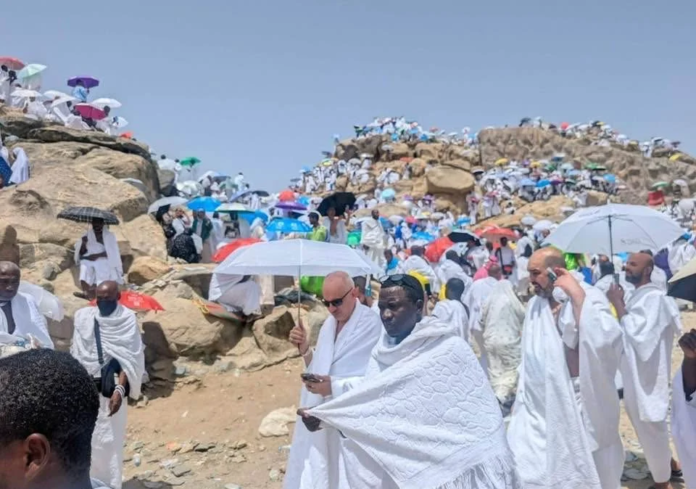
In an Arafat Day message released on Thursday, NAHCON described the Day of Arafat as the pinnacle of Hajj. The Commission said it is a day of mercy, forgiveness, supplication and total submission to Almighty Allah.
NAHCON noted that the occasion reminds Muslims of humility, sacrifice, patience and unwavering faith.
It said the day is a moment for deep reflection, sincere repentance and renewed commitment to righteousness and service to humanity.
The Commission stated that history teaches valuable lessons, and failing to learn from them risks repeating past hardships.
“But when we reflect on yesterday with wisdom, we are better prepared to build a stronger and more rewarding tomorrow,” NAHCON said.
The commission said it has continued to review past and current Hajj operations to improve processes and enhance the welfare of Nigerian pilgrims, stressing that it has moved from the era of long stays in transit camps awaiting airlift to more coordinated and efficient operations.
Following the gathering at Arafat where all mankind stands equal before the Creator, the Commission reaffirmed its commitment to reviewing operational challenges observed during the 2026 Hajj, stressing that it would strengthen supervision to better safeguard the interests of Nigerian pilgrims.
The Commission said it remains committed to upholding the vision of its founding fathers with dedication, discipline and sincerity of purpose.
In line with that commitment, NAHCON said it successfully renegotiated the cost of feeding services in Madinah. The resulting savings, it said, will be refunded directly to pilgrims.
The Commission assured pilgrims that adequate measures have been put in place for a safe, swift and seamless return journey after Hajj.
“As we observe the Day of Arafat, may Allah accept our prayers, forgive our shortcomings and guide us to choose sacrifice over selfishness, unity over division and wisdom over frustration,” it prayed.
In a related development, Borno State Governor, Professor Babagana Umara Zulum, has approved the provision of Hadaya, sacrificial rams, for 1,725 indigent pilgrims from the state currently performing the 2026 Hajj in Saudi Arabia.
The Hadaya is an Islamic ritual involving the slaughter of a ram, or equivalent livestock, during Hajj. It is a mandatory rite for pilgrims performing Hajj al-Tamattu or Hajj al-Qiran, the two most common forms for non-residents.
The sacrifice commemorates the obedience of Prophet Ibrahim, AS, and completes key Hajj rites.
Beyond its spiritual significance, it serves as expiation for certain acts and provides meat for distribution to needy pilgrims and residents of the holy cities.
Each animal will be slaughtered during the Days of Tashreeq, 10th to 12th of Dhul Hijjah, in line with Shariah guidelines.
Governor Zulum said the gesture ensures no registered indigent pilgrim is prevented from completing a core obligation of Hajj due to financial constraints.
This is not the first time the Borno government has funded Hadaya.
Zulum has consistently approved funds for sacrificial animals for Borno pilgrims across several Hajj seasons.
In addition to the rams, the governor also provided free Ihram garments for male pilgrims.
The two-piece white seamless cloth symbolizes equality and purity before Allah.
Female pilgrims also received khimar, head coverings, from the state government.
To improve welfare in the holy land, Zulum equally paid hotel differentials for the Borno contingent in Makkah.
The state government said the combined support covers spiritual, material, and welfare needs of the pilgrims during the exercise.
The meat from the sacrifice will be distributed to poor pilgrims and residents in Makkah and Madinah, in keeping with Islamic injunctions.