


By Steve Monu Idowu
In a serious country, the budget and the system would be on trial.
If Nigeria were a serious country, the corridors of power would currently be clearing out. Heads of agencies would have resigned in shame, and powerful appointees and politicians would be under arrest. Instead, we are left watching a scandal that exposes the absolute, terrifying decay of our institutional safeguards.
For those who haven’t been following the bizarre case of Prince Adeniyi Adeyemi Matthew, here is the reality of how the Nigerian state was allegedly compromised.
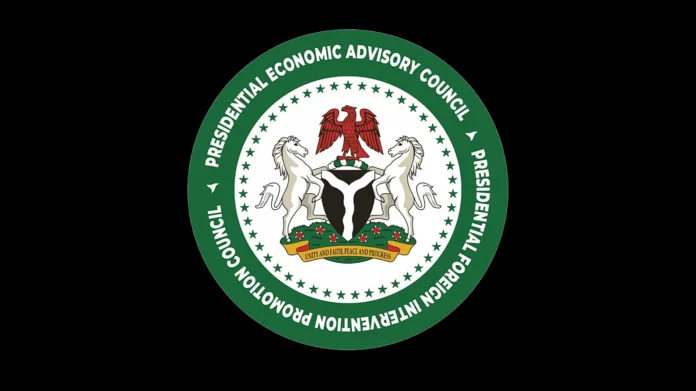
For months, this individual allegedly operated a federal agency that does not exist. He called it the Presidential Foreign Intervention Promotion Council.
No law created it. No official gazette announced it. Yet, this phantom agency set up shop inside the Federal Secretariat Complex in Abuja—the very heart of Nigeria’s civil service.
From that office, he allegedly acted as a Director-General appointed by the President. He held meetings with Nigerians and foreign nationals, convened a summit with ambassadors at a luxury hotel in Asokoro, and even wrote to the Ministry of Foreign Affairs requesting a note verbale to the US Embassy to secure visas for his ‘staff.’
He walked through the corridors of power, and every door opened for him.
Then, the rot deepens.
According to the Presidency’s own statement, this man operated 34 bank accounts, nine of them opened under the names of fictitious government agencies. Most damning of all, he allegedly opened an account with the Central Bank of Nigeria (CBN) itself, misleading the Office of the Accountant-General of the Federation with forged documents.
Think about the gravity of that. The apex bank—the ultimate gatekeeper of our financial system, the institution that relentlessly lectures commercial banks on ‘Know Your Customer’ (KYC) protocols—allegedly opened an account for an agency that is a complete figment of someone’s imagination.
But here is the part that should terrify every Nigerian, the ultimate proof of how deeply systemic this cancer is: this “non-existent” agency is sitting inside the 2026 national budget.
Flip to pages 50 and 51 of the Appropriation Act. There it is. Over N1.3 billion allocated to it for salaries, allowances, and even N182 million budgeted to host a ‘World Investment Summit.’
This is a budget that passed through the Budget Office, was vetted by the Federal Executive Council, debated and passed by the National Assembly, and ultimately signed into law by the President.
A federal budget does not write itself. Line items do not magically smuggle themselves onto pages 50 and 51 of an Appropriation Act. Somebody prepared that proposal. Somebody reviewed it. Somebody approved it. Somebody voted on it. Somebody signed it.
Let us be clear: the matter is currently in court, and the accused has made his own explosive, unproven allegations against the Chief of Staff to the President. We do not know the entire truth yet. But we know enough to state the obvious: one man sitting in a borrowed office could not have pulled this off alone.
A scheme of this scale—stretching from the Federal Secretariat to the Accountant-General’s office, through the CBN, and straight into the national budget—is impossible without the active aiding and abetting of powerful government officials and heads of agencies.
This fake agency was not built for decoration; it was meticulously designed to extract public money. The N1.3 billion budget allocation is the smoking gun. That is precisely how public funds would have flowed to it—legally, quietly, and with the full, unquestioned authority of the Nigerian state.
The real scandal here is not the impostor. It is the system that budgeted for him.
Why should this worry every Nigerian?
First, because if a phantom agency can seamlessly enter a signed federal budget, then we no longer know what else is hiding in there. How many other line items are feeding entities that exist only on paper? This explains exactly why budget padding is so porous and persistent. It is why we see absurdities like kitchen cutlery budgeted for every single year—items that should outlast a four-year administration are replaced annually because these phantom networks require a constant stream of funding.
Second, if forged letters can easily sway the Accountant-General’s office to facilitate a CBN account, then every financial safeguard we boast about is a myth.
Finally, there is the devastating impact on our international credibility. Every foreign investor reading this story is asking the same question: If Nigeria’s central bank cannot even detect a fake government agency, what happens to my money in their commercial banks?
This cannot be swept under the carpet. It must not be quietly forgotten. If the government fails to thoroughly investigate and prosecute every single official who signed off on this phantom council, they will be sending a clear message to the world:
Nigeria is not a serious country, and its budget is nothing more than a free-for-all ledger for the corrupt.
Steve Monu Idowu is a researcher, governance commentator, filmmaker, and founder of the Strategic Minds Institute (SMI), where he writes on governance, history, public policy, and institutional development.He writes from Abuja. He can be reached through