

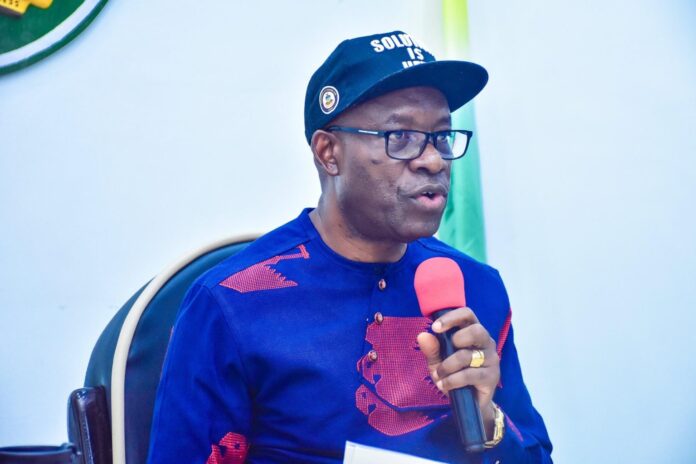

Our Correspondent
It was fire and fury at the University of Nigeria, Nsukka as Anambra State Governor, Prof Chukwuma Soludo stormed the ivory tower with a stinging message: “Nigeria won’t develop from theories alone!”
Speaking at the explosive 6th Biennial Adada Lecture organised by the Association of Nsukka Professors, the governor took direct aim at academics, accusing them of producing “thousands of papers” that never leave the shelves while the country struggles for real solutions.
In a no-holds-barred lecture, Soludo warned that Nigeria is drowning in “more noise but less light,” blasting the growing gap between classroom ideas and government action. According to him, knowledge that does not shape policy is as good as useless.
Citing global icons like Isaac Newton, Nnamdi Azikiwe and Kwame Nkrumah, the governor reminded scholars that history favours thinkers who act—not those who only write.
Then came the bombshell question that left the hall uneasy:
“Why is Adada not a first-world zone despite having hundreds of professors?”
Gasps reportedly followed as Soludo challenged lecturers to look inward, insisting that intellectualism without action is “sterile.”
He pushed a radical idea—“sacrificial volunteerism”—urging professors to step beyond lecture halls and personally tackle societal problems, even without government backing.
On hot political issues, Soludo didn’t dodge bullets. From Biafra agitation to marginalisation claims, he made his stance clear: the future of the Igbo lies in a united Nigeria. He insisted intellectuals must lead the debate—not leave it to street rhetoric.
Referencing the historic Nsukka auditorium’s role during the Nigerian civil war, he lamented what he called a shocking failure of scholars to fully document such defining moments.
With a stern warning, the governor told academics to stop “standing akimbo” while the nation drifts, declaring that silence from the intellectual class could cost Africa dearly.
“Talent is not enough,” he thundered. “If you don’t act, you’re part of the problem!”
Earlier, Vice Chancellor Simon Ortuanya welcomed Soludo, describing his visit as a “homecoming” and praising his contributions to society.
But by the end of the event, one thing was clear:Soludo didn’t come to flatter—he came to challenge.