


By Onu Okorie
Imagine spending over ₦1,500 every single day — just to eat right. For one person. That is now the reality in Nigeria, and for millions of families, it is a reality they simply cannot afford.
The National Bureau of Statistics confirmed this week that the cost of a healthy diet reached ₦1,541 per adult per day in March 2026 — a figure that may sound modest in isolation, but tells a quietly devastating story about food and survival in the country.
That number is not the cost of eating well comfortably. It is the bare minimum — the cheapest possible combination of locally available foods that meets basic nutritional guidelines. It excludes transport to the market. It excludes the gas to cook the meal. It is, in the bureau’s own words, a floor.
And the floor keeps rising.
A year ago, that floor was ₦1,477. Today it is ₦1,541 — and in states like Ekiti and Imo, it has already blown past ₦2,000. For a household of five, that translates to over ₦300,000 a month, spent on nutrition alone, before rent, school fees, or transport.
The hardest part of the data may be what it reveals about what is making healthy eating so expensive. Animal-source foods — the proteins that growing children and working adults need most — account for nearly 40 per cent of the total cost, yet supply only 13 per cent of daily calories. Fruits and vegetables, which doctors and nutritionists urge people to eat more of, cost the most per calorie of any food group.
In other words, the healthiest foods are the least affordable.
The regional gaps add another layer of pain. In the South-East, a healthy day’s eating costs ₦1,899 — nearly double the ₦1,233 recorded in the North-East. These are not just statistics. They are a map of inequality, drawn in hunger.
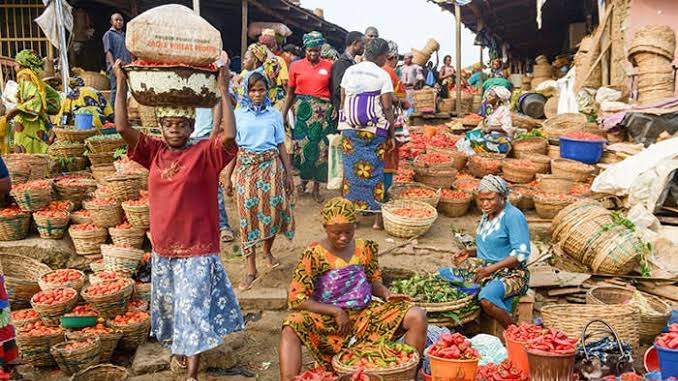
The NBS frames its findings in careful policy language — calling for collaboration among stakeholders, researchers, and civil society. But behind every data point is a mother in a Kano market stretching a small budget across a large family, or a father in Aba quietly cutting protein from the dinner plate so the children can eat first.
Future research, the bureau notes, will try to determine how many Nigerians simply cannot afford a healthy diet at all. For many families watching their naira buy less at every market visit, that answer may already be painfully clear.