


By Teddy Nwanunobi
With each second that ticks, the 2027 general elections will be an Armageddon for Nigerian politicians. This is because of the uncertainty it holds for the gladiators in the arena.
Baring any last-minute decision to withdraw, the fight for the presidency will feature the incumbent President Bola Tinubu of the ruling All Progressives Congress (APC), former President Goodluck Jonathan of the Kabiru Turaki-led faction of the Peoples Democratic Party (PDP), former Vice President Atiku Abubakar of the African Democratic Congress (ADC), Senator Sandy Onor of the Nyesom Wike faction of the PDP, Peter Obi (who has emerged as a key presidential aspirant and consensus figure for the Nigeria Democratic Congress – NDC), Seyi Makinde of the Allied Peoples Movement (APM), Prince Adewole Adebayo of the Social Democratic Party (SDP), Omoyele Sowore of the African Action Congress (AAC), and the Labour Party (LP) that has a candidate in waiting.
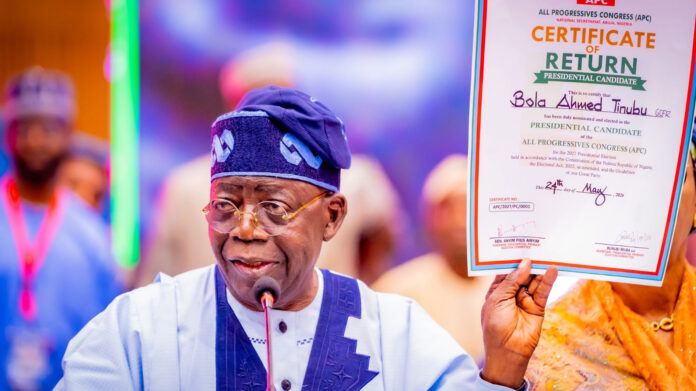
Tinubu:
There is strong belief that the massive turnout and support during APC’s primary is an indication that the APC has the numbers advantage to vote in the party’s candidates vying for various positions, especially during the presidential election. During the primary, Tinubu won with over 10.9 million votes against the 8.79 million votes in the 2023 general elections.
For his supporters, his 2027 advantage looks to have gained the upper hand as Atiku, Obi and Kwankwaso could split the opposition votes. He is expected to ride on power consolidation strength.
Jonathan:
Jonathan, who has been cleared by the court to contest the upcoming 2027 election, is yet to officially bid. It is believed that a possible presidential bid by the former President could significantly alter Nigeria’s political landscape. Currently, he is seen as a stronger and more experienced politician than he was during his previous time in office.
Atiku:
His political path in 2027 is highly ambitious, but faces steep hurdles. After resigning from the PDP to officially secure the ADC presidential ticket, he is mounting his seventh presidential run. His ultimate chances hinge on his ability to forge a massive northern coalition.
Obi:
His chances in the 2027 presidential election hinge on his ability to form broad opposition coalitions, with analysts projecting he could defeat the incumbent if he secures strong Northern backing alongside his massive base in the South. He has been actively vetted for presidential primaries and is campaigning on a promise to serve only a single term to stabilise the country.
Makinde:
The Oyo governor’s PDP-APM alliance gives him a route around PDP infighting, a platform to unsettle Tinubu’s home region, and a vehicle to shape succession politics at home. When Seyi Makinde stood before supporters at Mapo Hall in Ibadan on May 14 and declared his ambition to run for president, it was more than a rallying cry against Tinubu’s ruling APC.
So, the begging question here is: what is Makinde’s interest – president, spoiler or Oyo kingmaker?
Swore:
His chances remain steep, despite formally securing the AAC ticket unopposed. Historical data shows a decline in his vote count, and he faces a tough path against the entrenched political machinery of the APC and PDP.
Despite securing his party’s nomination, Sowore’s 2027 prospects face several major challenges and dynamics, including: electoral history, scepticism of the ballot, opposition disunity, and campaign platform.
Conclusion:
Nigeria’s presidential race is taking shape around familiar faces, shifting alliances and fractured parties – a scenario that may again favour the incumbent.
With a few hours left before the official deadline, Nigeria’s political parties are rounding off primaries to choose candidates for the 2027 presidential election. The emerging field is shaping up as a contest among former allies, old rivals, and familiar presidential hopefuls.