

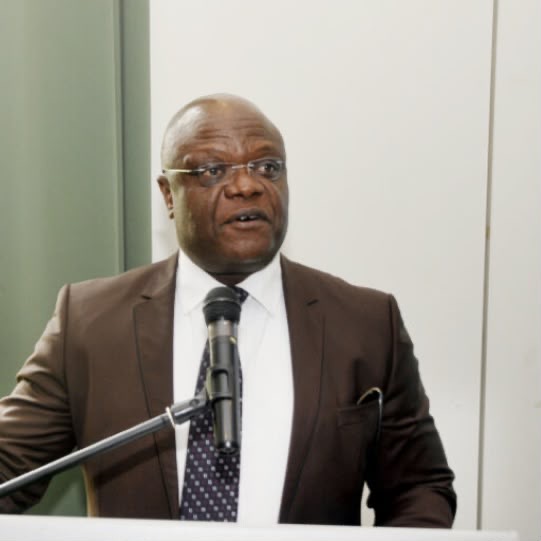

Few Nigerian scholars embody the convergence of academia, journalism, and public policy as seamlessly as Abiodun Adeniyi. A respected communication scholar, accomplished media intellectual, and influential public commentator, Professor Adeniyi has built a career defined by intellectual depth, institutional service, and an enduring commitment to national development.
Having recently emerged as Vice Chancellor of Baze University, he occupies a distinctive place in Nigerian academia as the first scholar in the country to serve as Registrar while retaining full professorial standing, a rare testament to both his academic stature and administrative capacity. Over the years, he has played pivotal roles in shaping the university’s academic and postgraduate culture, previously serving as Dean of the School of Postgraduate Studies, Deputy Dean, University Orator, and Head of the Department of Mass Communication.
Professor Adeniyi’s intellectual journey reflects global exposure, scholarly rigour, and a sustained commitment to communication scholarship and democratic values. A British Chevening Scholar, he earned his PhD and Master’s degrees in International Communications from the University of Leeds, after obtaining a degree in Sociology from Ahmadu Bello University and a Postgraduate Diploma in Journalism from the International Institute of Journalism.
The doctorate degree in Communication Studies was awarded to him in 2008, for his research on Internet and Diasporic Communication: Dispersed Nigerians and the Online Mediation of Distance, Longing and Belonging. The research investigated the intersections between international communication and the construction of identity, the evocation of nationalism, and how transnationalism is played up in the matrix.
He used the Nigerian Diaspora as a case. Professors Myria Georgiou-Lead, (now of the London School of Economics) and Stephen Lax (of Leeds University Institute of Communication Studies) guided him through the research. His PhD thesis is one of few African-Centred theses published by the University of Leeds under the joint Etheses Project. The project then ran in conjunction with the Universities of Sheffield and York.
Adeniyi returned to his native Nigeria in 2009, after a stint at the Oxford Internet Institute, working as a communications consultant on the platform of the World Bank Economic Reform and Governance Project (ERGP) at the Bureau of Public Procurement (BPP), Presidency, Abuja.
As consultant, he guided the Bureau in the administration of the five-million-dollar media and communication project over four and a half years. The project had sought to ingrain the new public procurement reform into the hearts and minds of the public contracting and executing audience, for quality, competence and transparency in the nations’ public expenditure process.
On expiration of the contract, he became Lead Consultant at Witswords Consults Limited (WCL), Abuja, before joining Baze University as a senior lecturer in Mass Communication, where he later became head of department from September 2016, until August 2018. He was returned as Head of Department September 2019, and soon promoted Associate Professor (after rigorous internal and external assessments), not just for his extensive works on the Media of Diaspora and in Strategic Communication, but in specifically redefining how the nascent Nigerian Diaspora is imagined and re-imagined, against the background of changing technologies of communication; and how they appropriate these opportunities for relating with origin, with each other and with host community-a delicate triangle of fluid exchange of meanings
Before fully transitioning into academia, he distinguished himself in journalism, rising from reporter to editor, and covering politics and national affairs with insight and analytical depth at The Guardian. That newsroom experience continues to shape his scholarly interests, particularly in journalism studies, political communication, media ethics, migration studies, and critical discourse analysis.
Widely regarded as one of Nigeria’s pioneering voices in diasporic communication, Professor Adeniyi’s scholarship explores migration, digital belonging, global media systems, development communication, and cultural identity. He is also recognised as the first Professor of Mass Communication produced by Baze University.
His growing body of scholarship includes influential books, journal articles, and policy-focused studies. Among his notable works are Diasporic Communication in the Digital Age and New Hidden Narratives of African Migration: Exploring Media and the Contestation of Place, published by Palgrave Macmillan. He also co-edited Media and the National Security Question: Communicating (In)security in Nigeria, West Africa and the Sahel, a major contribution to contemporary debates on security and media in Africa.
Beyond the classroom, Professor Adeniyi has established a significant footprint in governance and development communication. He has served as Deputy Chairman of Nigeria’s National Values Charter Committee and worked as Communications Consultant to major international organisations, including the World Bank, the European Union, the International Organization for Migration, and the former Department for International Development. His expertise has supported strategic communication and reform initiatives for institutions such as the National Bureau of Statistics and the Nigerian Extractive Industries Transparency Initiative.
A familiar voice in national discourse, he is also a regular analyst on broadcast platforms and a frequent speaker at conferences, policy dialogues, and executive training programmes across Africa. His academic engagements and field research have taken him to cities including Johannesburg, Cape Town, Accra, Nairobi, Kigali, Banjul, and Freetown, reinforcing the continental relevance of his work.
Professor Adeniyi’s contributions have earned recognition at the highest levels. On his 60th birthday, Bola Ahmed Tinubu described him as “a distinguished scholar, accomplished media intellectual, and committed nation builder” whose contributions continue to enrich national development. The President also commended his dedication to intellectual excellence, democratic values, and the mentoring of younger scholars.
With the recent appointment, Adeniyi joins an enviable list of media practitioners who transitioned into academia and climbed the stairs to reach the pinnacle of university governance. They include Prof Femi Onabanjo (Lead City University), Prof Dayo Alao (Adeleke University), Prof Abubakar Rasheed (ex- New Nigerian, ex-VC, Bayero University, ex-Executive Secretary NUC), Prof Nosa Owens-Ibie (Caleb University), Prof Umaru Pate (Federal University, Kashere), and Prof. Jide Oluwajuyitan. He is in a league of media professionals that have risen to the enviable position of becoming a University Vice Chancellor.
At the core of Professor Adeniyi’s remarkable career is a belief that scholarship must serve society. Whether in the classroom, newsroom, policy arena, or public discourse, he continues to bridge ideas and action while shaping conversations on media, governance, migration, and national renewal in Nigeria and beyond.