


Tony Okafor, Awka
Residents of Agu-Awka in Awka South Local Government Area have cried out over the absence of public primary and secondary schools in the area, saying the situation has shut them out of the state government’s free education policy.
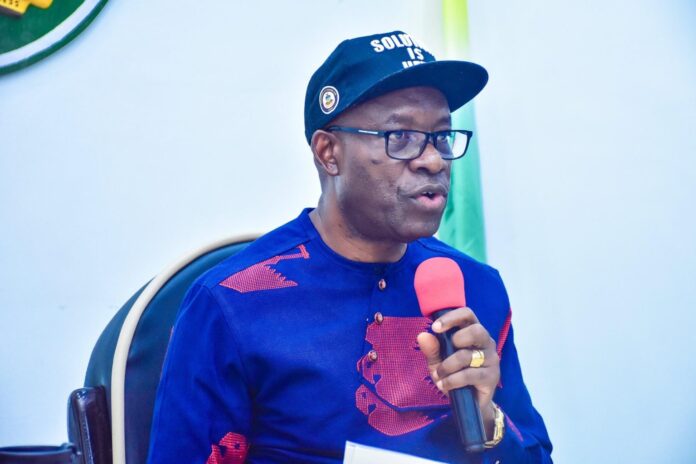
The residents appealed to Charles Soludo to urgently establish government-owned schools in the densely populated community located in the heart of the capital city.
They lamented that despite Agu-Awka hosting major government facilities and residential estates, no public school exists in the area, forcing parents to depend entirely on expensive private and mission schools.
The affected area, according to residents, stretches from Immigration Junction to Book Foundation along Esther Obiakor Road and includes the old Government House, Commissioners’ Quarters, Nwakpadolu Estate and parts of Ifite Road from Aroma Junction to the back gate of Nnamdi Azikiwe University.
The development came barely days after parents and guardians of a Catholic-owned nursery and primary school in the area protested a 43 per cent increase in school fees allegedly imposed by the management shortly before the resumption of third term.
The protesters had accused the school management of exploiting parents because there were no public school alternatives in the area.
Speaking to journalists, a resident, Chinedu Okeke, said families in Agu-Awka had been denied the benefits of the state’s free education programme because they had no nearby government schools to attend.
According to him, the few available institutions in the area include Igwebueze Primary School located within a Catholic Church premises and Nwafor Orizu Primary and Secondary Schools mainly used for the training of student teachers.
Okeke said many parents were now compelled to send their children to neighbouring communities such as Okpuno, Amansea and Nawfia to access public schools.
He added that transportation alone costs some families an average of N1,500 daily.
Another resident, Emeka Nwosu, argued that the population and land size of Agu-Awka justified the establishment of at least six public primary schools and three secondary schools.
He alleged that open spaces suitable for school projects were gradually being taken over by private developers.
“The point is that there are no public primary or secondary schools on the Onitsha-bound lane of the expressway between Aroma Junction and UNIZIK,” he said.
Nwosu described the situation as unacceptable, noting that while the area boasts more than 20 private secondary schools and over 30 private primary schools, not a single government-owned school exists there.