

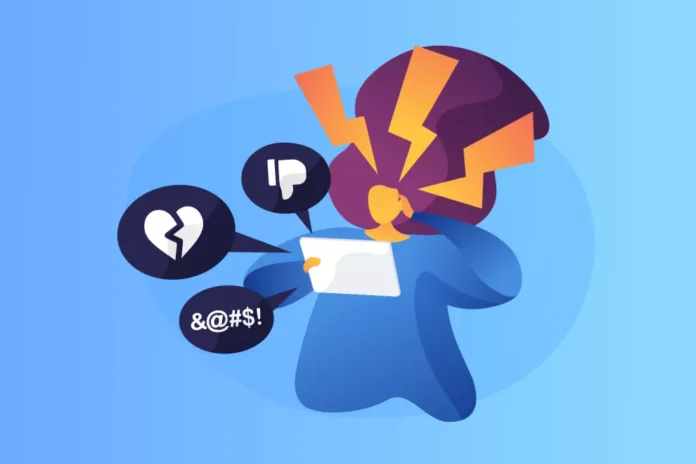

In today’s fast-moving digital world, social media can feel like both a megaphone and a battlefield.
TikTok skits, Instagram reels and anonymous comment threads have become places where people living with disabilities are mocked, impersonated or openly harassed.
For many Nigerian women with disabilities, these platforms that promise connection often deliver cruelty instead.
When Susan Ihuoma, a Person With Disability (PWD), opened her phone earlier this year, she was not expecting abuse — a man who had expressed interest in her lashed out when she declined.
His response was swift and cruel: he called her “crippled” and posted her photo online.
Instead of retreating, Ihouma took a screenshot and share it publicly. What followed surprised even her.
“Making it public made no fewer than 10 women with disabilities come out to speak about the same man and we realised that it was a trend for him.
“When he asks you out and you do not respond or turn him down, he begins to troll you and make you feel like he is doing you a favour.
“Are you kidding me? Doing us a favour? How? She asked.
Ihuoma, a member of the Network of Women with Disabilities and founder of Susan’s Unique Oasis Foundation, says online abuse against women with disabilities is not an isolated experience.
Ihuoma knows this reality too well, having found herself targeted online.
“I see videos of people mimicking cerebral palsy, autism and other disabilities for entertainment on online platforms.
“When a woman with a disability becomes pregnant or gets married, trolls rush in with comments like, ‘them dey marry too? So, she too dey do?” she said.
According to her, people think women with disabilities are asexual; so, once you celebrate a pregnancy or marriage, the trolling begins.
For millions of women with disabilities, technology has become a lifeline.
A smartphone can serve as a classroom, a workspace, a social community or a business outlet; it makes room for independence that physical infrastructure rarely allows.
But the same digital space that offers freedom also exposes them to new risks.
Cyberbullying, sexual harassment, image-based violence, digital stalking and scams are now part of their daily reality.
The challenges women with disabilities face formed the heart of a national policy dialogue held by the Federal Ministry of Women Affairs, the Network of Women with Disabilities, and partners working under the UK-funded SPRiNG programme.
Their goal was to confront a growing crisis: the rise of technology-facilitated gender-based violence (TFGBV) against women and girls with disabilities, among other issues.
The President of the Network of Women with Disabilities, Lois Auta, shared stark data.
According to her, about 69 percent of women with disabilities in Nigeria experience online gender-based violence daily.
More than 13 percent lack regular internet access, and digital platforms remain largely inaccessible.
Digital illiteracy, weak enforcement of disability laws and a lack of assistive technology make online spaces even harder to navigate safely.
While Nigeria has strong legal frameworks such as the Discrimination Against Persons with Disabilities Act and a new Third National Action Plan on Women, Peace and Security (NAP III), disability issues remain poorly represented in digital safety policies.
As a nation, we cannot talk about peace, security or digital inclusion without centering the voices of women with disabilities.
In the same vein, Nigeria cannot achieve peace, security or digital inclusion while leaving women with disabilities behind.
Globally, one in six people live with a disability.
In Nigeria, more than 35 million people live in abject poverty with nearly 19 million of them women and girls.
Studies show that women are two to three times more likely to experience gender-based violence and face systemic exclusion in education, employment, health and security processes.
In spite of the aforementioned obstacles, women with disabilities continue to shape online spaces with courage and creativity; they are entrepreneurs, peace builders, educators and leaders.
To encourage even growth and development, Nigeria’s digital future must be safe, accessible and inclusive.
Protecting women with disabilities online is not charity; it is necessary for justice, equality and Nigeria’s progress.