


By Milcah Tanimu
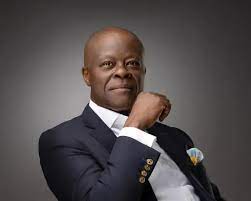
The Minister of Finance and Coordinating Minister of the Economy, Wale Edun, has highlighted that Nigeria’s high debt service to revenue ratio is causing significant fiscal constraints for the Federal Government. Speaking at the opening of the Securities and Exchange Commission (SEC) Nigeria-Islamic Financial Services Board (IFSB) International Forum in Abuja, Edun expressed concern over the fiscal exhaustion resulting from the situation.
In the proposed 2024 budget, the Federal Government allocates a substantial N9.18 trillion out of the total budget of N27.5 trillion for debt servicing. Edun emphasized that the non-interest financial market, particularly the Islamic financial market, presents a more affordable and sustainable way to raise funding for major infrastructure projects. He encouraged Nigeria to increase its participation in the global non-interest financial market.
Edun expressed optimism that the outcome of the forum would strengthen ties within the global Islamic finance community and help Nigeria leverage the significant funds available in the non-interest world for financing green sustainable growth.
SEC Nigeria’s Director General, Lamido Yuguda, highlighted the growth in the non-interest financial sector in Nigeria but acknowledged that it remains relatively small compared to the global market. He emphasized that the structure of the market promotes fairness, justice, and equity, making it more than just an Islamic financial market.
Yuguda shared statistics indicating that the global Islamic finance industry had an estimated size of $3.25 trillion in 2022, with global Sukuk issuances valued at $182.72 billion. In Nigeria, the Islamic finance segment reached an estimated size of $2.9 billion by the end of 2022, with outstanding Sukuk forming the largest part, followed by Islamic banks, and smaller contributions from Islamic funds and takaful.
Yuguda also highlighted the transformative growth of the Non-Interest (Islamic) Capital Market in Nigeria, contributing to the diversity of the financial markets in line with the revised capital market Master Plan 2021-2025. He pointed out the success of Sukuk issuances in financing critical infrastructure projects, with oversubscribed offerings demonstrating investor confidence in the strategic role of Sukuk in infrastructure development and financial inclusion.