


By Rosemary Ogbonna
French Embassy in Nigeria says it will expand its Plastic Waste Management Project to more universities following what it described as a successful three-year initiative.
Deputy Head of Cooperation at the embassy, Pierre Andriamampianina, disclosed this Tuesday at the project’s closeout session in Abuja.
Funded with more than €750,000, the project was implemented in 11 Nigerian universities to tackle plastic pollution while promoting innovation, recycling technologies and job creation.
Andriamampianina said the programme exceeded expectations in student mobilisation, job creation, production using recycled plastics, and improved university governance.
“The return on investment for Nigeria is much more than the money invested. The gains are enormous in terms of capacity building, public participation, youth mobilisation and innovation,” he said.
He said a final evaluation showed participating universities implemented more activities than originally planned.
“All the universities were so enthusiastic about the project. They did much more than expected and provided many activities on their own,” he said.
The embassy, he added, hopes to create a network of universities, researchers, innovators and private sector players to drive sustainable plastic waste management nationwide.
Vice-Chancellor of Nile University of Nigeria, Prof. Dilli Dogo, said the project led to the establishment of a fabrication laboratory and a plastic recycling micro-factory on campus in 2023.
He said the facilities have strengthened practical learning, innovation and entrepreneurship, adding that the university’s graduate unemployment rate remains below 15 per cent because students are trained as job creators.
“Plastic recycling has shown our students that entrepreneurship has no boundaries. Waste can be converted into wealth,” Dogo said. He urged government to provide policies to enable universities to commercialise research outputs.
Deputy Vice-Chancellor, Development Services, University of Lagos, Prof. Afolabi Leshi, said the project enhanced teaching, research and entrepreneurship at the institution.
Leshi said UNILAG plans to use its plastic recycling micro-plant to manufacture furniture from recycled waste before scaling to commercial production. He added that the university will partner with waste collectors to secure recyclable materials and create jobs.
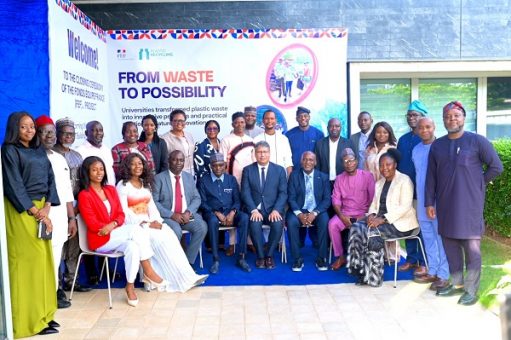
Stakeholders at the event said the project shows how partnerships among governments, universities and development agencies can address environmental challenges while creating economic opportunities for young Nigerians.