


Recruitment of children into the growing ranks of Boko Haram insurgents continues to pose a serious threat to security across Nigeria, particularly in the northern part of the country.
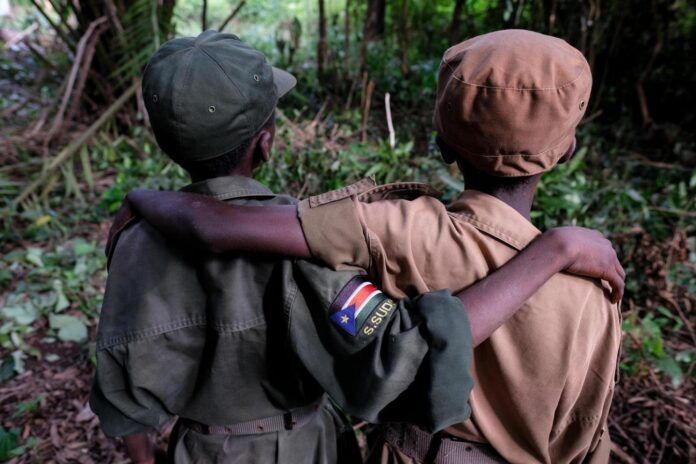
In recent times, a disturbing image surfaced online showing underage children dressed in military uniforms in Boko Haram custody. The image sparked widespread reactions among Nigerians, heightening concerns over the increasingly extreme and alarming nature of the group’s activities.
Over the years, images and videos released by Boko Haram have repeatedly revealed the use of young people in violent operations, including the killing of captured military personnel. These visuals underscore the extent to which children are being drawn into the group’s brutal campaign.
Last week, troops arrested a 15-year-old suspect linked to an attack in Borno that claimed the life of General Braimah and two soldiers, with the teenager reportedly admitting involvement in earlier assaults in Benisheik and Ngamdu.
Security experts have warned that the continued recruitment of children not only sustains the insurgency but also creates a cycle of violence that may persist for generations if not urgently addressed.
A criminologist, Dr. Suleiman Ishaq Muhammad of the Department of Criminology and Social Studies, University of Dutse, has raised alarm over the growing recruitment of children by bandits and insurgent groups across Nigeria.
He warned that the trend is fueling insecurity and creating long-term social damage.
Muhammad said the recruitment of children into armed groups is becoming increasingly common, especially in rural communities frequently attacked by bandits.
“The recruitment of children into insurgency and bandit activities is becoming rampant in Nigeria. Whenever bandits invade communities, one of the things they look out for is the availability of people to recruit, especially children.
“The number of children being recruited has increased drastically with the expansion of their operations.”
He explained that children are often targeted because they are easier to manipulate.
“They are children; they don’t have much understanding, and their ideology is still weak,” he said in an exclusive interview.
“They can easily be influenced by promises of food, protection, and other basic needs, and this makes them vulnerable to joining these groups.”
According to him, armed groups also use propaganda to attract young recruits, presenting their activities in a misleading way.
“They try to make their actions look justified or even protective. To a child or someone who doesn’t fully understand, it can appear like they are doing something right, and this can convince them to join.”
He added that recruiting children is also a cheap and convenient strategy for bandits.
“It is easier for them to attack a village and take children along than to recruit from outside. They cannot recruit legally, so they use violence and destruction to forcefully take those available.”
He further explained that children are often assigned strategic roles within these groups because they attract less suspicion.
“When a child is carrying a weapon, people hardly suspect it. A child as young as 10 can help move guns, cartridges, or even explosives from one place to another without being questioned.”
The criminologist warned that armed groups also see children as a long-term investment.
“They indoctrinate them, expose them to violence, and make them grow within the system,” he said.
“This helps sustain their operations over time because many of their members are young.”
Muhammed identified poverty and food insecurity as major drivers of child recruitment.
“Poverty is widespread in many rural areas, even without attacks. When bandits come and offer food, children are easily convinced to follow them.”
He also pointed to lack of access to education as a key factor.
“Many children between the ages of 10 and 12 are not in school. They are farming or doing other activities,” he said.
“When these groups promise them education or a better life, they are easily drawn in.”
He added that displacement and family separation during attacks leave children with few options.
“When communities are attacked, families are scattered. Some children lose contact with their parents and end up seeing the bandits as their new guardians.”
Other factors, he said, include revenge and abduction.
“Some children are used as part of revenge for members lost by these groups. In cases of abduction, children are sometimes forced into their system, especially if they appear strong or useful.”
Dr. Muhammad warned that the consequences of child recruitment are severe and long-lasting.
“These children face psychological trauma, and many suffer injuries or even death during operations. Some are also exposed to sexual violence and other forms of abuse.”
He stressed that recruitment into armed groups also robs children of their future.
“Once they are recruited, they lose access to education and other opportunities,” he said.
“Even if they escape, they often face stigma. Communities may not accept them again and may label them.”
To address the problem, he called for urgent interventions focused on reintegration and social support.
“We must understand that these children are victims. There is a need for proper reintegration and support systems to bring them back into society and give them a second chance.”
He urged government and stakeholders to tackle the root causes, particularly poverty and lack of education, to prevent more children from falling into the hands of armed groups.
Slot-based recruitment damaging Nigerian military – Dr. Muhammad.
Dr. Muhammad further alleged that Nigeria’s security recruitment system is being weakened by corruption and slot-based appointments, warning that it is affecting the professionalism of the military.
He said child recruitment into the military is not only a war crime but also prohibited under Nigerian law, stressing that weak verification systems and falsified age records remain a serious challenge.
“When recruitment is based on slots and not merit, it destroys the quality of personnel and weakens the entire security structure,” he said.
Dr. Muhammad also warned that mixing political influence with recruitment processes is dangerous for national security.
He added that proper standards of age, health, fitness, and competence must be strictly followed to maintain an effective military.
Weak governance, poverty driving child soldier recruitment in Northern Nigeria – Bokaji
Also speaking, security analyst and retired Army Captain, Abdullahi Adamu Bokaji, warned that weak governance and widespread poverty are fueling the recruitment of children into armed groups across Northern Nigeria and the wider Sahel.
He revealed this in an exclusive interview. Bokaji described the use of child soldiers as both a humanitarian tragedy and a serious security threat.
He noted that the crisis continues to deepen in fragile and conflict-affected communities.
He explained that, under international standards, a child soldier is any person under the age of 18 who is recruited or used by armed forces or non-state armed groups in any capacity.
He added that their roles go far beyond combat.
“Many people think of child soldiers only as fighters, but they are also used for intelligence gathering, logistics, carrying messages, and, in some cases, sexual exploitation,” he said.
“This shows how deeply children are being exploited in these conflict environments.”
According to him, recruitment is often not voluntary, as many children are forced into armed groups through abduction, threats, or intimidation.
However, he noted that underlying social and economic challenges also make children vulnerable.
“In some cases, children are taken by force. In others, they are pushed by poverty, lack of education, displacement, and the collapse of family and community structures,” Bokaji said.
“Armed groups take advantage of these conditions to manipulate and indoctrinate them.”
He revealed that most recruitment happens between the ages of 13 and 17, although younger children have also been affected.
“This reflects how desperate and opportunistic these groups have become, especially in areas where government presence is weak,” he added.
Bokaji further noted that the problem is not only increasing but also becoming more visible due to improved monitoring by international organisations.
“The expansion of asymmetric conflicts, the rise of non-state armed actors, and worsening economic conditions have all contributed to the increase,” he said.
“At the same time, better reporting systems are helping us understand the true scale of the problem.”
He stressed that addressing the issue requires more than just military action, calling for a comprehensive approach that tackles both security and development challenges.
“We need stronger security and governance frameworks, especially in rural and conflict-prone areas, to prevent armed groups from accessing vulnerable populations,” he said.
He also emphasised the importance of prevention through social investment. “If we invest in education, youth empowerment, and economic opportunities, we can address the root causes that make children easy targets,” he added.
The retired officer highlighted the role of communities in tackling the crisis, urging authorities to involve local leaders in protection efforts.
“Traditional and religious leaders must be part of early warning and response systems. They understand the communities and can help identify risks before they escalate,” he said.
Bokaji also called for effective disarmament, demobilisation, and reintegration (DDR) programmes for affected children, stressing that rehabilitation is key to breaking the cycle.
“These children need psychosocial support, access to education, and vocational training to help them rebuild their lives and prevent re-recruitment,” he said.
He warned that failure to act could have long-term consequences for peace and stability in the region.
“The use of child soldiers sustains cycles of violence and weakens society,” Bokaji said.
“When children are exposed to violence at such an early age, it creates a generation that grows up in conflict. Addressing this is not just a moral duty, it is a strategic necessity for lasting peace and security.”
Child recruitment illegal under Nigerian law – Barrister Yau
A legal practitioner, Barrister Usman Yau, has said that the recruitment of children into any arm of the Nigerian military is strictly prohibited under the law.
He stressed that anyone below the age of 18 remains a child and cannot be enlisted.
Citing the Child Rights Act 2003, Yau said the legislation clearly outlaws the recruitment of minors into the armed forces.
“The position of the law is that there is total prohibition of recruitment of children into any branch of the armed forces of the federation,” he said.
“Section 34 of the Child Rights Act talks about this clearly. No child should be recruited into the army, navy, or air force.”
He explained that the law does not make exceptions, noting that even a 17-year-old is still considered a child.
“Insofar as that person is under the age of 18, he is still a child. A child of 17 years is a child. So, the law is very clear that no one under 18 should be recruited.”
Nigeria ranks among top five countries for child recruitment – UN
Nigeria has been listed among the five countries with the highest cases of child recruitment into armed groups.
In 2026, the United Nations highlighted the growing concerns over the situation in conflict-affected regions.
According to UNICEF, at least 1,120 children were recruited in 2024 by two armed groups operating in Nigeria’s North-East.