


Agency report
China has recently commenced an $11 billion desert-based renewable energy project in the Kubuqi Desert, Inner Mongolia, aimed at generating 5GW of energy by 2025.
The project is expected to cover an area of 6,300 square kilometers and will consist of both solar and wind power plants. The project, known as the Kubuqi Base, is an ambitious initiative to transform the desert into a sustainable energy hub.
The project aims to address China’s energy needs while reducing the country’s carbon footprint. The Kubuqi Desert, which spans over 18,000 square kilometers, has been suffering from desertification, a process where fertile land turns into desert due to environmental factors.
The Kubuqi Base project will utilize various renewable energy technologies such as concentrated solar power (CSP) and wind turbines to generate electricity. The project will also use an energy storage system that stores energy during peak production times and releases it during periods of low production.
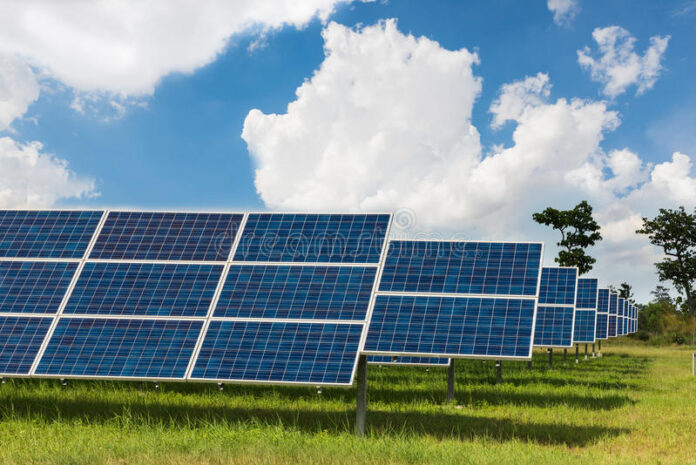
The project’s construction will involve the installation of over 2.5 million solar panels and 1,000 wind turbines, with a combined capacity of 5GW. The project’s wind turbines will have a height of up to 150 meters, and the solar panels will cover an area equivalent to 3,000 football fields.
China is a country that has the most wind and solar power generation capacity and one of the most ambitious programs for investing in renewables, even though it still uses a lot of fossil fuels. As of 2021, China’s renewable power generation capacity was 1063 GW, which was close to 45 percent of the country’s total generation capacity.
As planned by the government, China should get 33 percent of its electricity from renewable sources by 2025. In 2021, it will get 29.4 percent of its electricity from renewable sources. Reuters stated earlier this year that plans are afoot to increase wind and solar capacity to 1,200 GW by 2030.
This is because Beijing wants to reach the peak of its emissions by that year. At the moment, China is the country that puts out the most greenhouse gases. The project’s impact is already being felt in the region, with more than 40,000 jobs created during the construction phase. The project will also contribute to the country’s goal of reducing carbon emissions by 2030, by replacing coal-fired power plants with renewable energy sources.