


By Rosemary Ogbonna
The Federal Government, on Thursday, warned Nigerians of the imminent threat of floods even as the rainy season peaks from this month of July. Nigerians were subsequently urged to begin immediate preparations for possible flooding across the country warning that climate change has significantly altered the nation’s rainfall patterns and heightened flood risks across several states.
The call was made by the Special Assistant to the President on Climate Change Matters, Yussuf Kelani, who said recent flooding in Lagos and other parts of the country should serve as a wake-up call for governments, communities and citizens to prioritise disaster preparedness and climate resilience.
In a statement issued in Abuja, Kelani said climate change was no longer a future environmental concern but a present-day national development challenge requiring coordinated action at all levels.
He noted that “Climate change has altered the frequency, duration and intensity of rainfall across many regions of the country
“Instead of moderate rainfall spread over several days, communities increasingly experience short-duration but extremely heavy downpours that overwhelm drainage infrastructure, flood rivers, destroy roads and displace entire communities.”
The Presidential aide explained that scientific evidence has shown that rising global temperatures are increasing atmospheric moisture, resulting in heavier rainfall and more frequent flooding, coastal erosion, desertification and prolonged droughts in different parts of Nigeria.
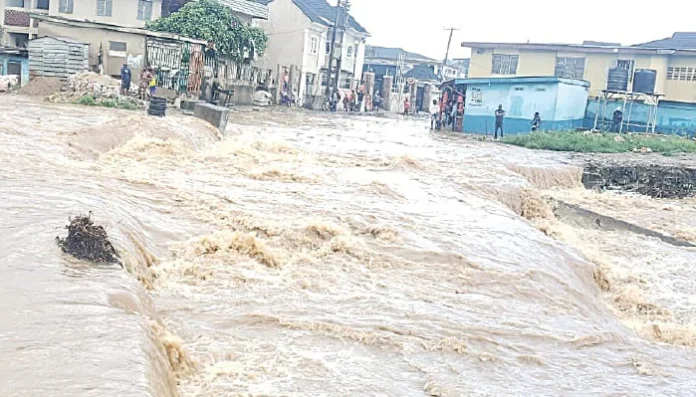
Kelani said the recent floods, which submerged roads, disrupted businesses and damaged homes in Lagos and other locations, underscored the growing vulnerability of urban centres to climate-related disasters.
“Every flood is ultimately a human tragedy before it becomes an environmental statistic,” he said, noting that thousands of Nigerians had suffered losses of property, livelihoods and productivity.
He warned that flood risks extend beyond Lagos, stressing that communities along the Rivers Niger and Benue, as well as states in the North-Central, South-South, South-East, parts of the North-West and coastal regions, remain highly vulnerable.