


By Rosemary Ogbonna
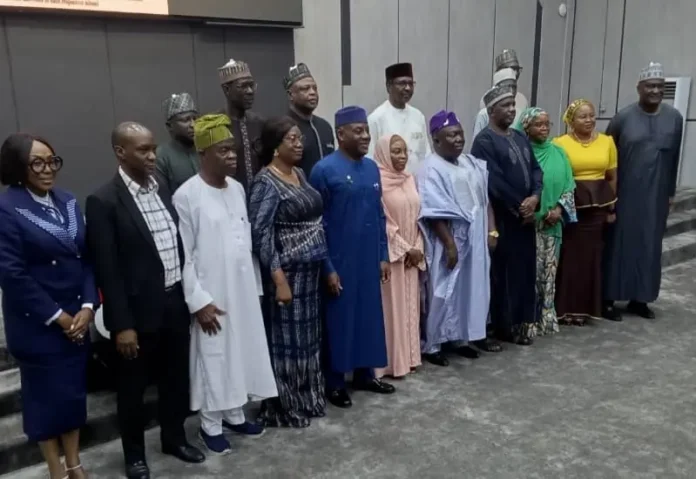
The Federal Government has inaugurated a Ministerial Implementation and Monitoring Committee to ensure that UBEC Smart Schools, Bilingual Schools and Alternative Schools across Nigeria become fully operational.
The Minister of Education inaugurated the committee on Tuesday in Abuja, saying the assignment was to convert completed school infrastructure into “living institutions where children learn, teachers teach and communities thrive.”
The minister said while UBEC had invested substantial public resources in the three school models, recent reports showed many projects remained unfinished and several completed schools had not been handed over to states or opened for learning.
“Every day a completed school remains locked represents lost opportunities for thousands of Nigerian children. Every abandoned project represents resources not yielding their intended educational value,” he said.
He said Smart Schools are designed for digital, technology-enabled learning, Bilingual Schools for linguistic inclusion and national integration, and Alternative Schools to serve vulnerable children, girls, out-of-school children and other underserved groups.
The minister charged the committee to ensure completion of ongoing construction, provision of furniture and equipment, and installation of electricity, water and internet connectivity.
He also directed members to work with states and SUBEBs to facilitate teacher deployment, conclude handover processes, and ensure student enrolment.
“The success of this Committee will not be measured by the number of meetings held or inspection reports produced. It will be measured by one question: How many schools have become operational and are educating Nigerian children?” he said.
He added that the era of projects being “completed on paper while remaining inaccessible to beneficiaries must come to an end,” describing the committee as part of a new culture of accountability under the Renewed Hope Agenda.
The minister commended President Bola Tinubu, for his commitment to education reforms and acknowledged the Minister of State for Education, Prof. Suwaiba Said Ahmad, and the Executive Secretary and management of UBEC for investments in basic education.
He said the committee’s mandate covered the full project cycle “from conception to completion, from handover to operation, from staffing to enrolment, and from enrolment to measurable learning outcomes.”
“The Federal Ministry of Education and UBEC will provide every necessary support for the successful execution of your assignment,” he added.
He assured Nigerians that “no educational infrastructure funded with public resources will remain abandoned, idle or underutilised” under the Tinubu administration.