

By Onu Okorie
President Bola Ahmed Tinubu has taken another significant step in Nigeria’s clean energy transition with the commissioning of a state-of-the-art Compressed Natural Gas CNG Daughter Booster Station in Jahi, Abuja, as part of a broader nationwide effort to reduce dependence on costly petroleum products and unlock the country’s vast gas resources.
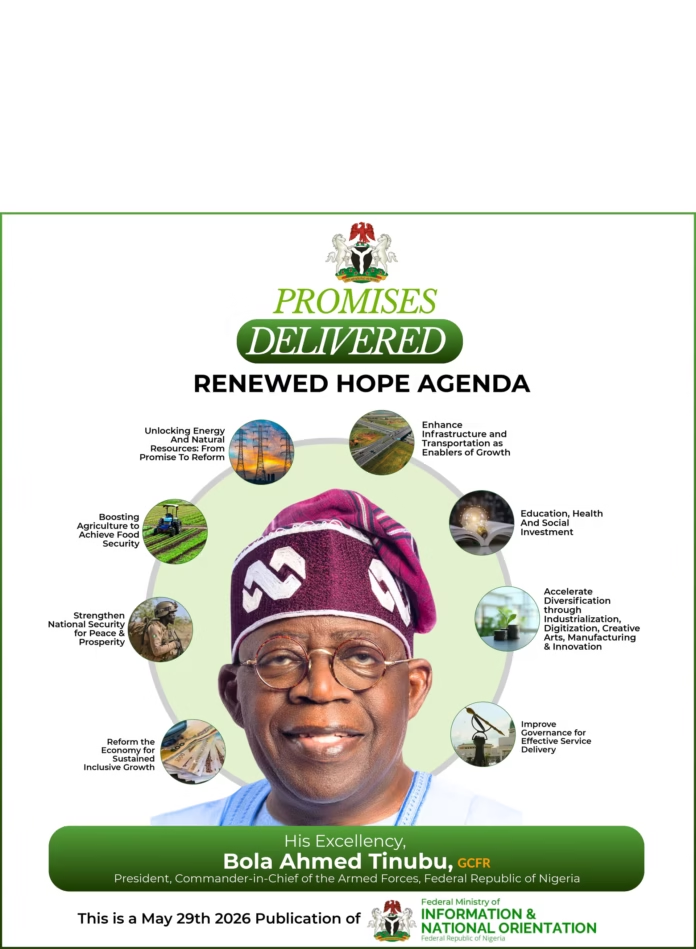
Represented at the commissioning ceremony by the Minister of State for Petroleum Resources Gas, Ekperikpe Ekpo, President Tinubu described the project as a key component of his administration’s Renewed Hope Agenda, which prioritises domestic gas utilisation as a catalyst for industrial growth, economic diversification, and energy security.
Nigeria possesses approximately 215 trillion cubic feet of proven natural gas reserves, among the largest in Africa. However, for decades, much of this wealth has been directed toward exports while millions of Nigerians continued to grapple with expensive and environmentally harmful fuel alternatives.
The Tinubu administration is seeking to reverse that trend. The Jahi facility is one of four gas infrastructure projects commissioned simultaneously across the country, alongside facilities developed by Ibile Oil and Gas in Lagos and Portland Energy in Owerri. The projects underscore growing momentum in Nigeria’s gas sector and signal increasing private sector confidence in government-backed energy reforms.
Speaking at the event, Ekpo said the new station represents a critical milestone in the country’s drive toward cleaner and more accessible energy.
“This facility marks another important milestone in our collective drive to deepen gas utilisation, expand access to cleaner energy solutions, and strengthen Nigeria’s gas value chain,” he said.
At the centre of the Jahi project is Rolling Energy Limited, which developed the facility in partnership with the Midstream and Downstream Gas Infrastructure Fund MDGIF.
Chairman of Rolling Energy, Mubarak Umar Dambata, revealed that the company is pursuing an ambitious infrastructure expansion programme across Northern Nigeria. Planned projects include additional CNG mother stations, daughter stations, and Liquefied Natural Gas LNG facilities in Kaduna, Kano, and Borno states.
Beyond infrastructure development, Rolling Energy has partnered with the Presidential Initiative on CNG and Electric Vehicles to convert more than 8,000 vehicles to gas-powered systems, helping Nigerians reduce transportation costs while supporting cleaner mobility solutions.
The Jahi facility boasts a sales capacity of 1,000 Standard Cubic Metres SCM per hour and is equipped with two CNG tube skids with a combined storage capacity of 17,000 SCM. It also features a Mass Conversion Centre capable of converting up to 20 vehicles and 25 tricycles daily.
Since commencing commercial operations, the station has been serving between 350 and 400 vehicles daily and is projected to accommodate over 1,000 CNG vehicles and 100 trucks each day across the Federal Capital Territory and neighbouring regions.
Chairman of the Presidential Initiative on CNG and Electric Vehicles, Ismahil Ahmed, said the removal of fuel subsidies by the Tinubu administration had accelerated the search for more affordable and sustainable energy alternatives.