

By Okechukwu Nwanguma
Nigeria stands today at a dangerous crossroads. Across the country, from rural communities to urban centres, citizens live under the constant shadow of violence, crime, and fear. Yet, in the face of this deepening crisis, the policy response from government circles increasingly leans toward a familiar but flawed solution: the creation of state police.
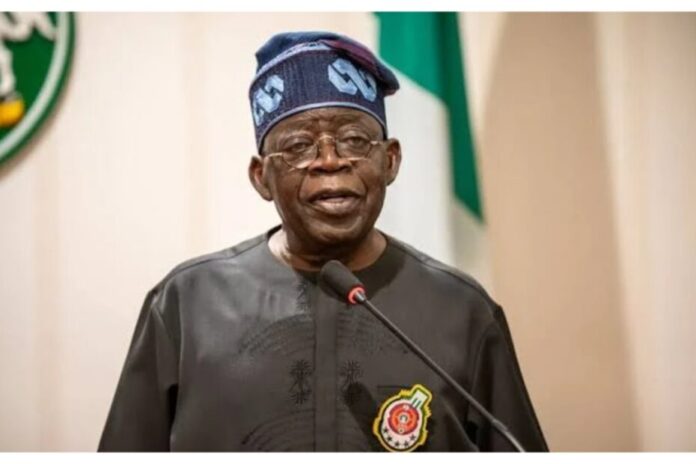
President Bola Ahmed Tinubu must resist this temptation to pursue what appears to be reform but risks becoming a costly diversion. The truth is that Nigeria’s insecurity is not primarily a policing structure problem – it is a governance problem.
Crime and violence in Nigeria are deeply rooted in criminalised politics, bad governance, poverty, social injustice, mass unemployment, and widening inequality. These are not abstract concepts; they are lived realities for millions of Nigerians who feel excluded, neglected, and alienated from the state. In such an environment, criminal networks thrive, and violence becomes both a tool and a symptom of systemic failure.
No policing model – whether federal, state, or hybrid – can succeed in isolation from these underlying conditions. Without addressing the socio-economic and political drivers of insecurity, the creation of state police risks merely decentralising dysfunction rather than solving it.
Equally troubling is the state of the Nigeria Police Force itself. Years of neglect have left the institution weakened and compromised. Police officers operate under poor conditions, with inadequate welfare, insufficient training, and limited resources. At the same time, corruption, impunity, and lack of accountability have eroded public trust.
The result is a police force that is often seen not as a protector, but as a source of fear and exploitation. This trust deficit is one of the most significant obstacles to effective policing in Nigeria. Communities are less willing to cooperate with law enforcement, intelligence gathering suffers, and criminals exploit the gap.
Fragmenting this already fragile institution into state-controlled units – without first fixing its foundational problems – could worsen the situation. In a political environment where institutions are frequently captured by powerful interests, state police could become tools of repression in the hands of governors and local political elites. Instead of enhancing security, it could deepen abuse, entrench impunity, and fuel political violence.
What Nigeria urgently needs is not the multiplication of policing structures, but the transformation of governance and accountability systems.
First, there must be a deliberate effort to decriminalise politics. Elections must cease to be battlegrounds where violence is rewarded and perpetrators are protected. Political actors who sponsor or benefit from violence must be held accountable, regardless of their status or affiliation.
Second, government must invest meaningfully in social and economic justice. Reducing poverty, creating jobs, and addressing inequality are not just development goals – they are central to national security. A society that offers dignity and opportunity to its citizens is inherently more stable and secure.
Third, comprehensive reform of the Nigeria Police Force is non-negotiable. This includes improving welfare and working conditions, ensuring merit-based recruitment and promotion, strengthening internal and external oversight mechanisms, and guaranteeing operational independence from political interference. The police must be repositioned as a professional, rights-respecting, and service-oriented institution.
Fourth, accountability must be enforced consistently. Officers who abuse their powers must face consequences, and victims must have access to justice. Without accountability, reform efforts will remain cosmetic and ineffective.
The call for state police is not without merit in theory. In a truly federal system, decentralised policing can enhance local responsiveness and efficiency. However, in Nigeria’s current context – where governance deficits and institutional weaknesses are pervasive – such a move risks compounding existing problems.
President Tinubu has a historic opportunity to confront the real causes of Nigeria’s insecurity. This requires political courage, not policy shortcuts. It demands a commitment to justice, accountability, and inclusive governance.
Nigeria does not need more police formations; it needs a system that works. Until the roots of insecurity are addressed, structural reforms like state policing will remain, at best, a distraction – and at worst, a dangerous illusion.