

Tony Okafor, Awka
The International Society for Civil Liberties and Rule of Law (Intersociety) has raised fresh concerns over rising insecurity in Nigeria, alleging that at least 1,402 Christians were killed and 1,800 abducted between January 1 and April 6, 2026.
In a statement issued on Monday and signed by Emeka Umeagbalasi, Chidinma Evangeline Udegbunam and Obianuju Joy Igboeli, the group said the figures represent a sharp escalation compared to its earlier report of March 19, which recorded 1,050 deaths and 1,690 abductions within 78 days.
The latest report, covering a 96-day period, indicates an additional 350 deaths and 110 abductions.
The group attributed the violence to armed insurgent groups and alleged complicity or inaction by state actors.
Intersociety also said that, on average, 15 persons were killed and about 20 abducted daily within the review period, describing the trend as “widespread and escalating.”
The group highlighted a surge in violence during the Christian Holy Week, reporting that at least 102 people were killed between March 28 and April 4, while 34 deaths were recorded on Easter Sunday alone.
According to the report, incidents occurred across several states, including Borno, Kaduna, Plateau, Nasarawa and Benue.
It cited multiple attacks on communities, places of worship and residential areas, as well as abductions and destruction of property.
Eyewitness accounts referenced by the organisation detailed roadside bombings, coordinated village raids and attacks on worshippers during religious services.
Intersociety further stated that a proportion of abducted victims do not survive captivity, estimating that about 10 per cent of abductees may die due to conditions such as injuries, lack of medical care and other forms of maltreatment.
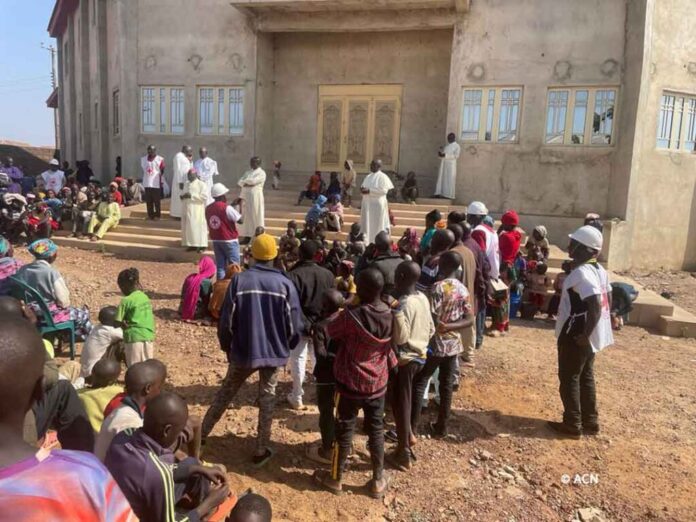
The group expressed solidarity with internally displaced persons (IDPs), particularly those from northern parts of the country.
It highlighted the activities of a Benin-based charity, the Home for the Needy Foundation, which it said currently shelters 4,513 displaced persons, including children and young adults affected by violence.
According to the report, the foundation has supported education and rehabilitation efforts, producing university graduates and currently sponsoring hundreds of students in tertiary institutions.
However, Intersociety alleged that the centre has faced harassment and accusations from government agencies over the years, claims it described as unfounded.
The organisation also drew attention to the situation of displaced persons outside Nigeria, including an estimated 120,000 Nigerians in Cameroon and about 12,000 others in Pulka, Borno State.
It expressed concern over what it described as unsafe conditions and the risks faced by displaced populations, especially those returning to conflict-prone areas.
Intersociety called on government authorities, humanitarian organisations and international partners to intensify efforts to address insecurity, protect vulnerable communities and provide support for displaced persons.
It also appealed for increased funding and assistance for shelters and rehabilitation centres catering to victims of violence.