

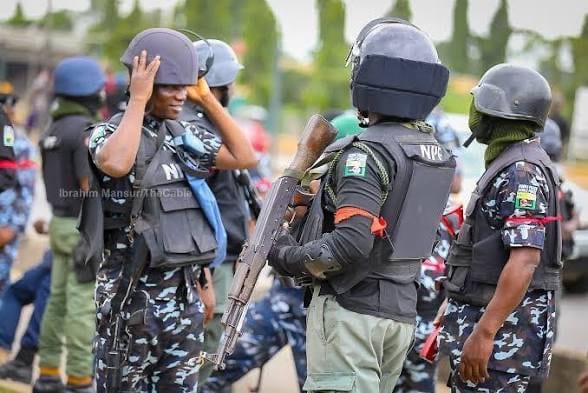

………A Word of Caution to the Inspector-General of Police, Tunji Disu
By Okechukwu Nwanguma
The arrest of a citizen in Suleja, Niger State, for allegedly shouting “no water, no light” during the visit of Governor Mohammed Umaru Bago, is more than an isolated incident. It is a disturbing reflection of a deepening crisis in Nigeria’s policing culture – one where law epoPp0Pnforcement risks being weaponized against the very people it is meant to serve.
According to reports, Hamisu Abdullahi, an electrician and father of four, was arrested and detained for days on allegations of “attempting to disrupt government activities.” His alleged offence? Voicing a grievance – a simple, direct expression of the everyday hardships faced by millions of Nigerians.
If this account is accurate, then we are confronted with a troubling question: Since when did the expression of public frustration become a criminal act?
Policing Dissent or Protecting Power?
The role of the police in a democratic society is clear: to protect lives and property, uphold the rule of law, and safeguard the rights of citizens – not to shield public officials from criticism or embarrassment.
When citizens are arrested for expressing dissatisfaction – especially on issues as basic as access to water and electricity – policing begins to drift from service to suppression.
This is the essence of predatory and partisan policing:
– Policing that targets the weak while protecting the powerful
– Policing that criminalizes dissent but overlooks abuse of authority
– Policing that serves political convenience rather than constitutional duty
Such a pattern erodes public trust and undermines the legitimacy of the police institution.
The Constitutional Line That Must Not Be Crossed
Nigeria’s Constitution guarantees freedom of expression. Citizens have the right to speak, to criticize, and to demand accountability from those in power.
Shouting “no water, no light” is not incitement. It is not violence. It is not a threat to public order. It is, at worst, an inconvenient truth.
To treat it as a criminal act is to blur the line between law enforcement and political enforcement.
The Danger of Normalizing Abuse
Incidents like this may appear minor in isolation, but they carry dangerous implications when normalized:
– They create a climate of fear and self-censorship
– They embolden abuses of power at all levels
– They signal to citizens that the police are not neutral arbiters, but instruments of authority
Nigeria has walked this path before – where security agencies became tools of repression rather than protection. The consequences were severe, and the scars remain.
A Call to the Inspector-General
This is why this moment demands leadership.
The Inspector-General of Police, Tunji Disu, must make it unequivocally clear that:
– The Nigeria Police Force is not an enforcement arm of political office holders
– Officers must not arrest or detain citizens for exercising their constitutional rights
– Allegations such as this must be investigated transparently and impartially
– Erring officers must be held accountable
Silence or inaction will only reinforce the perception that such conduct is acceptable.
Policing for the People, Not Against Them
The legitimacy of the police does not come from the power they wield, but from the trust they earn.
Every time a citizen is unjustly arrested for speaking out, that trust is diminished.
If the police are seen as protectors of the ruling class rather than defenders of the people, they risk losing the moral authority essential for effective policing.
Conclusion
The voice that cried “no water, no light” is not the problem. It is a symptom of a deeper governance failure.
Suppressing that voice will not solve the problem. It will only deepen public frustration and widen the gap between the state and the people.
Nigeria does not need a police force that silences its citizens. It needs one that listens – and protects their right to be heard.