

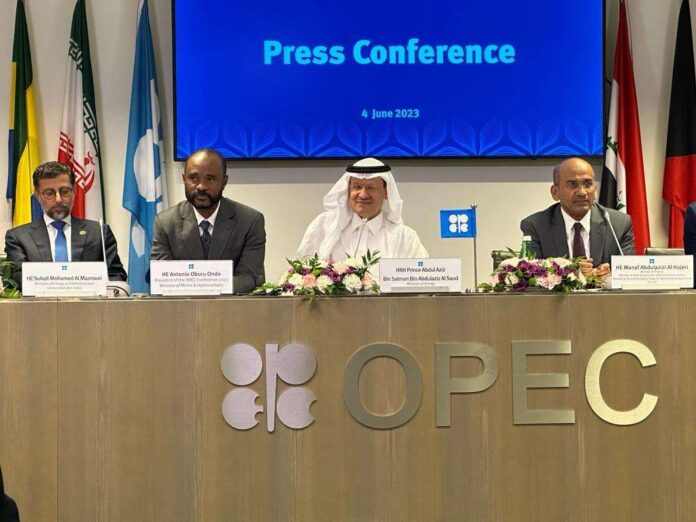

The Board of Governors of the Organization of the Petroleum Exporting Countries has convened its 173rd meeting in Vienna, Austria, to deliberate on the organisation’s administrative, financial and long-term strategic matters amid continued volatility and tightening conditions in the global oil market.
The two-day meeting, taking place at the OPEC Secretariat, is being chaired by Yousef Al Salem, Saudi Arabia’s Governor for OPEC and the current Chairman of the Board of Governors.
The gathering comes at a critical period for oil-producing nations and energy markets, as crude prices continue to respond to production adjustments, geopolitical tensions and shifting global demand patterns.
OPEC’s Board of Governors serves as one of the organisation’s key governing bodies, overseeing budgetary, operational and policy implementation matters that guide the cartel’s activities.
Industry analysts are closely watching the meeting for signals regarding the future direction of the wider OPEC+ alliance, which includes non-OPEC producers such as Russia.
The alliance has in recent years maintained coordinated production cuts aimed at stabilising the market and supporting crude prices after periods of oversupply and economic uncertainty.
According to estimates published by Petroleum Economist, the oil market remained structurally tight in April despite ongoing concerns over global economic growth and energy demand.
The report noted that OPEC+ production levels were down by about nine million barrels per day from pre-crisis levels earlier this year, reflecting the continued impact of voluntary and coordinated output reductions by member countries and allies.
The tight supply conditions have helped support benchmark crude prices in recent months, although market volatility has persisted due to concerns surrounding inflation, slowing industrial activity in some major economies and evolving geopolitical developments in Europe and the Middle East.
Energy experts say the sustained production discipline by OPEC+ has prevented a significant collapse in oil prices, particularly as inventories in several key consuming regions remain under pressure.
“The market continues to show signs of constrained supply, especially when compared with historical production levels before the crisis period,” an energy analyst familiar with OPEC market trends said. “The alliance appears determined to maintain market stability while carefully monitoring global demand recovery.”
The Vienna meeting is also expected to assess broader strategic issues affecting the future of the organisation, including energy transition policies, investment in upstream oil projects and the role of fossil fuels in global energy security.
OPEC member states have repeatedly argued that underinvestment in oil exploration and production could create future supply shortages and threaten global energy stability. The organisation has consistently maintained that oil will continue to play a central role in the global energy mix for decades despite increasing investments in renewable energy.