


By Onu Okorie
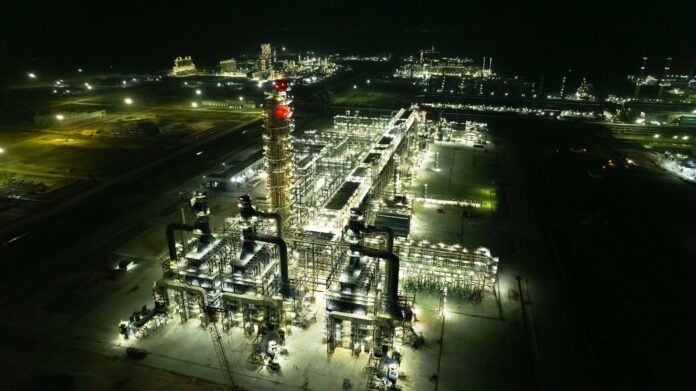
The Nigerian Midstream and Downstream Petroleum Regulatory Authority April 2026 factsheet has shown that domestic refineries, led largely by the Dangote Refinery, achieved an average capacity utilisation of 99.12 per cent during the month, indicating a major improvement in local refining operations. The report noted that the Dangote refinery operated at full capacity utilisation for most days in April.
Data from the report revealed that local production of Premium Motor Spirit, popularly known as petrol, stood at 53.6 million litres per day, while domestic supply averaged 40.7 million litres daily. Diesel production was put at 23.6 million litres daily, with aviation fuel production reaching 22.9 million litres per day.
The authority also disclosed that Nigeria’s modular refineries continued to contribute modestly to domestic fuel supply. The three modular refineries — WalterSmith Refinery, Edo Refinery and Aradel Holdings — supplied an average of 0.559 million litres per day in April. WalterSmith recorded the highest average capacity utilisation at 56.14 per cent, while Edo Refinery posted 79.20 per cent utilisation.
On fuel consumption, the report showed that Nigerians consumed an average of 51.1 million litres of petrol daily in April, slightly above the official benchmark of 50 million litres per day. Diesel consumption stood at 17.3 million litres daily, while aviation fuel consumption averaged 2.5 million litres daily. Liquefied Petroleum Gas consumption was recorded at 4.8 kilotonnes per day, surpassing the benchmark estimate of 3.9 kilotonnes daily.
Despite improved local refining activity, petrol prices remained elevated nationwide. The NMDPRA factsheet showed that the average actual pump price of petrol in Lagos stood at N1,271.50 per litre during April, while Abuja recorded N1,326 per litre. Kano averaged N1,340 per litre, while Maiduguri posted the highest average price at N1,371.50 per litre.
The highest petrol price recorded during the period reached N1,413 per litre in Maiduguri, while the lowest recorded price nationwide was N1,225 per litre in Lagos. According to the report, the pricing trend reflected the impact of high international crude oil and gasoline prices, with Brent crude averaging $120.55 per barrel and gasoline costing $1,074.97 per metric tonne during the month.
On national fuel reserves, the regulator stated that the country maintained 18 days sufficiency for petrol, 39 days for diesel and 70 days for aviation fuel. LPG stock sufficiency was estimated at 13 days.