

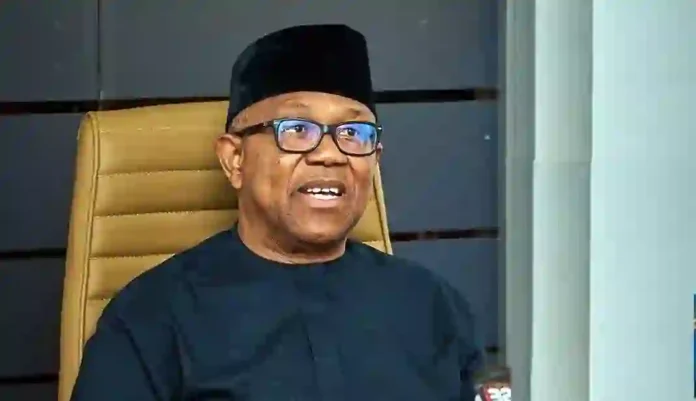

BY AHMED AKANBI
Former Anambra State Governor and presidential candidate of the Nigeria Democratic Congress, NDC Peter Obi, has warned that Nigeria’s democracy is facing a serious institutional crisis, accusing educated professionals and other influential groups of contributing to the erosion of electoral integrity.
Obi raised the alarm at the 2026 Goodluck Jonathan Democracy Dialogue in Bauchi State, where he criticised developments in the country’s electoral and judicial systems.
According to him, the growing acceptance of electoral malpractice, questionable legal practices and the alleged protection of politicians accused of wrongdoing represents a dangerous threat to Nigeria’s democratic future.
Reflecting on his experience with the judiciary, Obi recalled an instance in which he approached the Court of Appeal and secured a favourable judgment from five judges whom he said he had never met.
He contrasted that experience with what he described as the disturbing state of the electoral process today.
“So if you look at that and look at what is happening today in Nigeria, where professors are now aiding illiterates to rig election,” Obi said.
The former governor also questioned the implications of the removal of forgery as an electoral offence, arguing that such developments could undermine public confidence in the electoral system.
“Where our lawmakers have removed forgery as an offence in electoral matter,” he said.
Obi further expressed concern over the involvement of senior legal practitioners in cases involving alleged electoral violations.
“Our senior advocates of Nigeria are defending forgery. Our religious leaders are now praying for criminal politicians for blessing,” he alleged.
He argued that the problem confronting Nigeria goes beyond the conduct of elections, extending to the institutions expected to safeguard democratic values and ensure accountability.
“We have a crisis and above all our judges are singing ‘On your mandate we stand’,” Obi said, in reference to what he described as the growing politicisation of the judiciary.
The former governor called for a renewed commitment to democratic principles, credible elections and institutional accountability, stressing that Nigeria’s democracy could not thrive where electoral malpractice and other forms of wrongdoing were increasingly normalised.
His comments come amid renewed political activities ahead of the 2027 general elections and growing national debate over electoral reforms, judicial independence and the credibility of Nigeria’s democratic institutions.