


By Onu Okorie
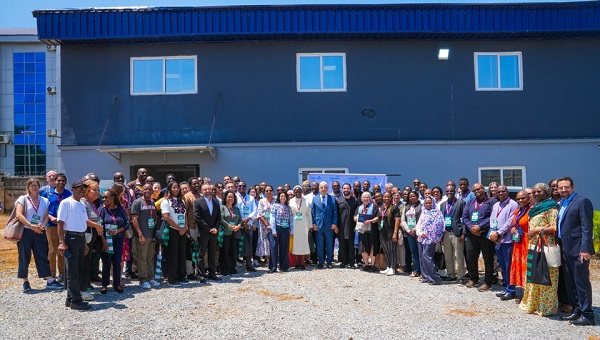
Nigeria’s National Agency for Science and Engineering Infrastructure (NASENI) has received international recognition for its growing role in local healthcare manufacturing, as a delegation of about 85 global health professionals from a Harvard University-led programme toured its state-of-the-art biotechnologies factory in Abuja.
The delegation, participating in the Science of Defeating Malaria programme and led by Professor Dyann F. Wirth of Harvard University, visited the NASENI-TROMENT Biotechnologies Factory and praised the facility as a landmark step in the fight against malaria and other infectious diseases across Africa.
At a closing dinner held over the weekend, NASENI’s Executive Vice Chairman and Chief Executive Officer, Mr Khalil Suleiman Halilu, said the international commendation affirmed the vision that drove the project’s establishment 18 months ago — to reduce Nigeria’s reliance on imported diagnostic kits and build homegrown manufacturing capacity.
“This validates what we set out to achieve,” Halilu said, reaffirming the agency’s commitment to strengthening Nigeria’s healthcare sovereignty through locally manufactured medical diagnostic technologies.
The factory, which operates under the N-CheckUP brand, is designed to produce up to 600 million diagnostic kits annually — enough to meet approximately 80 per cent of Nigeria’s diagnostic testing needs, with surplus capacity targeted at exports to other African nations and global markets. Its product range covers rapid diagnostic tests (RDTs) and in-vitro diagnostic (IVD) products for malaria, HIV, hepatitis B and C, typhoid, syphilis, COVID-19, pregnancy testing, and blood glucose monitoring.
Halilu described the initiative as central to NASENI’s broader mandate of harnessing science, technology and innovation to tackle national challenges, generate employment and develop industrial capacity. He expressed gratitude to Professor Wirth and the Harvard delegation for their recognition of Nigeria’s progress and reiterated the agency’s ambition to position the country as a leading healthcare manufacturing hub on the continent.
The Science of Defeating Malaria programme, which ran in Abuja from June 7 to 13, convened scientists, policymakers and public health experts from around the world to advance strategies for malaria elimination and the strengthening of global public health systems.