
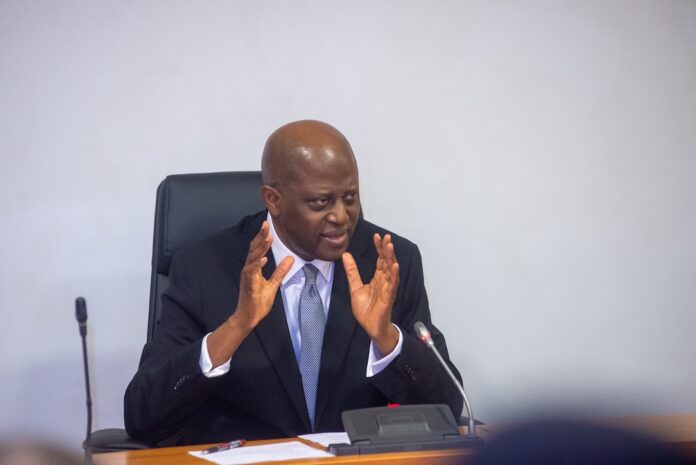

The Governor of the Central Bank of Nigeria (CBN), Olayemi Cardoso, on Thursday, said Nigeria’s ongoing macroeconomic reforms have positioned the country’s economy to withstand potential shocks arising from escalating tensions in the Middle East.
Cardoso stated this while delivering a Distinguished Alumni Lecture during the Founders’ Day celebration of St Gregory’s College in Lagos.
He noted that the global economy is currently facing renewed uncertainties driven by geopolitical tensions, particularly the evolving crisis involving the United States, Israel and Iran.
According to him, the situation could result in rising energy prices, disruptions in global supply chains and increased risk aversion among international investors.
Cardoso, however, maintained that economic reforms introduced over the past two years have strengthened Nigeria’s macroeconomic buffers and placed the country in a better position to absorb potential external shocks.
He said, “Today, the global economy is facing renewed shocks, including continued geopolitical tensions and developments in the US–Israel–Iran conflict. These events have the potential to push energy prices higher, disrupt supply chains and increase risk aversion among global investors.
“But the macroeconomic reforms and policy buffers we have built over the past two years have placed Nigeria in a far stronger position to navigate these challenges. The storms may come, but our house will stand firm.”
The apex bank governor also disclosed that the country’s foreign exchange market has become more liquid and efficient following policy reforms introduced by the central bank.
According to him, deliberate policy measures implemented by the bank have helped eliminate distortions in the foreign exchange market while restoring investor confidence.
“Today, the foreign exchange market operates with far greater liquidity and efficiency, while the backlog of unmet demand has been cleared. Market participants are now able to transact without relying on extraordinary Central Bank interventions,” he said.
Cardoso further revealed that Nigeria has recorded a significant improvement in capital inflows in recent years as investor confidence gradually returns to the economy.
He added that the country’s external reserves have also strengthened, recently surpassing $50 billion, the highest level recorded in more than a decade, supported by improved balance of payments and rising foreign investments.