
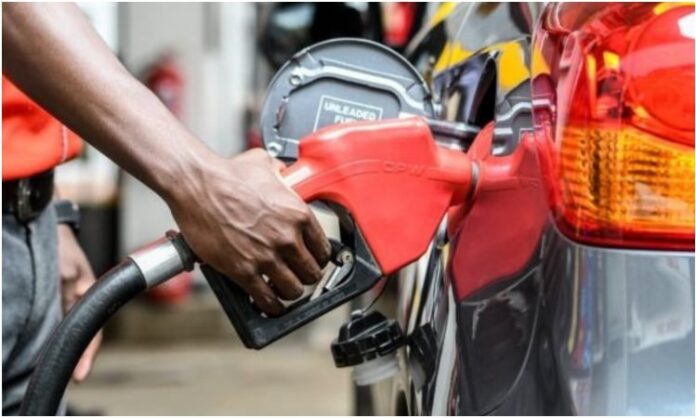

The relentless rise in the pump price of Premium Motor Spirit (PMS), popularly known as petrol or fuel, has compounded economic hardship across Nigeria, with prices approaching ₦1,400 per litre in many parts of the country.
The latest spike is worsening the already fragile financial situation of households, as transport fares soar, business costs escalate, and disposable incomes shrink further.
The development has heightened anxiety among transporters, commuters and small business owners, many of whom say they are now struggling to stay afloat amid what they described as an “unbearable” cost-of-living crisis.
Crude Oil Rally, Dangote Price Adjustment Drive Increase
The surge in petrol prices is largely attributed to the sharp rise in global crude oil prices, which climbed to nearly $120 per barrel last week before easing slightly to $112 over the weekend, following escalating tensions in the Middle East.
Industry players say the increase has had a direct impact on local pricing, particularly after Dangote refinery reviewed its gantry price upward from ₦1,175 to ₦1,245 per litre.
The adjustment immediately triggered a chain reaction across the downstream sector, with marketers revising pump prices to between ₦1,310 and ₦1,400 per litre, depending on location, logistics and supply conditions.
The development highlights the growing volatility in Nigeria’s deregulated fuel market.
In Lagos, the commercial nerve centre of the country, transport operators say they are bearing the brunt of the hike.
Checks by journalists at several filling stations showed prices fluctuating between ₦1,320 and ₦1,330 per litre, while some outlets briefly sold at ₦1,380 before adjusting downward.
At stations owned by the Nigerian National Petroleum Company Limited (NNPCL), pump prices were adjusted upward twice within a few days, underscoring the instability in supply and pricing.
According to reports, commercial drivers told journalists that the increase has significantly reduced their profit margins, with many now operating on the edge.
Toheeb Sulaimon, who plies the Ogba-Ikeja route, described the situation as dire.
“When fuel was around ₦800 per litre, I could spend about ₦9,000 on fuel and still make up to ₦30,000 in a day. Now, everything has changed. The cost has doubled, but passengers are fewer,” he said.
Another driver, Maduka Chibo, said his daily fuel expenditure has jumped from about ₦10,000 to over ₦20,000.
He added that despite increasing fares, operators are losing customers as many commuters now opt for cheaper alternatives or reduce travel altogether.
In Kano, the impact of the fuel hike has been equally severe, with petrol selling as high as ₦1,390 per litre at some stations.
Independent marketers, including AA Rano, adjusted prices upward from around ₦1,330 to between ₦1,385 and ₦1,390, citing higher supply and logistics costs.
The development has triggered sharp increases in transport fares, particularly among tricycle and shuttle operators.
A resident, Ismail Mabo, narrated his ordeal: “I was charged ₦4,000 for a trip that normally costs about ₦1,000. This is too much. Some of these operators are taking advantage of the situation.”
Another resident, Abba Kabir, warned that the sustained rise in fuel prices could fundamentally change transportation patterns.
“At this rate, people will stop using their cars. Some may even convert them to commercial use just to survive,” he told reporters.
He added that the pressure on households is becoming unbearable, especially for low-income earners.
Abuja Residents Groan As Prices Hit ₦1,370
In Abuja, the Federal Capital Territory, pump prices have climbed steadily, with most filling stations now selling between ₦1,361 and ₦1,370 per litre.
The latest increase followed a new pricing template released by MRS Oil Nigeria Plc, which pegged its benchmark pump price at ₦1,332 per litre, subject to variations based on delivery and supply terms.
Residents say the frequent adjustments have made it difficult to plan daily expenses, as transportation costs continue to rise unpredictably.
A civil servant in the city noted that commuting costs have nearly doubled in recent months, forcing many workers to seek alternative arrangements, including carpooling and remote work where possible.
In Ilorin, Kwara State, a market survey showed petrol selling between ₦1,295 and ₦1,343 per litre.
Residents lamented that the continuous increase is eroding their purchasing power and forcing difficult financial decisions.
Oladuni Lateefat, a civil servant, said her family is struggling to cope with rising expenses.
“What we used to manage with ₦4,000 daily is no longer enough. Transportation alone is taking a huge part of our income,” she said.
She disclosed that she is considering abandoning the use of her personal vehicle to cut costs.
Businesses are also grappling with the impact. A cement dealer in the city revealed that the price of cement has already risen by ₦500 due to higher transportation costs.
He warned that further increases are likely if fuel prices continue to climb.
In Port Harcourt and Yenagoa, the situation is even more dire, particularly in areas with limited access to official filling stations.
Petrol sells between ₦1,300 and ₦1,400 at registered outlets, while black market prices have surged to as high as ₦1,800 per litre.
Residents say the disparity has worsened the burden on households, with many forced to buy from informal sources at exorbitant rates.
Commuters reported that transport fares have doubled in some cases. In Port Harcourt, trips that previously cost between ₦300 and ₦400 now go for as much as ₦700.
Similarly, interstate travel has seen significant increases. The fare from Yenagoa to Uyo has risen from about ₦9,000 earlier in the year to ₦11,000.