


For many decades, football has served as Nigeria’s most resilient and successful global diplomat. Amidst protracted struggles to project Nigeria’s international image in other sectors, the Super Eagles have uniquely possessed the extraordinary power to unite Nigerians across deep-seated ethnic, religious, and political fault lines. Historically, the green-and-white jersey commanded global awe. Nigeria’s triumphant campaign at the 1994 Africa Cup of Nations, its historic debut on the global stage in the United States, and its monumental ascent to fifth in the official FIFA World Rankings in April 1994 were not mere flashes in the pan; they signaled the arrival of a geopolitical football powerhouse.
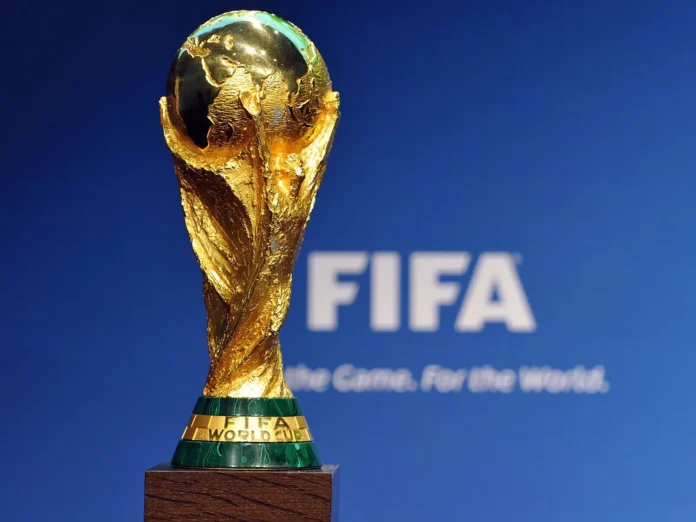
It is in the light of the above that we view with great dismay Nigeria’s failure to qualify for the ongoing 2026 FIFA World Cup being hosted by the United States, Canada and Mexico. Irrespective of reasons being adduced by the football handlers, the nation’s absence is a profound national setback with systemic implications that reverberate far beyond the pitch.
Indeed, the absence of Africa’s most populous nation from global football’s centerpiece event severely diminishes the country’s international visibility, paralyzes one of its most potent instruments of cultural soft power, and demands an immediate autopsy of the structural decay defining football administration in Nigeria.
That illustrious heritage is precisely what makes the current state of attrition so intolerable. Missing the world’s premier football tournament is indicative of a systemic decline that can no longer be ignored. Nations with a fraction of Nigeria’s population, far fewer financial endowments, and negligible footballing history have successfully engineered highly competitive national teams through disciplined, long-term blueprinting. Nigeria, uniquely blessed with an inexhaustible reservoir of elite talent both domestically and in the diaspora, has been reduced to a passive spectator.
The biting irony is that Nigeria’s footballing woes have never been caused by a deficit of raw talent because we have them in excess. All over the world, and at every sporting event, Nigerian athletes continue to anchor matchday squads in Europe’s most elite leagues, competing at the absolute apex of club football. The rot lies strictly within the administrative architecture. A chronic culture of ephemeral coaching appointments, inconsistent technical policies, destructive administrative turf wars, a near-total abandonment of grassroots development, and a toxic reliance on last-minute improvisations have systematically sabotaged the nation’s immense potential. Sustained sporting excellence is never an accident of raw talent; it is the direct product of institutional stability, competent leadership, and strategic vision.
The multi-dimensional costs of this World Cup absence are staggering. Economically, the domestic sports ecosystem is starved of vital foreign direct investments, lucrative corporate sponsorships, and global brand partnerships. Psychologically, an entire generation of young, aspiring footballers is deprived of the existential inspiration that comes from watching their national icons test their mettle against the world’s best. Culturally, the nation’s international brand suffers a severe death as its most recognizable global symbol vanishes from the world stage. For millions of citizens navigating complex socio-economic realities, football has long been an indispensable repository of hope and collective pride. Every missed tournament chips away at that national psyche.
This dark hour leaves no room for superficial blame games or emotional platitudes. It demands a radical, institutional overhaul. The Nigeria Football Federation (NFF), alongside state authorities and corporate stakeholders, must initiate a clinical, transparent restructuring of the sport’s governance. Transitioning toward absolute administrative transparency, entrenching merit-based professional management, making heavily institutionalized investments in grassroots academies, and establishing a sacred, unalterable 10-year development blueprint must immediately become matters of urgent national priority. On-field triumph is merely a mirror reflection of off-field governance.
Nigeria has successfully engineered historic resurgences before. The same federation that rose from relative obscurity to become continental champions and look down from the top five of global football still possesses the raw human capital to reclaim its seat among the elite. What is missing is a caliber of administrative leadership that matches the sublime quality of the players, and institutions that fiercely place the national interest above parochial, personal considerations.
The Super Eagles’ absence from the 2026 World Cup must serve as a severe institutional wake-up call rather than a permanent epitaph on Nigerian football. If the bitter lessons of this historic failure are embraced with unyielding courage and sincerity, Nigeria can rebuild a formidable, modern footballing infrastructure. But if administrative complacency prevails, a proud national heritage will be irrevocably relegated to history books. A nation that once proudly stood fifth in the world must never grow comfortable watching the World Cup from the sidelines.
QUOTE
The Super Eagles’ absence from the 2026 World Cup must serve as a severe institutional wake-up call rather than a permanent epitaph on Nigerian football