


By Onu Okorie
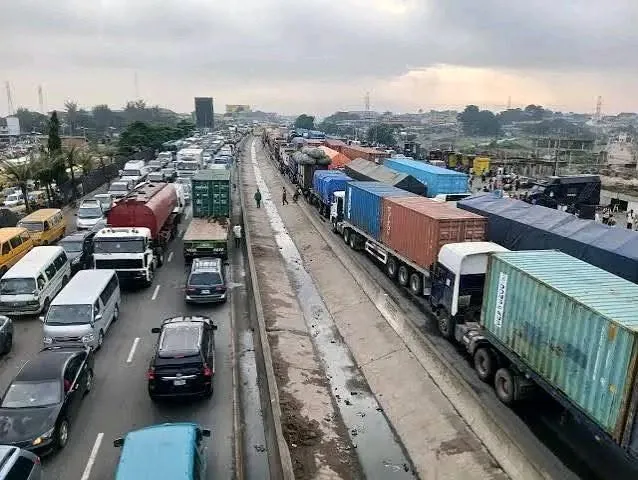
Federal Road Safety Corps (FRSC) has commenced an immediate and coordinated intervention with the Presidency and the Federal Ministry of Works to restore the free flow of traffic along sections of the Bida–Kutigi corridor in Niger State.
The intervention followed a directive by President Bola Ahmed Tinubu for urgent measures to address the prolonged gridlock and ease the hardship being experienced by motorists, transport operators, commuters and other road users.
The decision was reached following a high-level meeting involving the Corps Marshal of the FRSC, Shehu Mohammed, the Minister of State for Works, Bello Muhammad Goronyo; the Senior Special Assistant to the President on Transport and Mobility, Prince Ademola Adetokunbo; and the National President of the National Association of Road Transport Owners (NARTO), Alhaji Yusuf Lawal.
The meeting focused on immediate and practical measures to complement the sustained traffic management operations being carried out by FRSC personnel deployed along the affected corridors.
According to the FRSC, the major areas of concern include the Wuya Bridge between Kutigi and Bida, where traffic congestion is frequently experienced, particularly on Wednesdays because of increased vehicular movement associated with the weekly market.
The Corps said its commands in Bida and Kutigi have consistently deployed personnel every Wednesday to manage traffic and facilitate the movement of vehicles around the bridge.
More serious, however, are reported blockages along sections of the Bida–Badeggi–Agaie road, which have remained impassable in both directions for about 15 days.
Another major obstruction has also affected the Maje–Diko Junction axis in front of the Suleja NNPC Depot, with the blockage reportedly persisting for approximately 15 days.
The prolonged obstructions have disrupted the movement of passengers and goods and caused significant hardship for motorists and transport operators using the affected routes.
The Corps Marshal has consequently directed FRSC personnel to maintain a strategic presence and continue effective traffic management along the affected corridors while the Presidency and the Federal Ministry of Works work to resolve the underlying road obstructions.
The FRSC acknowledged the frustration, delays and economic losses suffered by road users as a result of the gridlock, and appealed for patience and cooperation as the intervention takes effect.
Motorists were urged to remain calm, obey traffic-control instructions and avoid reckless overtaking and other activities capable of worsening the congestion.
The Corps also appealed to road users to cooperate with personnel deployed to restore order and facilitate the movement of traffic.
Nigeria’s regulatory certainty in oil unlocks long-term capital – NMDPRA
By Onu Okorie
Mallam Rabiu Abdullahi Umar, Chief Executive of the Nigerian Midstream and Downstream Petroleum Regulatory Authority NMDPRA, has said that Nigerua’s regulatory certainty in the post PIA remains central to unlocking long-term capital and investment to the sector.
Mallam Umar who spoke at the recent Bangkok International Trade & Exhibition said that the country has moved from from touting the size of its gas reserves to demonstrating what those reserves can actually build.
He said pipelines, processing facilities and gas-to-power projects all depend on predictable commercial structures, reliable supply and sustainable payment arrangements.
On the export side, Nigeria LNG Managing Director and CEO Adeleye Falade said international buyers are shifting their priorities. Price and volume still matter, he noted, but reliability, supply-chain performance and emissions intensity are increasingly shaping deals — making methane management and operational efficiency commercial concerns as much as environmental ones.
Panelists argued that Nigeria’s opportunity goes well beyond shipping LNG abroad. At a session titled “Rising Economies, Rising Demand: How the Next Industrial Age Gets Powered,” Heirs Energies CEO Osayande Igiehon pointed to gas’s role at home — powering electricity generation, strengthening manufacturing, and supplying feedstock for fertiliser and petrochemical industries, which in turn create demand for finance, logistics and engineering services.
Dr Ainojie “Alex” Irune, Managing Director of Oando Energy Resources, emphasized strategic partnerships, capital allocation and indigenous capacity, arguing that international finance and technology need African companies able to operate assets and manage commercial risk.
Roberto Lorato, Commissioner of MedcoEnergi, offered a note of caution: strong demand alone doesn’t make a project investable. Credible revenues, reliable counterparties, sound risk allocation, regulatory certainty and risk-adjusted returns remain essential.
Taken together, speakers described an opportunity stretching from gas production and LNG through pipelines, processing, power, fertiliser, petrochemicals, manufacturing and logistics. The challenge, several suggested, is no longer proving how much gas Africa has — but proving it can be connected to markets, capital and productive economic activity.
As one observer put it, Nigeria’s pitch from Bangkok is evolving from “We have gas” to “Here is what this gas can build.” The real test, though, won’t come from another conference — it will come from what gets built.