

Valentine Obienyem
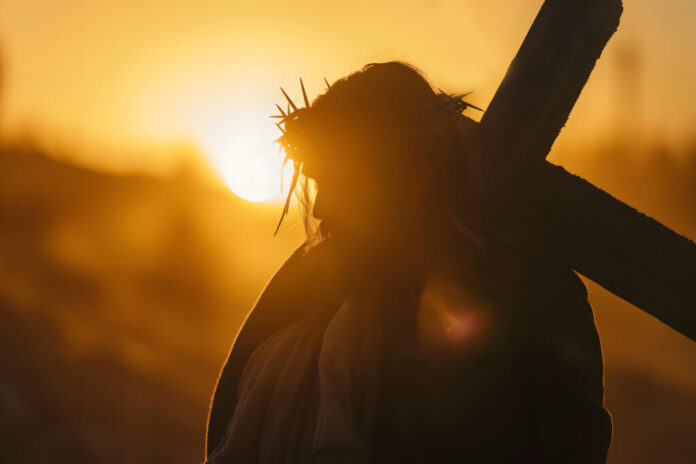
Yesterday was Good Friday, the commemoration of the Passion of our Lord. A question often arises: why is it called “Good” when it marks the death of our Saviour? Some argue it should be called “Bad Friday,” for it is associated with suffering and death. Indeed, Christ was not only crucified; He was humiliated and stripped naked, as was the Roman custom. The loincloth seen in art preserves modesty, but in reality He endured total humiliation and pain. In that sense, the day appears tragic – almost “bad.”
Yet it is called Good Friday because of its ultimate outcome: the redemption of humanity. What was intended by purveyors of darkness to be a defeat becomes the foundation of salvation. The Exsultet of the Easter Vigil proclaims this paradox with clarity.
The commemoration of the Passion begins with the Stations of the Cross – the journey from the Praetorium to Golgotha. This devotion presents, in vivid scenes, the drama of Christ’s suffering, allowing the faithful to walk with Him step by step to Calvary. In this simple yet profound practice, the indignities Christ endured become a living experience, enabling the faithful to enter into the reality of Christ’s Passion with deeper understanding and personal reflection. By dividing the Passion into fourteen moments, the faithful are led to dwell on each detail: the weight of the wood, the pain of the falls, the sorrow in the eyes of His mother, transforming a historical event into a deeply personal encounter.
As a young seminarian, I was especially drawn to the Twelfth Station, not merely for its theology, but for its striking literary form that made me memorize it seamlessly: “Those barbarians fastened Him with nails, then securing the cross, allowed Him to die in anguish on this infamous gibbet.” The Stations stir deep emotion, especially empathy.
This experience became even more vivid on pilgrimage to Jerusalem with President Goodluck Jonathan many years ago. Though not a Catholic, he participated in the Stations, guided by his minister, Prof. Viola Onwuliri. It was a striking moment that showed the universal power of this devotion. Walking the Via Dolorosa, retracing Christ’s steps are fittingly a living encounter with the Passion. This pilgrimage underscores the Catholic Church as a custodian of a tradition that is both historical and experiential, drawing the faithful into the mystery of Christ’s suffering and sacrifice.
After the Stations of the Cross, the Good Friday liturgy follows in three parts: the Liturgy of the Word, the Veneration of the Cross, and Holy Communion. Like all the Church’s liturgical actions, each part is deeply rooted in Scripture and rich in theological meaning, drawing the faithful into a profound reflection on the mystery of Christ’s Passion and the saving lessons it reveals.
You may notice that while Passion narratives on other days, such as Palm Sunday, can be taken from any Gospel, the Good Friday account is typically read from the Gospel of John. The is because the Gospel of John is the most philosophical and profound of the four Gospels. It presents a deeply theological portrait of Jedus Christ, especially through its opening declaration of Christ as the “Logos” (the Word). In this Gospel, the focus is not only on events but on their deeper meaning, using symbolism, extended reflections, and rich theological insight to reveal the identity and mission of Christ. It draws the reader beyond the surface of the narrative into a deeper encounter with the mystery of salvation. In one sentence, it infused its narratives with life.
Following the readings, the sermon was delivered by Fr. Maximus Okonkwo, while Fr. Chigozie Jidere earlier led the Stations of the Cross and the Maundy Thursday liturgy. The sharing of responsibilities among these deeply learned and theologically grounded priests reflects unity, collaboration, and order within the Church. For many, nothing is more rewarding than the insight gained from a well-delivered sermon, and on this, both priests are richly endowed.
The Prayers of the Faithful on Good Friday, called the Solemn Intercessions, form part of the Liturgy of the Word. In these prayers, the Church intercedes for the entire world, the Church, and all in need. Do we open up here? The ritual of “ka anyi sekpu nu na Ka anyi binie nu” that characterise this section tests our endurance to the bursting point.
The next part is the Veneration of the Cross. To an outsider, it may appear as the worship of a carved wood Catholics call the cross or crucifix but it is not. It is an act of reverence for the instrument through which Christ accomplished salvation. This veneration is reserved for Good Friday to emphasize the significance of His Passion, while on other days the cross is honored in a less formal way such as the ubiquitous sign of the cross.
The liturgy concludes with Holy Communion. The faithful receive hosts consecrated the previous day, since no Mass is celebrated on Good Friday. The Church abstains from celebrating Mass because the day is wholly dedicated to remembering Christ’s death. Instead, the focus is on silence, reflection, and mourning, with Communion as a continuation from Holy Thursday.
Today, we shall take part in the celebration of Holy Saturday, a sacred moment of quiet vigil and profound anticipation, as the Church waits in hope for the joy of