


…..equities market, experiencing robust bull run in 2026,
By Onu Okorie
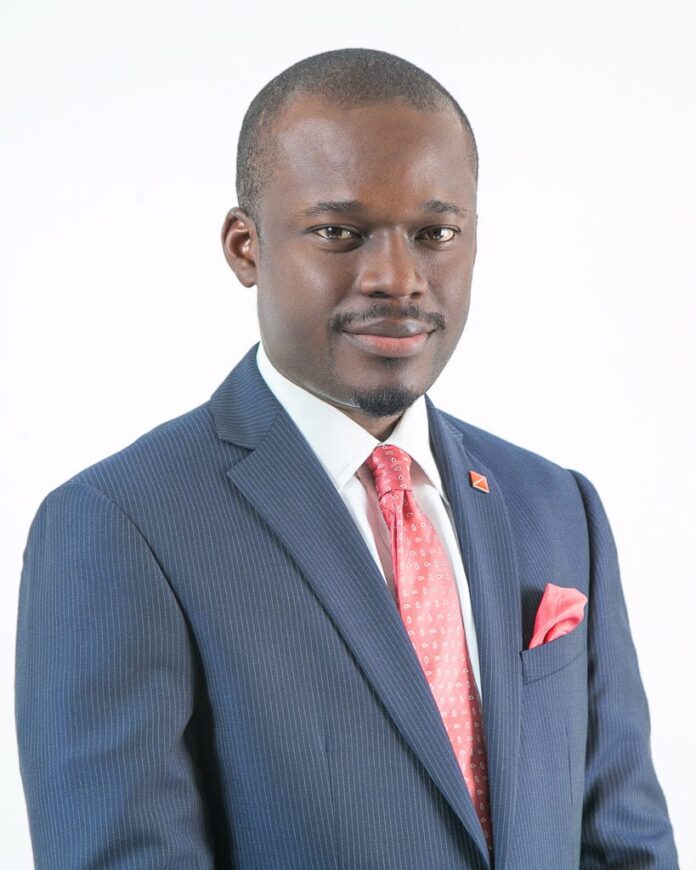
Group Chief Executive Officer of Griffin Capital Group Babatunde Obaniyi has disclosed that foreign investors pulled between $10 billion and $15 billion from Nigeria during the foreign exchange crisis, citing acute difficulties in repatriating funds as the primary deterrent to portfolio participation.
Obaniyi stated this while speaking on the state of the country’s capital markets at the launch of officially entering the Nigerian market as a fully integrated financial services group, bringing together investment banking, asset management, trusteeship, lending, and insurance services under a unified institutional platform.
He said that the Nigeria’s equities market is experiencing a robust bull run in 2026, and attributed the renewed investor optimism to far-reaching economic reforms initiated under President Bola Tinubu’s administration.
He noted that the country’s foreign reserves, now estimated at approximately $49 billion, are playing a pivotal role in reinforcing macroeconomic stability and restoring confidence among both domestic and international investors.
Griffin Capital Group is positioning itself as a key architect of Nigeria’s next phase of economic development, with an agenda that stretches well beyond conventional capital market activity.
Obaniyi outlined plans to expand into infrastructure financing, shareholder finance, and structured trade finance, while simultaneously broadening credit access for small and medium-sized enterprises — a segment he described as “the engine room” of the Nigerian economy.
The SME sector, which contributes roughly 60 percent of gross domestic product and absorbs over 90 percent of employment, remains chronically underserved by formal financial institutions. With an estimated 35 to 40 million SMEs nationwide, the financing gap represents both a critical challenge and a significant commercial opportunity.
Housing finance emerged as another central pillar of Griffin Capital’s growth strategy. Obaniyi cited Nigeria’s estimated 20 million housing unit deficit — compounded by a rapidly expanding population — as an urgent structural challenge demanding innovative financial solutions.
The company intends to develop long-term funding mechanisms and mortgage products that would make housing affordable for both developers and end-consumers, creating a deeper and more accessible mortgage market.
Obaniyi argued that Nigeria’s aspiration to become a trillion-dollar economy cannot be achieved through conventional financial instruments alone. Pointing to the Lagos–Calabar Coastal Highway as a case study, he stressed that large-scale infrastructure delivery will increasingly hinge on private sector participation and imaginative financing structures.
He underlined that Griffin Capital’s enduring success would be measured not by profit alone, but by its tangible contributions to economic growth, infrastructure delivery, and inclusive wealth creation across Nigeria.
Obaniyi was emphatic that the quality of Nigeria’s capital market recovery will depend as much on institutional integrity as on macroeconomic conditions. He stressed that corporate governance, fiduciary responsibility, and ethical conduct are not merely regulatory requirements but the bedrock of long-term investor confidence — attributes Griffin Capital intends to make central to its brand identity.
The firm’s leadership team, he noted, brings decades of combined industry experience — a differentiator it believes positions it to serve as the country’s most trusted financial adviser. “Our goal is to be the most trusted adviser in the market while contributing meaningfully to national development,” Obaniyi said.
For market observers, the emergence of homegrown institutions with the ambition and technical depth to compete on global governance standards represents an encouraging development in the maturation of Nigeria’s financial sector — one that complements the regulatory reforms already underway.