


By Rosemary Ogbonna
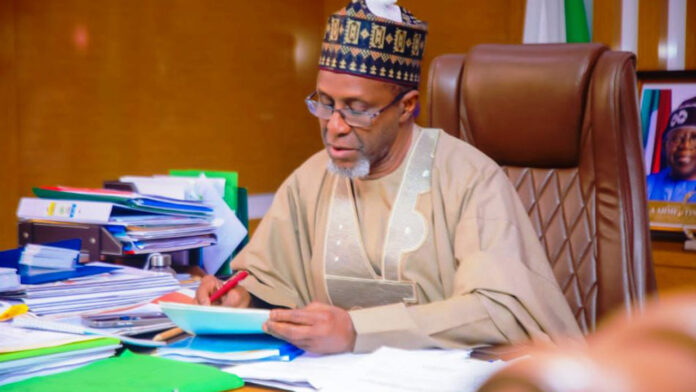
Minister of Environment, Balarabe Abbas Lawal, has warned that climate change impacts are intensifying globally with extreme weather events, saying urgent action is needed to prevent uncontrollable loss of livelihoods and biodiversity.
Lawal stated this at a 3-day Peer Learning Forum on National Adaptation Plan Process in Conflict-Affected Countries, which ended recently in Abuja. The Permanent Secretary, Federal Ministry of Environment, Salihu Aminu Usman, represented him.
Usman said Nigeria has committed to reducing greenhouse gas emissions by 47 per cent conditionally with international support. He noted that while Nigeria’s Nationally Determined Contributions focus on mitigation, the country has also advanced adaptation through its National Adaptation Plan, now in the final validation stage.
“Adapting to climate change means taking action to prepare for and adjust to both the current effects of climate change and the predicted impacts in the future,” Usman said.
The forum was co-hosted by the Federal Ministry of Environment and the NAP Global Network. Delegates from Burkina Faso, Cameroon, Central African Republic, Chad, Liberia, Mali, Somalia, South Sudan and other conflict-affected nations attended.
Lawal said conflict-sensitivity and peacebuilding were central to Nigeria’s NAP process. He linked climate change to farmer-herder crises, cattle rustling and banditry, warning that ignoring adaptation in fragile contexts would undermine peacebuilding.
“Links between climate change and fragility mean that it would be a mistake to ignore medium- and long-term adaptation needs in these peacebuilding contexts. Conflict-affected states also need to adapt to the impacts of climate,” the minister said.
He added that climate change and conflict compound each other, and adaptation could break the cycle by improving social wellbeing and addressing root causes.
Lawal commended President Bola Tinubu’s administration for creating a conducive environment for the forum and thanked the NAP Global Network for technical and financial support.
Director of Climate Change, Dr Inionong Abiola-Awe, said extreme weather and climate variability are impacting infrastructure, biodiversity and security in Nigeria.
“Nigeria has validated its National Adaptation Plan as a means of identifying medium to long-term adaptation needs, developing and implementing strategies and programmes to address those needs in a participatory and fully transparent approach. Nigeria has also integrated conflict-sensitivity and peacebuilding issues into its NAP,” she said.
Director of Nature for Resilience, International Institute for Sustainable Development and NAP Global Network Secretariat, Alec Crawford, said climate risks now unfold alongside insecurity, displacement and pressure on institutions.
“NAP processes are often framed as technical exercises. But they are essential vehicles for countries to identify and address medium- and long-term priorities for adapting to climate change in an inclusive and effective manner,” said Crawford.
He commended Nigeria for hosting the forum and acknowledged financial support from the Government of Ireland.
Established under the UNFCCC Cancun Adaptation Framework in 2010, the NAP process helps developing countries identify medium and long-term adaptation needs. Nigeria’s NAP, supported by the Green Climate Fund, builds on the earlier National Adaptation Strategy and Plan of Action.