


- Treat every victim of abduction equally regardless of social status- Experts
By Francis Ekeh, Gbolahan Jamiu, (Ibadan) and Ethel Madu, (Owerri)
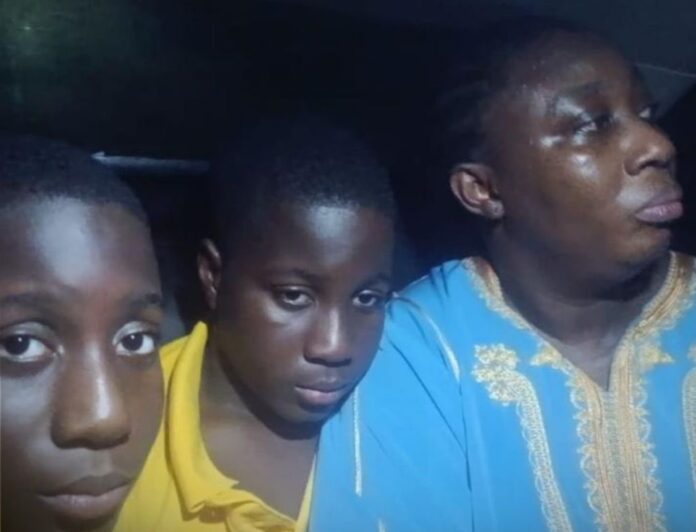
The news of the release of Mrs. Busayo Adegoke John-Paul, sister of the former Minister of Power, Chief Adebayo Adelabu, and her twin children, who were kidnapped last week was yesterday received with mixed feelings across the country.
While some people hailed the police for the prompt action leading to their release, others condemned the action of ignoring over 47 school teachers and pupils kidnapped in the same Oyo state weeks ago as well as others in various parts of the country being held captive by kidnappers with no hope of their regaining freedom soon.
A senior police source told newsmen on Sunday in Ibadan, the Oyo State capital, that the Adegoke family members were rescued on Saturday night.
Mrs. John-Paul, who is a biological sister to the former minister of Power, Chief Adebayo Adelabu, was kidnapped alongside her 12-year-old twin sons at Elewura-Challenge in Ibadan South West Local Government Area of the state.
The abduction was reportedly carried out by some armed attackers who were said to have trailed the car conveying the victims from their home before flagging them down at 7.30 am at the scene of the incident.
Reacting to the development, a renowned journalist Mr. Edetaen Ojo wondered why the police was quick to get the woman and her twin sons released but ignore other ones still in captivity
“Were the security operatives able to rescue this family because they’re not in the forest or because they’re from an influential home and not held by bandits?
“I would have thought that it would have been easier to track and find the dozens of teachers and students kidnapped weeks ago than the three people who were kidnapped only a few days ago, but here we are”, he said
An Akure based legal practitioner and human rights activist, Mr. Danjuma Ismaila Durojayi said the contrast between the two key kidnapping incidents in Oyo state was difficult to ignore, stressing that every victim of abduction deserves the same urgency, professionalism, and commitment from security agencies, regardless of social status, influence, or public visibility.
“While it is important to welcome and commend any successful rescue operation, it is equally legitimate to ask why many other victims – including school children, teachers, farmers, commuters, and ordinary citizens – remain in captivity for weeks or months without similar outcomes”.
According to him, the real measure of success is not the rescue of a few high-profile victims but the ability of the state to provide security and effective response for all citizens. “Equal protection under the law should not depend on who the victim is or who they know”, he explained.
Also reacting was a public affairs analyst, Ms. Juliana Francis, who said insecurity in Nigeria continues to escalate because some people in government are involved, and that, that was part of the reason terrorists keep infiltrating military camps
Her words: “The DSS and the Police can track the videos of content creators and monitor the phones of journalists to arrest them for making or sharing perceived “offensive” videos or comments about politicians or influential Nigerians, yet they cannot track terrorists who openly show their faces in videos and flaunt ransom money. What happened to using coordinates and other technologies to pinpoint locations?”, she asked
In the same vein, Merije James accused security agencies of knowing those behind kidnapping and other forms of insecurity in Nigeria and urged them to brace up to the challenge
“Our security agencies can’t say that they don’t know the financiers of this terrorism or banditry. But because some top officials are allegedly involved, their hands have become tied. But one day na one day monkey go go market…..e no go return. Before the DSS was unbundled during the time of NSO you hardly know them but today they wear uniforms openly and parade themselves everywhere”, she stated
In his own reaction Mr. Okechukwu Nwanguma , a human rights activist and Executive Director, Rule of Law and Accountability Advocacy Centre (RULAAC) in a statement he issued on Sunday in Owerri, and made available to us, condemned the lopsided action of the police and called on them and other security agencies to speed up action to release other Nigerians held in captivity across the country
The statement reads: “The reported rescue of the sister of Nigeria’s Minister of Power, Adebayo Adelabu, and her twin children is welcome news. Every successful rescue operation deserves commendation, and every life saved is valuable.
“However, the speed and apparent efficiency with which this operation was carried out have inevitably raised difficult questions in the minds of many Nigerians.
“Why are some kidnapping victims rescued within days while others remain in captivity for weeks, months, or indefinitely? Why do countless schoolchildren, teachers, farmers, traders, commuters, and ordinary citizens disappear into the hands of criminals without receiving the same level of urgency and attention?
“These are not questions borne out of cynicism. They are questions rooted in a legitimate concern about equality, justice, and the responsibilities of the state.
“The Nigerian Constitution guarantees equal protection under the law. Security agencies are obligated to protect all citizens without discrimination based on social status, political influence, wealth, ethnicity, religion, or personal connections. Yet public perception increasingly suggests that some victims attract extraordinary efforts while others become mere statistics.
“This perception is dangerous because public confidence in security institutions depends not only on their effectiveness but also on their fairness.
“Many Nigerians still remember the mass abductions of schoolchildren and students across different parts of the country. Families have endured prolonged agony while waiting for news of their loved ones. In numerous cases, rescue efforts appeared slow, uncertain, or dependent on negotiations and ransom payments. Some victims have remained in captivity long after public attention faded.
“When a high-profile victim is rescued quickly while others remain forgotten, citizens naturally ask whether influence and connections play a role in determining the intensity of official response. These questions deserve honest answers.
“Equally troubling are persistent concerns about the state’s capacity and willingness to deploy technology and intelligence resources consistently. Security agencies have demonstrated remarkable ability to track activists, journalists, critics, and social media users accused of offending powerful interests. Yet armed groups and kidnappers often circulate videos, make ransom demands, move across territories, and maintain communication networks without being similarly tracked and dismantled.
“Citizens are entitled to ask why technologies used to monitor dissent cannot be deployed with equal vigour against violent criminals. They are entitled to ask why kidnappers continue to operate with apparent confidence despite the vast security architecture funded by taxpayers.
“The issue is not whether influential persons deserve protection. They do. The issue is whether ordinary Nigerians deserve any less.
“A society governed by the rule of law cannot operate on the principle that some lives matter more than others. Security cannot be a privilege reserved for the politically connected or socially prominent. The true measure of a nation’s commitment to justice is not how it protects the powerful but how it protects the vulnerable and the ordinary citizen.
“Government officials and security agencies should view these public questions not as attacks but as expressions of legitimate concern. Nigerians are asking for a system where every victim receives the same urgency, professionalism, and commitment regardless of status.
“The success of a rescue operation should not be judged solely by the identity of those rescued. Rather, it should be assessed by whether the same capability, determination, and resources are consistently deployed on behalf of all citizens.
“Until every Nigerian can expect equal protection and equal concern from the state, questions about selective efficiency and unequal treatment will continue to arise”, Nwanguma said.