

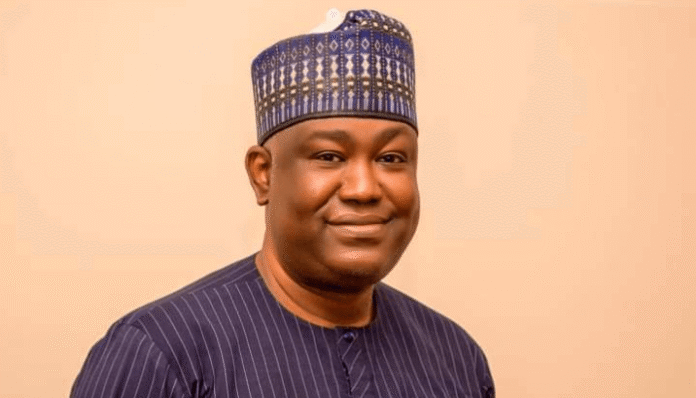

The Federal High Court in Abuja has fixed July 14 to hear a suit filed by Accord Party chieftain, Dr. Gbenga Olawepo-Hashim, seeking an order to compel the party to submit his name to the Independent National Electoral Commission, INEC, as its presidential candidate for the 2027 election.
Olawepo-Hashim is challenging the party’s refusal to recognise him as its candidate despite claiming victory in the primary election held on May 30, 2026.
In the suit filed against the Accord Party and INEC, he argued that the party’s failure to upload his name to INEC’s nomination portal violates the Electoral Act 2026, the Constitution, and INEC’s guidelines on candidate nomination.
He is seeking a declaration that the party’s action breaches Section 86 of the Electoral Act 2026 and relevant INEC guidelines. He also wants the court to order the Accord Party to immediately forward his name to INEC as its presidential candidate.
Alternatively, he is asking the court to direct the party to conduct a fresh presidential primary in which he would be allowed to participate if it refuses to submit his name.
In an affidavit, Olawepo-Hashim said he is a registered and financially up-to-date member of the Accord Party.
He disclosed that he funded the party’s electronic membership registration with N7 million and paid the N50 million nomination fee for the presidential primary.
According to him, he was the sole aspirant and won the primary which was monitored by INEC officials in compliance with the Electoral Act.
He, however, alleged that despite his victory, the party failed to forward his name to INEC and did not issue aspirants with guidelines for the primary, though he proceeded based on assurances from the party’s national leadership.
Counsel to the plaintiff, Henry Akunebu, SAN, argued that political parties must comply with the Electoral Act, their constitutions and INEC regulations in nominating candidates, urging the court to uphold internal party democracy by granting all the reliefs sought.
During Thursday’s proceedings, Justice Mohammed Umar granted INEC’s request for an extension of time to regularise its processes. Counsel to the commission, H.S. Danjuma, said he was recently briefed and needed time to file a counter-affidavit and written address.
Although counsel to the Accord Party, Egasi Olusesi, did not oppose the request, Akunebu urged the court to bar INEC from further participation, arguing that the commission failed to respond within the period prescribed under the Practice Directions for pre-election matters.
In a brief ruling, Justice Umar adjourned the case to July 14 for substantive hearing.
The outcome is expected to provide judicial clarity on the application of the Electoral Act 2026 and define the role of the courts in protecting internal democracy within political parties ahead of the 2027 polls.