

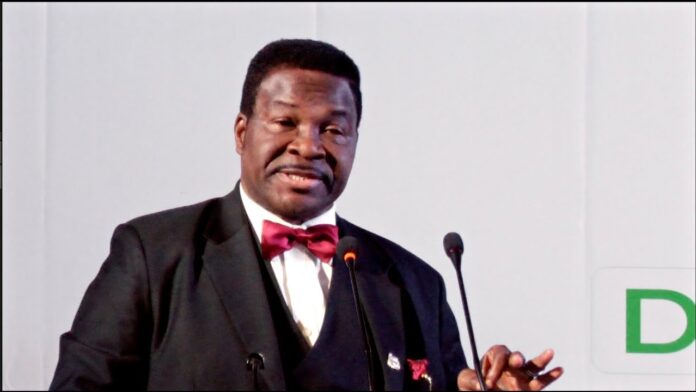

by Ozakhome
Introduction
Last week’s installment examined the meaning and nature of declarations and the principles guiding their grant. That theme is continued this week, after which we consider evidentiary issues such as the general burden and standard of proof in declaratory actions and the powers of the court declarations. Enjoy.
Principles Guiding the Grant of Declaration (Continues)
There are also hypothetical situations where the courts are expected to give advisory opinions for the guidance of a future conduct of a governmental authority and not in the course of actual litigation. However, in common law jurisdictions the courts no longer entertain such cases where they are to give advisory opinion but rather take up cases of actual controversy.
A court will not go on journey of its own just to discover and understand issues placed before it. Such issues must be real and not merely theoretical and the Plaintiff must have sufficient interest to seek a declaration in relations to them.
In BISIMILLAHI Vs. YAGBA-EAST L.G (2003) 4 NWLR (PT. 810) @ 329 C.A. ESP. AT R. 4, the court had this to say on declaration:
“A declaration is granted only where an applicant is able to show that he has a legal right which should be protected by the declaration. Although the power of the court to make a binding declaration of right is a discretionary one, the applicant must establish a right in relation to which the declaration can be made”
The court went further to enumerate the principles guiding the grant or refusal of declaratory orders as follows:
A declaration will be granted even when the relief has been rendered unnecessary by the lapse of time for the action to be tried, if at the time the action was brought, it raised substantial issues of law;
The claim to which the declaratory relief relates must be substantial that is, the applicant must be entitled to relief in the fullest meaning of the word;
A declaration will only be granted where there is a breach;
The applicant must establish a right in relation to which the declaration can be made, hence the court will not generally decide hypothetical questions;
The reliefs claimed must be something which it would not be unlawful or unconstitutional or inequitable upon which the court exercised its jurisdiction.
In addition to the above principles enumerated by the court, a declaration cannot be granted against an officer of the state where the appropriate remedy is by procedure of petition of right.
General Burden and Standard of Proof in Declaratory Actions
Under Section 146 of the Evidence Act:
“When the question is whether any person is owner of anything of which he is shown to be in possession, the burden of proving that he is not the owner is on the person who affirms that he is not the owners”
This also applies to declaratory actions whereby a Plaintiff who brings an action for declaration asserting certain facts is expected to prove such facts. Therefore, the general burden of every case is on the Plaintiff who asserts a particular fact. It is his duty to prove the facts that he asserts and to show that the declaratory order should be in his favour.
The Plaintiff ought not to rely on the weakness of the Defendant’s case as it is he (the Plaintiff) that has asserted a fact which he has brought to court that is expected to prove such fact. The only instance where the burden of proving an asserted fact shifts from the Plaintiff to the Defendant is where the Defendant admits the facts asserted or denied it. In such a vase, there is then an evidential burden on the Defendant to prove the fact.
O this, see MAKANJUOLA VS. AJILORE (2001) 12 NWLR (PT. 727) @ 416, where the court held as follows:
“Although the general burden or onus of proof is usually on the Plaintiff, as he who asserts, to start or begin a case by adducing evidence to prove or establish his case as per the averments in his case per the averments in his pleadings, an exception is that the burden or onus can be shifted and be cast on the Defendant who admits the Plaintiff’s claim as pleaded and who will then be called to begin by calling evidence. In the instant case, the principle applies to the appellants as the persons who would have failed if no evidence was called at all based on the issues joined after the close of pleadings.”
Still on the issue of burden of proof in civil cases involving declarations, the court further held as follows:
“Under the general burden of proof, the ultimate burden of establishing a case is as disclosed and fixed by the pleadings. Then, there is the sense of introducing evidence which is evidential burden. The burden rests upon the person who substantially asserts the affirmative before evidence is gone into. After evidence is on him who would lose if no further evidence is called.”
From the foregoing, it can be said that where one party asserts a fact which is not specifically denied by the other, the court will presume its truth in the absence of contradictory evidence. Even where facts have been disclosed in the pleadings, it is still incumbent on the parties to prove such facts by adducing evidence to that effect. This is known as the evidential burden.
Therefore, the burden of first proving the existence or non-existence of a fact lies on the party against whom the judgment of the court would be given if no evidence were produced on either side, regard being had to any presumption that may arise on the pleadings. See Section 137(1) of the Evidence Act.
The Plaintiff must satisfy the court with very strong and cogent reasons why he believes that he should get the relief in his favour as it is a discretionary one given by the courts. The court also in exercising its discretion must do so judicially and judiciously.
Power of Court to Grant Declarations
Most Civil Procedure Rules of the various states of the Federal Republic of Nigeria derive their powers to make declaratory orders from Order 25 Rule 5 of the Supreme Court Rules of England of 1883 which provides as follows:
“No action or proceeding shall be open to objection, on the ground that a merely declaratory judgment or order is sought thereby and the court may make binding declarations of right whether any consequential relief is or could be claimed or not.”
The above rule was enshrined in the High Court (Civil Procedure) Laws of the Western States of Ogun, Ondo and Oyo which was also applicable in Bendel and also the Lagos High Court Rules. There was no express provision as to the above rule in the Northern and Eastern states, but it could be inferred that the rule was incorporated into these regions by their reference to the practice and procedure applicable in the High Court of Justice of England.
Lord Sterndale, expatiating on the wide powers of the court to make declaratory orders in the case of BHANSON VS. RADCLIFF UDC (1922) 32 CH. 490 @ 507, observed as follows:
“In my opinion under Order 25 Rule 5 the powers of the court to make a declaration, where it is a question of defining the rights of two parties is almost unlimited; and I might say only limited by its own discretion. The discretion should, of course, be exercised judicially but it seems to me that the discretion is very wide.”
The above observation by Lord Sterndale shows that the power of the court to grant declarations is a discretionary one and not a mandatory one. The court is not bound to grant it even if it has the jurisdiction to do so as long as it can give justiciable reason for it not granting the relief. The court can refuse the grant on grounds that the Plaintiff has no sufficient interest, it is unconstitutional, the issue is purely political or purely academic etc. But the court in exercising such powers must do so with caution so as not to abuse the powers given to them. They should exercise such discretion judiciously and no frivolously.
It will be recalled that the Nigerian Courts were precluded from entertaining certain matters such as the chieftaincy matters by the various state legislations before the 1979 constitution. But lately, the courts are generally called upon to make declarations under customary law regarding claims to chieftaincy title or other disputes arising therefrom.
The powers of the court to make declaratory orders was further emphasized in the case of DISU VS. AJILOWURA (2001) 4 NWLR (PT. 702) 76 C.A, where the court in ratio 4 said as follows:
“By Order 23 Rule 5 of the Lagos State High Court (Civil Procedure) Rules, 1994, no action or proceeding shall be open to objection on the ground that a merely declaratory judgment or order is sought thereby, and the court may make binding declarations of right whether any consequential relief is or could be claimed or not.”
See also paragraphs F – G of the leading judgment delivered by Galadima J.C.A. where he read that:
“The court or a Judge in chambers may order any pleading to be struck out on the ground that it discloses no reasonable cause of action or answer, and in any such case or in case of the action or defence being shown by the pleadings to be frivolous or vexatious, the court or a judge in chambers may order the action to be stayed or dismissed or judgment to be entered as may be just.” (To be continued).
THOUGHTS FOR THE WEEK
“The overreach of the judiciary can be attributed to, one, the inability of the executive to deliver; and two, the tendency to issue judicial pronouncements for national good. The second element is dangerous because that’s the function of the government”. -Kapil Sibal.