
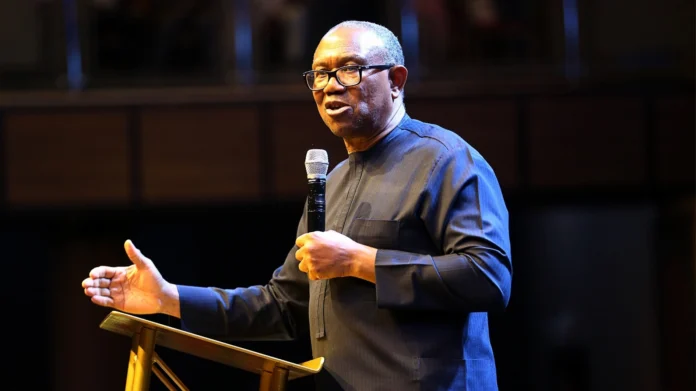

Presidential candidate of the Nigeria Democratic Congress (NDC), Peter Obi, has used the occasion of Father’s Day to reflect on Nigeria’s past and present, expressing concern over what he described as a steady decline in national unity, security, and institutional strength.
In a reflective message marking the day, Obi said he found himself revisiting difficult questions about the country’s trajectory, asking whether Nigeria’s current challenges are imposed or self-inflicted.
Recalling his upbringing and early years, he noted that Nigeria was once more united, with fewer divisions along religious, ethnic, or regional lines. He described a period in which students, professionals, and citizens interacted freely and identified primarily as Nigerians rather than as members of distinct identity groups.
Obi also reflected on his business and professional experiences, stating that trust and competence once formed the basis of partnerships, while the national currency held stronger value and Nigerians enjoyed greater respect abroad.
He further referenced a time when movement across the country was safer and more seamless, with improved security and stronger public confidence in national institutions. According to him, Nigeria’s armed forces and police were also more widely recognized for their contributions to international peacekeeping and stability.
The NDC candidate expressed concern that many of these gains have eroded, citing growing insecurity, weakened national cohesion, declining opportunities for young people, and reduced public confidence in governance and infrastructure.
He also raised concerns about Nigeria’s perceived diminishing influence in global affairs, pointing to recent international engagements such as the G7 summit, where he noted that countries like Egypt and Kenya were invited while Nigeria was absent.
Despite his concerns, Obi stressed that lamentation alone is not enough, urging Nigerians—especially fathers—to take responsibility for the future by promoting unity and accountability.
He called for active civic participation, including obtaining Permanent Voter Cards (PVCs), voting responsibly, and protecting the integrity of the electoral process, insisting that meaningful change can only come through collective civic action and responsible leadership choices.