

From Rhoda Godwin, Yenagoa
The recent death of a pregnant woman during childbirth under the care of a Traditional Birth Attendant (TBA) has once again raised difficult questions about maternal healthcare in Nigeria.
According to reports, the woman died while attempting to be delivered of a baby weighing about 5.8 kilogrammes.
Health experts say such pregnancies often require close monitoring and, in many cases, specialist medical interventions. The tragedy sparked public outrage and renewed calls for stricter regulations of traditional birth practices.
At a stakeholders’ meeting organised by the Bayelsa State Primary Health Care Board shortly after the incident, some participants argued that Traditional Birth Attendants should be abolished altogether, insisting that only skilled healthcare professionals in properly equipped hospitals should handle childbirths.
Yet, others cautioned against simplistic solutions. They argued that while maternal deaths must be prevented, the realities faced by many rural women cannot be ignored. In communities where hospitals are distant, transportation is unreliable, and healthcare costs remain a burden, TBAs often serve as the first point of contact for expectant mothers.
This raises an important question: Why do many women still rely on TBAs, despite the risks often associated with unskilled childbirth?
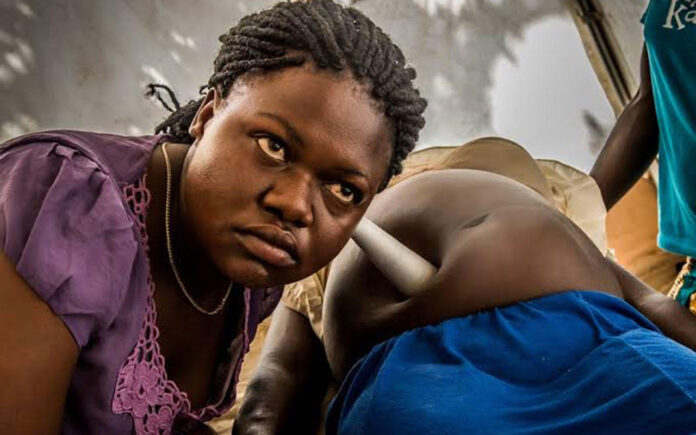
In Ogu Community, Yenagoa Local Government Area of Bayelsa State, the answer may lie in the life and work of a woman popularly known as Mama Torvinie.
For more than three decades,Mama Torvinie has assisted pregnant women through childbirths. Within her modest maternity facility, generations of mothers speak of the reassurance, guidance, and emotional support she provides.
To many families, she is not simply a birth attendant. She is a trusted figure who understands their language, culture, and circumstances.
But unlike the stereotypical image often associated with TBAs, Mama Torvinie’s story is one of adaptation and learning.
She began her professional life as a trained teacher before eventually moving into maternal care, a vocation she inherited from her mother.
Growing up, she watched her mother assist women during childbirths in communities where modern healthcare facilities were scarce or difficult to reach. Over time, what began as a family tradition evolved into a personal calling.
Recognising the changing realities of healthcare, she decided that experience alone was not enough.
”I was a trained teacher before I went into this work. I inherited it from my mother, but I wanted to learn more and acquire proper education,” she explained.
Determined to strengthen her knowledge, she enrolled in nursing school in Tombia, where she received formal training in maternal and child healthcare.
That decision fundamentally changed her approach.
Instead of viewing traditional and modern medicine as competing systems, she came to see them as partners capable of serving the same goal: saving lives.
Today, one of her strongest messages to pregnant women is the importance of antenatal care.
Every woman who visits her facility is encouraged to undergo scans and routine medical checks.
”I always advise them to go for a scan, so we can know the position of the baby, and the condition of the mother,” she said.
Her emphasis on diagnosis and early detection reflects a broader lesson in maternal healthcare: identifying risks before labour begins can mean the difference between life and death.
This leads to another critical question: What challenges do pregnant women face in accessing hospitals?
For many women in Bayelsa’s riverine and rural communities, reaching a hospital is not always straightforward.
Distance remains a major obstacle. Some communities are separated by rivers and creeks, requiring lengthy boat journeys before reaching healthcare facilities. During emergencies, these delays can prove fatal.
Cost is another factor
Although public healthcare services exist, transportation expenses, medications, laboratory tests, and other associated costs often discourage women from seeking hospital care.
Beyond finances and geography lies another issue — trust
Many women feel more comfortable with caregivers they know personally. TBAs often live within the community, remain accessible around the clock, and provide emotional support that extends beyond childbirth.
For expectant mothers facing uncertainty and anxiety, such relationships matter.
Yet, healthcare experts warn that trust alone cannot guarantee safe delivery outcomes.
Complications such as obstructed labour, excessive bleeding, hypertension, and fetal distress require medical interventions that most TBAs are not equipped to provide.
This is where Mama Torvinie’s approach offers an important perspective. She insists that knowing when not to handle a case is one of the most important skills a birth attendant can possess.
“I don’t struggle with difficult cases. If I see any complications, I send them to FMC,” she said.
By FMC, she means the Federal Medical Centre in Yenagoa, one of the state’s leading referral hospitals.
Her referral culture has become central to her practice
Whenever she identifies danger signs, abnormal scan results or conditions beyond her capabilities, she directs patients to the hospital for specialist care rather than attempting risky deliveries herself.
This raises another important question: How can trained TBAs complement modern healthcare?
For advocates of collaboration, the answer lies precisely in referral systems like the one Mama Torvinie has adopted.
Rather than functioning as replacements for hospitals, trained TBAs can serve as community-based health partners who identify pregnancies early, encourage antenatal care, and refer complicated cases before emergencies occur.
Such a model recognises an important reality: many women will continue to approach TBAs first.
The challenge, therefore, is ensuring that these initial contacts become pathways into the formal healthcare system, rather than barriers to it.
According to Mama Torvinie, more than 200 women have delivered successfully under her care over the years.
Among those were, at least, ten breech presentations, cases in which babies are positioned feet-first or bottom-first, instead of head-first.
While such deliveries can be dangerous, she insists that careful monitoring and timely referrals have been critical to managing risks.
In more than thirty years of practice, she says she has recorded only one stillbirth.
Whether one agrees with the TBA model or not, her experience highlights the potential value of training, supervision and accountability.
It also points to another policy question: What lessons can policymakers learn from communities where TBAs and hospitals work together?
Public health experts generally agree that skilled birth attendance remains the safest option for delivery.
However, healthcare policies are most effective when they account for local realities.
The continued reliance on TBAs suggests that gaps still exist between healthcare facilities and the communities they are intended to serve.
Rather than focusing exclusively on prohibition, some stakeholders believe that greater attention should be paid to integration.
This could involve structured training programmes, referral partnerships, regular monitoring, and clear guidelines defining the limits of TBA practice.
Such collaboration would not replace hospitals. Instead, it would create additional channels through which women can access professional care.
Mama Torvinie believes this approach deserves serious consideration.
She says government recognition of responsible TBAs remains limited despite decades of community service.
According to her, health officials occasionally visit her facility to ensure compliance with public health requirements, including HIV screening, and other maternal health protocols.
While she welcomes such oversight, she believes more meaningful engagement is needed.
”The government does not recognise us,” she lamented.
Her concern extends beyond personal recognition. She argues that experienced TBAs, who understand their limitations and maintain strong referral relationships, can contribute to safer maternal healthcare outcomes.
Whether policymakers agree or disagree remains a subject of ongoing debate.
What is undeniable, however, is the urgency of reducing maternal deaths.
Nigeria continues to record one of the world’s highest maternal mortality rates, with many deaths linked to delays in seeking care, delays in reaching facilities, and delays in receiving treatments.
Addressing these challenges will require more than policy declarations. It will require investments in rural healthcare infrastructure, improved transportation systems, stronger referral networks, public education, and community engagement.
Most importantly, it will require solutions rooted in the realities of the women most affected.
Back in Ogu Community, the national debate over TBAs feels distant from the everyday concerns of expectant mothers seeking care.
For Mama Torvinie, the issue is not whether childbirth belongs exclusively to tradition or modern medicine. It is about ensuring that mothers survive, and babies are born healthy.
Every day, women continue to visit her facility for guidance and support. Some will eventually deliver there. Others will be referred to hospitals when specialised care is required.
In her view, there is no contradiction in that approach. And perhaps, that is the most important lesson emerging from her story.
The future of maternal healthcare may not lie in choosing between traditional and modern systems. It may lie in building stronger bridges between them — bridges that prioritise timely referrals, community trust, and professional medical care.
This because when a woman’s life is at stake, the goal should never be to defend one system against another. The goal should always be to save lives.