


By Ahmed Akanbi
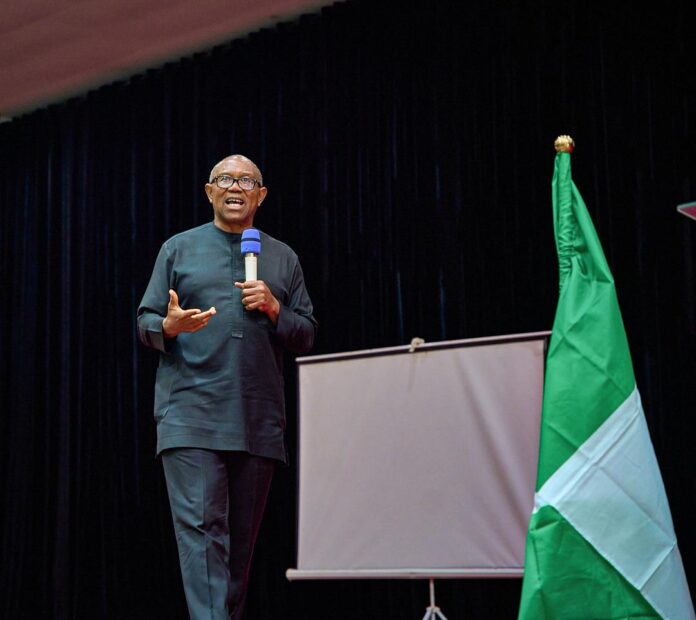
The 2027 presidential candidate of the Nigeria Democratic Congress, NDC, Peter Obi, has raised concerns over what he described as excessive borrowing and lack of transparency in public finance management under President Bola Ahmed Tinubu’s administration.
In a statement posted on his X account Tuesday, Obi alleged that Nigeria’s total public debt had risen to about N200 trillion under the current administration, an increase of more than N100 trillion within three years.
According to the former Anambra State governor, the pace of debt accumulation under the Tinubu administration exceeds that of former President Muhammadu Buhari, which he said accumulated about N49 trillion in debt over eight years.
Obi expressed concern that while Nigerians continue to grapple with economic hardship, the government has continued to borrow heavily without providing sufficient details on how the funds are being utilized.
Citing figures from the Federation’s Budget Office, Obi claimed that the federal government borrowed N11.89 trillion between January and September 2025.
He said the amount exceeded the planned borrowing target of N10.34 trillion by about N1.54 trillion.
He argued that in a transparent and accountable system, such a deviation from the approved borrowing plan would warrant detailed explanations from relevant government agencies.
The former presidential candidate further alleged that only N3.10 trillion of the borrowed funds was directed toward capital expenditure during the same period.
He said the amount represented 17.66 per cent of the N17.58 trillion budgeted for capital projects.
According to him, this left a funding gap of approximately N14.48 trillion, accounting for more than 82 per cent of the planned capital expenditure.
Obi described the situation as troubling, insisting that there had been no adequate explanation regarding the deployment of the remaining funds.
“The question Nigerians are asking and deserve answers to is what happened to the balance,” he said, while calling on the government to provide a detailed account of how the borrowed funds were spent.
He maintained that accountability and prudent management of public resources remain essential to addressing Nigeria’s economic challenges and achieving sustainable development.