
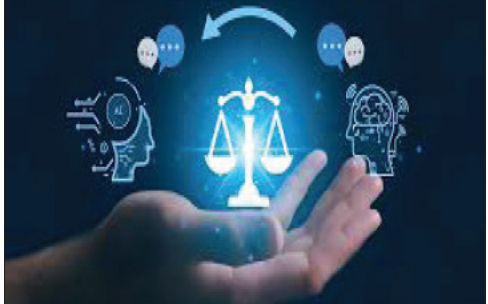

This concluding part of our treatise examines the human rights challenges
posed by AI such as the right to privacy; equity/non-discrimination; freedom
of expression/assembly; right to due process. It also explores the legal
responses to AI in Europe, the US, China, etc. It concludes with the
situation in Nigeria, by wondering whether our is a case of exclusion by
design and when identity becomes a barrier. Enjoy.
Key Human Rights Challenges Posed By AI
Artificial Intelligence (AI) intersects with human rights in complex ways,
often creating tensions between innovation and the protection of
fundamental freedoms. While AI systems can promote accessibility,
improve healthcare, and enhance efficiency in governance, they can also
entrench existing inequalities, violate privacy, suppress dissent, and
deprive individuals of due process. This section outlines four critical human
rights areas most impacted by AI: privacy, non-discrimination, freedom of
expression, and the right to an effective remedy.
The Right to Privacy and Data Protection
Privacy, enshrined in Article 12 of the UDHR and Article 17 of the ICCPR,
is among the most directly challenged rights in the age of AI. AI systems
rely heavily on the collection, analysis, and inference of massive amounts
of personal data. Through processes such as data mining, profiling, and
predictive analytics, individuals’ behaviors, preferences, and even emotions
can be monitored, predicted, and manipulated.
A key area of concern is the deployment of facial recognition technologies
(FRT), particularly in public surveillance. In countries like China, facial
recognition is widely used for social control purposes; in liberal
democracies, it is increasingly adopted by law enforcement, often without
sufficient oversight. The European Court of Human Rights has ruled that
surveillance practices without safeguards against abuse constitute a
violation of Article 8 of the ECHR.
Page 2 of 7
Furthermore, AI’s ability to generate “derived data”—inferences about
individuals’ health, beliefs, or sexual orientation—raises concerns that go
beyond conventional notions of privacy. These inferences, often made
without consent or transparency, can result in stigmatization and
discrimination.
The Right to Equality and Non-Discrimination
AI systems are often marketed as neutral and objective. However, they are
trained on datasets that reflect historical and societal biases, and thus risk
perpetuating and amplifying discrimination. This threatens the right to
equality and non-discrimination, protected by Articles 2 and 7 of the UDHR
and Article 26 of the ICCPR.
Freedom of Expression and Assembly
AI is increasingly used to moderate online content, either through
automated filters or human-machine hybrid systems. While these systems
aim to reduce hate speech and misinformation, they also risk over-
censorship, threatening the right to freedom of expression and assembly
(Article 19 and 20 of the UDHR).
AI-driven moderation can suppress legitimate dissent, satire, or political
speech—especially when content is flagged based on opaque and
proprietary standards. For example, during protest movements, authorities
have used AI surveillance and social media monitoring to track, intimidate,
and detain activists.
Moreover, recommendation algorithms on platforms like YouTube or
Facebook have been shown to amplify polarizing and extremist content to
maximize engagement—contributing to disinformation and social
fragmentation. These developments challenge not only freedom of
expression, but the very integrity of democratic discourse.
The Right to Due Process and Effective Remedy
A foundational principle of the rule of law is that individuals must have the
right to challenge decisions that affect their rights. This is codified in Article
8 of the UDHR and Article 2(3) of the ICCPR. However, the deployment of
Page 3 of 7
AI in decision-making—whether in criminal sentencing, immigration, or
welfare benefits—often undermines this principle. Automated decision-
making systems can be inscrutable (“black boxes”), making it difficult for
affected individuals to understand the basis of decisions, challenge errors,
or seek redress. When algorithms are protected as trade secrets,
transparency is further compromised.
Legal Responses To AI: National And International Approaches
European Union (EU)
The EU is at the forefront of AI regulation through its proposed Artificial
Intelligence Act (AIA), introduced in 2021. The AIA adopts a risk-based
approach, classifying AI systems into unacceptable, high-risk, limited-risk,
and minimal-risk categories.
United States
The U.S. has taken a more market-driven and decentralized approach to AI
governance. Federal efforts include:
* The Blueprint for an AI Bill of Rights (2022), which outlines principles such
as safe and effective systems, algorithmic discrimination protections, and
data privacy,
* Sector-specific guidance from agencies like the Federal Trade
Commission (FTC) and the Food and Drug Administration (FDA).
China
China integrates AI regulation within a broader framework of state
surveillance and political control. Key regulations include the Personal
Information Protection Law (PIPL) and Algorithmic Recommendation
Management Rules (2022), which require transparency in recommendation
engines and allow users to opt out.
International and Regional Instruments
UNESCO’s Recommendation on the Ethics of AI (2021)
UNESCO’s landmark non-binding recommendation sets out global ethical
norms for AI, including principles of accountability, transparency, fairness,
non-discrimination, and environmental sustainability. It urges member
states to establish legal frameworks, ethical impact assessments, and
inclusive governance mechanisms.
Page 4 of 7
Council of Europe
The Council is drafting a binding international convention on AI, human
rights, democracy, and the rule of law. This would be the first legally
binding treaty on AI governance with a human rights focus. The treaty aims
to complement the European Convention on Human Rights and provide
judicial redress mechanisms for violations.
African Union
The African Union has initiated discussions on an AI continental strategy,
focusing on data sovereignty, inclusivity, and capacity building. While
regulatory developments are nascent, countries like Kenya, Nigeria, and
South Africa are exploring AI frameworks that align with local contexts and
human-centered development goals.
United Nations
The UN’s High-Level Advisory Body on AI, established in 2023, is tasked
with developing a Global AI Governance Framework. Its priorities include
mitigating harms, enabling inclusive access, and fostering global
cooperation. However, enforcement remains a challenge due to state
sovereignty and divergent political interests.
Challenges in Global AI Regulation
Despite growing momentum for AI regulation, several challenges persist:
Jurisdictional Fragmentation: Differing legal cultures and priorities make
international harmonization difficult. For example, the EU emphasizes
human rights, the U.S. prioritizes innovation, and China focuses on state
control.
Regulatory Lag: The law struggles to keep pace with rapid advances in AI
capabilities, especially in generative AI and autonomous systems.
Exclusion By Design: When Identity Becomes A Barrier
The central irony of Nigeria’s digital identity architecture is that it
often excludes those it was intended to include. Many Nigerians particularly
those in remote or underserved regions lack access to the infrastructure
necessary for NIN registration. Others face language barriers, physical
inaccessibility, or the sheer economic burden of traveling to registration
centres. These exclusionary practices turn identity from a right into a
Page 5 of 7
privilege, doled out only to those who can navigate a complex and
centralised system.
This problem is exacerbated by the uncritical integration of digital identity
into essential services. When NIN becomes the gateway to healthcare,
banking, education, and welfare, it also becomes a weapon of exclusion.
Individuals without it are effectively rendered invisible to the state, unable to
assert their rights or access services. In many ways, this constitutes a form
of structural violence perpetuated not by malice, but by institutional neglect.
The NDPA 2023 attempts to confront this problem by empowering the
NDPC to issue binding guidelines and orders to both public and private
data controllers. The Commission is authorised to mandate equitable
access and fairness in digital platforms, including those tied to identity
systems. However, the law is yet to address the design of accessibility,
including provisions for persons with disabilities, rural dwellers, and
indigenous communities. Until digital inclusion is made a legislative priority,
not just a technical aspiration, the architecture of exclusion will persist.
Conclusion: Charting an Ethical and Inclusive Digital Future for
Nigeria
As Nigeria stands at the crossroads of digital transformation, the imperative
to embed ethics, human dignity, and inclusive governance into every layer
of its technological ecosystem has never been more urgent. This work has
illuminated the profound ethical, legal, and societal implications of
deploying artificial intelligence, digital identity systems, and data-driven
governance in a complex socio-political environment. From the conceptual
underpinnings of human rights to the operational challenges of data
sovereignty and AI oversight, the picture that emerges is one of a nation
both full of promise and fraught with systemic risk. The passage of the
Nigeria Data Protection Act (NDPA) 2023 marks a crucial milestone, but it
is only a foundational step. Laws, no matter how well-written, are only as
effective as the institutions that enforce them, the infrastructure that
supports them, and the citizenry that holds them accountable.
At the centre of this article is the recognition that technology is not neutral.
Algorithms, databases, and biometric systems are not mere technical tools,
they are deeply political instruments that reflect, reinforce, or resist existing
power dynamics. In Nigeria, where inequalities based on geography,
gender, disability, and socio-economic status already shape access to
Page 6 of 7
services, uncritical digitisation risks amplifying these disparities. We have
seen real-world illustrations: the disenfranchisement caused by the hasty
implementation of the National Identity Number (NIN) system; the exclusion
of rural and disabled citizens from registration processes; the misuse of
surveillance and AI systems without proper legal safeguards. Each
instance is not just a policy failure, it is a breach of the constitutional
promise of dignity, autonomy, and justice.
By centering human dignity, participatory design, and intersectional
fairness, Nigeria can develop AI systems and data policies that do not
simply function, but uplift. This means operationalising consent as
something more than legal formality; mandating explainability and
accountability in all algorithmic decision-making; ensuring the right to opt
out is real and accessible; and making digital systems interoperable with
the lived realities of every Nigerian, not just the digitally literate or
economically privileged.
Citizens must have avenues to influence how data is collected, how AI is
used, and how rights are protected. Building public trust in digital systems
is impossible without transparency, inclusiveness, and redress
mechanisms. Institutions like the Nigeria Data Protection Commission must
be empowered not only with legal mandates but with the political
independence and technical capacity to oversee complex digital
ecosystems. Likewise, the role of civil society, academia, and the private
sector cannot be relegated to the sidelines they must be co-creators of
Nigeria’s digital future.
Ultimately, Nigeria's digital transformation must be judged not merely by the
sophistication of its technologies, but by the justice of their impacts. A truly
sovereign digital state is not defined by control over infrastructure alone,
but by its commitment to protecting the rights, dignity, and agency of its
people. The challenge is immense but so too is the opportunity. If Nigeria
seizes this moment with foresight, courage, and moral clarity, it can build a
digital society where innovation serves inclusion, and where technology
becomes a force for equity, not exclusion. The path forward is clear: ethical
by design, inclusive by intention, and human-centred by law. (The end).
Thought for the week
Page 7 of 7
“Ethics is knowing the difference between what you have a right to do and
what is right to do. (Potter Stewart).