

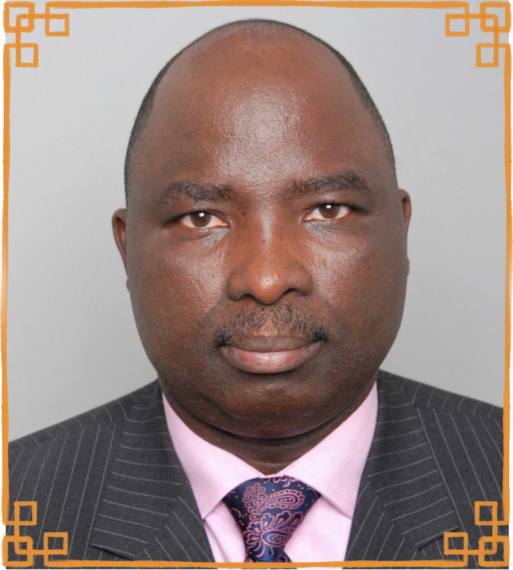

Introduction: Despite huge investments and repeated promises,
electricity supply remains unstable in Nigeria. From low
generation levels to persistent outages, from mounting debts
to growing public frustrations with the discos, the issues are
serious and demand clearances. In this interview, a key voice in
Nigeria's power sector, Chief (Barr.) Sunday Odon, Managing
Director/ CEO of the Association of Nigerian Electricity
Distributors, and the official spokesman for all the discos, bares
his mind on the electricity problem on TVC’s Your View.
Excerpts:
Question: The matter is light and many times we keep talking
about light situation. We hear about investments. We hear
about what the government is doing, what the discos are
doing, but nothing seems to change and especially we're
talking about our generation capacity. We've heard things like
oh, you know, we have an estimated generation capacity of
14,000 megawatt, but is it seems we're generating just 6,000
megawatt and we're wondering what is happening? In fact, all
these English things are a bit too much. Why is there no light?
Answer: Thank you very much. First, let me make Nigerians
understand the fact that the Nigerian electricity crisis is not a
mystery. What we have today, this crisis, this problem, is just a
result of decades of policy inconsistency, lack of investment in
the sector, and structural dysfunction. Of course, resolving this
requires a lot of work.
The government needs to be deliberate. I would even say the
president, as a person, needs to get directly involved. There
must be a deliberate intention to even hurt feelings and step on
toes in order to get it done and reverse the trend. We are not
moving in the right direction. Things are not going well, and we
have to be frank, sincere, and deliberate.
The issue of installed capacity is important. When you mention
14,000 installed capacity, you are talking about the machines
and equipment, what they are capable of doing. Just because
you have a brand new car in front of your house inside your
village, a village without roads, and the car is brand new, that
car is capable of running. But once you do not have enough fuel
in the car, it can only take you a few limited places, and if there
are no roads, you cannot even leave the same spot.
As a result of different kinds of issues, gas supply shortages are
one of the reasons, and of course maintenance issues, water
management issues in the case of hydro plants, and then
transmission limitations. That is even the biggest problem.
Because once you are able to generate electricity, when you
produce it, you should be able to evacuate everything that has
been generated. In Nigeria, we are not able to do that. We have
stranded power here and there.
So, there is a need to fix the bottlenecks. There is a need to
take the bull by the horns. They need to call everybody
together and say, “You know what? Let’s get it done.”
Otherwise, we will keep speaking grammar and playing to the
gallery from generation to generation and administration to
administration. Because, like I said, you cannot fix the adversity
of 50 years in four years.
So, it is not something you just think is an easy fix, but it is
something that must be done. We must start doing something
impactful from day one. It can be done. We just need to know
what to do.
Question: You alluded to the supply chain. You said we have
generated power, but we return power. The one that we
generate, we do not even use up. So, what has been the
problem over the years? Is the government not supposed to
be prioritizing supply at this stage?
Answer: Okay, first of all, let me talk about the siblings, then I
will talk about the issues and what we can do. I have always
likened the power sector in Nigeria to siblings with three
children. We know our mother, but our father changes from
time to time, sometimes every four years, sometimes every
eight years. In the time of the military, it was for a much longer
period. So, we have the father, but we know our mother.
The firstborn is called Mr. Generation Company. That is the
producer of electricity. The second is called Mr. Transmission,
which is the Transmission Company of Nigeria. The last one,
which I represent, are the DISCOs, the electricity distribution
companies.
These are siblings from the same mother. We live in the same
house, but we live in different rooms. Sometimes we do not
talk to each other. That is the number one problem. Sometimes
food will come into the house, and you know, in some cultures,
like my Yoruba culture, the younger person is pampered. But in
the case of the power sector, the younger person is bullied.
So, the senior person is there, the middle one is there, until we
all decide that we can come out of our rooms into the sitting
room and say, “Gentlemen, what can we do?” You pass your
own responsibility to this one, to that one.
Number one, our senior brother, the Generation Company, is
private. Our brother after that is the most pampered. He is still
owned by the government, so he does not even see himself as
one of us.
The one in the middle is pampered, a special child. Even though
he is not disabled, he has been made disabled. Then the
younger one is also not very efficient. That one too is private,
but it still needs support to line up and work in harmony with
the others.
So, what we suffer from is nonalignment. When you generate
10,000 megawatts or 14,000 megawatts, you must be able to
transmit it. If you generate 10,000, you must be able to
transmit 10,000 megawatts, and you must also be able to
distribute 10,000 megawatts. That is what should happen:
10,000 generated, 10,000 transmitted, 10,000 distributed.
What we have in Nigeria is misalignment. You are capable of
generating so much, but you cannot transmit it. We have never
been able to transmit 7,000 megawatts consistently since 1960
till this morning.
So, I look at South Africa and other countries, and we are
failing. I have said it before on this program, and I will say it
again. If you have a child that is not paying attention to studies
and is not doing well in school, you try to correct the child, and
the child still refuses to improve. If you are not capable of
taking care of your own child, give the child up for adoption.
You do not need to change the name, but something needs to
be done about transmission.
Question: Okay, let me ask you this. I want us to talk because
when you answered the first question, you mentioned that
“We can’t have change without the presidency.”
Answer: Yes.
Question: When you were answering the second question
again, the child you are pointing at is the one under the
presidency. So obviously, the father needs to be very
involved, and our president had promised us electricity. Do
you think that based on the actions of the past few years, he
is really serious about giving us power? Especially when we
had a minister who, before he stepped down, was called the
Minister of Darkness instead of the Minister of Power. What
do you say to that? What do you think the president should
be doing?”
Answer: I think the president needs to be more interested and
personally involved. The power sector in Nigeria is the most
important sector because if you fix the power sector, it will
even improve security and everything else. Once there is
power, many things will come with it, including
industrialization, job opportunities, and other things that can
make the country better.
It is not enough for people to simply send memos to the
president. I think the president, along with some loyal and
honest people around him, should investigate further and get
to know things more deeply. For instance, it should not be
automatic for us to renew people’s tenure. Once somebody’s
tenure is to be renewed, we need to go back and check: What
has that person done? What has the person done well? We
need to be practical.
Nigeria does not lack theoretical answers. We have good
policies. Where we fail, where we drop the ball, is in
implementation. We need bold reform. Bold in the sense of
taking the bull by the horns. We need to show more interest
and put the country before self.
Because, again, over the years, what we have been suffering
from is the fact that sometimes we are self-serving, and that is
the truth. So, the president needs to be aware of certain things,
and I will quickly run through what I think we need to do to get
things fixed.
Number one, we need consistent policy formulation and
implementation. In terms of policy formation, we are actually
not doing badly now. In fact, the federal regulator we have
today and the leadership in place are among the best so far
since 2005 when we started having NERC.
The people in NERC are very good. I am even aware that the
president has not had a single meeting with the NERC
executives. He needs to call them and say, “Guys, what is going
on?” so he can hear from the other side. It is not enough to
listen only to the Ministry of Power. You also need to have the
NERC chairman, vice chairman, and executives come and
explain themselves personally to the president. That is why I
say the president needs to take charge. It is not enough to
appoint somebody there; you also have to show interest.
So then, implementation is our problem. When I say consistent
policy formulation and implementation, which is number one.
Number two, our country needs to have respect for the sanctity
of contracts. Number three, commercialization of gas. We need
commercialization of gas to attract investment and exploration.
Gas-fired plants account for about three-quarters of what we
use. So, we need to look again into the issue of gas so that gas
will be available for domestic use at a commercial value, and
that requires money.
Then, like I said earlier, number four is alignment of the value
chain. We need to align the value chain because what we have
now is not unified. There is no commercial logic in what we do.
If you take care of generation and spend so much money on
generation, but they cannot evacuate or distribute the power,
that is a failure. If generation is good and distribution can take
6,000 megawatts, but transmission cannot transmit 6,000
megawatts, that is not good. That is why alignment is very
important.
Then comprehensive metering is also very important. We have
failed in that area. That is the only way you can enable revenue
recovery. MAP is good, but very slow in execution. We are not
doing well enough.
The other time, somebody said meters are free. We should not
make universal statements. Our statements should be qualified.
We should explain clearly and let people know the exact
figures. If I bring in 2 million meters and we need 8 million, I
should say, “These are the 2 million meters that are free.” That
way, people will know they can still go through MAP for the
remaining 6 million meters that we require as a nation.
We should also bring out figures. We should be open with
figures.
Question: Okay, so you had mentioned MDAs that are owing
DISCOs money, and some of these agencies—you mentioned
one about 1 point something billion in Port Harcourt
communities like Afam. So what can the president do about
this?
Answer: MDAs debt is an embarrassing one. Every time we
keep asking. MDAs means ministries, departments, and
agencies. People are even owing 5,000 naira to DISCOs and still
not paying. Some pay only 1,000 or 3,000. Sometimes they
even bribe the marketer with 500 naira, and that person leaves
the 5,000 debt till next month. So once you leave a property,
wherever you go, the debt follows you.
And we’ve been begging that this is something we need to do.
NIMC needs to cooperate with us, the government, and I’m
saying the president. I’m now talking to the president. The
president is the person who can make this thing happen
because you are going to offend people.
Yes, once we say NIN and BVN should be on your bill, wherever
you go, the way you leave Lagos and get a job in Abuja, you
carry your bill with you. And with that, we have a better
system. These are the things I think, in summary, we need to do
as a nation. International oil companies are not part of the
power sector. Once you don’t pay them, they will simply pull
the plug. That was what happened within the last two months,
and that is why you saw that at a time the Federal Government
decided to pay that debt of 3.3 trillion naira.
That is something that accrued over a long period of time, not
just this administration and not even the last administration. Of
course, it continues, and even this administration is trying to
pay it. We are having daily problems, so we need to deal with
that.
Question: Amazing, very eye-opening. Why is there no light?
Because especially in the last two months, we have not had
light.
Answer: The lack of electricity in the last two months, to be
honest, has to do mainly with gas legacy debts. What do I
mean? There have been debts owed to gas suppliers. And
remember when I mentioned generation, transmission,
distribution. Apart from the issue of gas debts, another reason
we do not have light is maintenance issues. Pipeline vandalism
is another problem we have. Maintenance issues and all of
these also speak to the issue of payment. If you pay the market,
as I always say, they will have money to maintain all this
infrastructure. These are the issues why we do not have light.
Our generation companies… there are only two ways in Nigeria
so far. I hope we can go to solar, and I’ll come to that. But we
only generate electricity through hydro, which is water, Kainji,
Shiroro, and Jebba. Three major ones.
Of course, we need to go back and check those river basin
authorities. There’s one in my state, River Basin Authority.
There’s 9 megawatts there, nobody is using it since 1982. It is
just lying there. Now, the other thing is, gas is the fuel used by
generation companies. And when the gas suppliers are…
Question: How do we discourage electricity theft by
consumers?
Answer: We need to have Special mobile courts. Let me tell you
how it works.” One issue is people bypassing meters, even big
men. I have caught a big man before in a place called Bompai in
Kano. I caught a big man in a place called Transamadi. So we
have seen this all over the country.
Once we catch them, and we have evidence, the sector should
fund mobile courts through the Chief Judge of every state, with
magistrates attached. I am happy a lawyer is here. Take a van
to the marketplace and try them summarily.
This is a summary trial system that does not require custodial
sentences. You do not need to send them to prison. Once they
are guilty, you can make them sweep the market for one week
instead of fines. Not fine as in money, but punishment—let
them sweep the market.
The moment people see a big man being disgraced like that
publicly, they will stop stealing energy.
Also, the president needs to decide how to follow the money.
Let me give you an example. You have tenants who owe
electricity bills on a property and then leave. That is the end.
The burden is transferred to the next tenant or the landlord.
The way out is this: tenants should have electricity accounts in
their own names. And every bill in the country should be linked
properly, with proper identification.
And of course, apart from transparency, the Nigerian power
sector needs access to cheap and long-term capital. When you
borrow from Nigerian banks, the interest rate is very high, so it
is time for government to think about development finance. Of
course, they have done some of this already, but we also need
to turn to institutions like the World Bank, AFDB, IFC, and
others. Then, for us as a people, we need to recognize
electricity as a commodity with value. In other words,
electricity is a product like Coca-Cola or Fanta.
Our culture and attitude show that we often treat electricity as
a social service, and we have a sense of entitlement. We have
communities in Nigeria that are not paying for electricity, and
so far government has not been able to do anything about it at
local, state, or even federal level.
I will mention two examples. There is a community called AFAM
under Port Harcourt DISCO, and every month it is losing about
1.9 billion naira in direct billing losses. This is confirmed. This is
not an assumption.
There is another place called Bussa under the distribution
company in Niger State. These communities are not paying
government. The president now needs to step in. There should
be ways of addressing this. It should not be a big deal.
Then, of course, electricity theft and vandalism and we've been
calling and we've been making a case saying that
We need to do more, not just this. And I will say it again,
everybody talks about the DISCOs, and I understand that, but
that is the last mile.
I mentioned the three siblings earlier. From generation, there
should be improvement in service delivery. We need to know
what is actually generated. We need to know what happens at
every stage before invoicing, and even the invoices themselves
need to be checked.
From generation to NBET, from NBET to transmission, from
transmission to distribution, and even at the distribution level,
we need to ensure that the right things are being done. Once
the sector becomes viable, it becomes easier to sanction
operators who fail in service delivery.
The president also needs to be aware of the need for more and
better transparency in the sector. This starts with generation,
generation dispatch, energy billing by the DISCOs, and all
stakeholders within the sector. We also need to see how funds
flow through the system.
We must recognize that issues surrounding dispatch, energy
billing, and fund flows have enabled corruption and inefficiency
to thrive in the sector. Therefore, there must be publication of
clear and timely data on generation, transmission, transmission
losses, generation dispatch, and DISCO performance, including
tariff utilization.
Once money comes into the sector, we need to know what
happened to it. What was it used for? How was it spent?
And how do we deal with invoicing? In past years, we have had
issues of alleged over-invoicing, but we should be realistic.
Where we are now: Nigeria, with the population we have, and
those who have poles in front of their homes—that is to say,
those connected to the grid—Nigeria needs about 28,000
megawatts to serve them.
Now, we are hovering around less than 6,000 megawatts.
What we need to do is incremental generation that goes
straight into transmission and distribution. Immediate grid
investment. If we keep doing this consistently and immediately,
gradually there will be improvement. You cannot see it within a
year.
Question: The President said, “Hold me accountable.” He even
said, “I will give you power; don’t vote for me for a second
term unless I can give you good reason.” What do you make of
these statements?
Let me say something that may offend some people, and I have
said it before. I have been part of the power sector since
November 1, 2013. I am saying that today, things have
improved compared to before, except for the last two months
when there was a problem of gas supply.
Check your area, check your neighborhood, ask your friends,
ask your family. The system has improved a bit in the last two
years. Yes.
And we are not where we are supposed to be. We are still far
away. I would say we have failed. But to say it is worse than
2013, whoever says that does not know what they are saying.
All these crises in the power sector—whether it is “I provide
power” or “I have not been able to provide power”—we should
come up and say: this is what we have, this is where we are,
and this is where we are supposed to be.
If and when I get into government, or if I am an opposition
leader, this is what I will do. It is not enough to just play to the
gallery. Why would I give you my strategy? You too, do your
own strategy now.
But you know, people have said the issues in power, and you
mentioned it—you are saying from 1989 to 1999, no power
plants were built. We are talking about over 30 to 40 years ago.
So the problem of power has been compounding over the past
40 years. What is the realistic timeline Nigerians should expect
for improvement? Should we say, “Let us give the government
four years”? Can there be improvement within one year?
Because when the president was coming in, he promised us
electricity. And we felt okay, he had a roadmap for how it
would go.
Question: Why should government be owing money, when
they declared revenue?
Answer: Sorry, they declared revenue into the general account.
The MDAs. What I am saying is that we should now begin to do
deduction at source. That is a major thing.
Then we should also ensure a proper payment system for
MDAs. The last time we tried to do it, we were resisted by
people at an air force base.
Yes, these are government institutions. So we need to do what
is right to get the right result. But as long as we have this huge
billions of naira in MDA debt, that is a problem.
And these MDAs should show stronger leadership and set good
examples. That is what government needs to do. If your
government entities are not paying electricity bills, how do you
expect ordinary people on the street to know they need to pay?
That is what I think we need to fix our electricity problem.
Question: Do we have competent people leading the power
sector, are the contractors competent?
Answer: We make sure we ask to be led by somebody who
knows the road. Somebody who knows the way into that place.
Competence. We should not be putting a square peg in a round
hole. That is all. I do understand that sometimes political
exigencies mean decisions are taken based on certain other
factors, but when it comes to power, we need, for once, to put
people who know the business to lead us along that dark valley.
That is what I think we need to do as a nation. We should know
what it has cost the nation. We should know what they have
been able to do. You don’t give a job inside a river to somebody
who cannot swim. That is what I am saying.
You cannot do the job without having contractors, but we need
to ask: who are the contractors? Go and check that area with
issues of banditry and terrorism. These acts are also affecting
our infrastructure and the work these people are doing.
At the same time, check the job areas. Go to Niger State and
see those who are building the towers. I would expect that we
give contracts for this kind of work to tested and grounded
companies, whether foreign or local, preferably foreign, and we
arrange for top-notch security.
A country where we just give contracts to an “elegbete”
somewhere who is not necessary… I repeat, I am a Nigerian and
I will say the truth—you don’t have to like what I am saying. We
should not be giving contracts for giving sake, or to politicians.
No, I am not saying all politicians are bad, but it is not enough
to do “jobs for the boys.”
We should give contracts and execute them in a transparent
manner. We should know how much has been spent.
Question: With all of these things, do you think we are going
to solve this electricity issue anytime soon, having issues with
collection of money and all of those things? What is the
timeline we should realistically expect? Based on your
experience in this industry, what do you think?
Answer: We should not dream where there is no point
dreaming. We should dream of a better Nigeria…should not be
making everything political or making it look as if once they
install solar, they are insensitive. It is the best thing to happen
to us. We need more people to use solar and leave us so that
we can serve people that are not being served.
I understand that political parties are playing politics. Some are
attacking the president on the issue of grid collapses and all of
that. But not just that. If you have solved the problem for
yourself, how do you solve it for the masses? That is why the
solar argument also exists.
Okay, I want to appeal to our leaders, those in government and
those in opposition. I believe that opposition, for the nation to
thrive, needs to hold government accountable and criticize
them constructively. But we should not play politics with the
power sector. Let us leave the power sector out of politics.
And I will tell you why. We have suffered so much in the last 60
years. I can tell you that in a period of 10 years, between 1989
and 1999, when we had four heads of state, not a single power
plant was built in Nigeria within that period. Fact check me.
We are supposed to be growing our electricity in accordance
with our growing population. And when we are not doing that,
what we should try to do is be patriotic and look for solutions.
When you criticize government, provide solutions. Don’t just
say, “This is not good.” Say, “This is not good enough, and this is
what we should do.”
Now, any institution—government houses, whether state,
federal, or even local government, or private individuals—the
moment anybody installs solar, they are helping the DISCOs,
they are helping the power sector. Why?
Once you install solar, if what I supply to your house is 1
megawatt, the moment you install solar, you have freed up that
1 megawatt for people around you to use.
In the case of the Presidential Villa, the moment they did that,
it is a very good thing for us at AEDC Abuja Electricity
Distribution Company. Some see it as loss of revenue. No, what
we have is not even enough for Abuja. So once we can take off
the Presidential Villa, then we will be able to give more power
to other people all the way to Kogi and Niger, which are served
by that DISCO. People should be seeing things from that angle
of positivity.
So we have a problem there, but let me talk about MDAs,
ministries, departments, and agencies. These are government
institutions. So I think, as the leader of the country, the
president can play a critical role by enforcing payment
discipline across government institutions
Question: We learnt the minister signed some deals that were
meant to ensure we were at transmission point. Which of
these deals is still on?
Answer: Well the cement deal is still on. But you see, I keep
saying it is not enough to have any deal. Implementation is the
problem. We need a total restructuring of the TCN. We need to
go in and check and see what is going on there. We need to
know what is happening.
Question: And let me just add, maybe in conclusion, as you
round up. You have explained some things to us that seem
very obvious to you, but we have had Ministers of Power for
administration after administration. And I am wondering,
what seems so obvious to you does not seem quite obvious to
many past administrations. What are we missing? Is it just
putting the wrong people in the wrong places, or is there just
no willpower to do the right thing? And who does not benefit
when we do not have electricity in this country?
Answer: Okay, I am an Egba man. I am from Otukpa and we
have so many villages, about 145 townships. So we have
villages, thick forest. If you are going to a village in Egba, in any
area of Egba, inside a thick bush, what we do in our…