


The National Environmental Standards and Regulations Enforcement Agency (NESREA) has restated its commitment to ensuring that Nigeria’s emerging hydrogen industry develops in line with national environmental standards and global sustainability expectations.
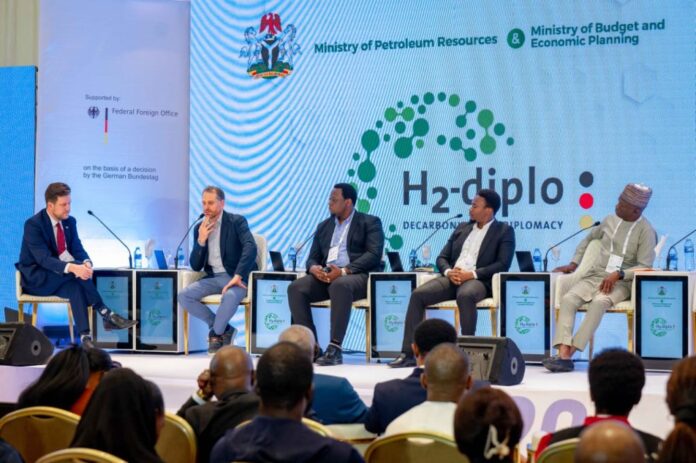
This reaffirmation came during the 3rd German-Nigerian Hydrogen Symposium held in Abuja.
The two-day event brought together policymakers, researchers, industry leaders and technical experts to explore hydrogen policy implementation, sustainability frameworks and industrial decarbonisation pathways for both countries.
Representing the Director-General of NESREA, Prof. Innocent Barikor, the Director, Inspection and Enforcement, Dr Christopher Beka, participated in a high-level session on sustainability in the hydrogen sector, where he noted that “while regulations exist, new sectors such as hydrogen require sector-specific environmental impact considerations to ensure proactive safeguards rather than reactive policies.”
Addressing stakeholder concerns on the end-of-life handling of hydrogen production equipment, Dr Beka emphasized that NESREA’s Extended Producer Responsibility (EPR) programme provides a clear regulatory pathway for managing such equipment when it reaches the end of its useful life.
He explained that under the EPR framework—already being implemented for used tyres, plastics, used electrical and electronic equipment (UEEE), and used acid–lead batteries (ULAB)—manufacturers and producers bear full responsibility for the recovery, recycling and safe disposal of equipment they place on the market.
He noted that this approach will equally guide the end-of-life management of hydrogen production infrastructure, ensuring that Nigeria’s clean-energy transition does not generate new environmental burdens.
The agency assured stakeholders that it will continue to promote environmentally sound management of emerging technologies as Nigeria scales up its decarbonisation efforts.