
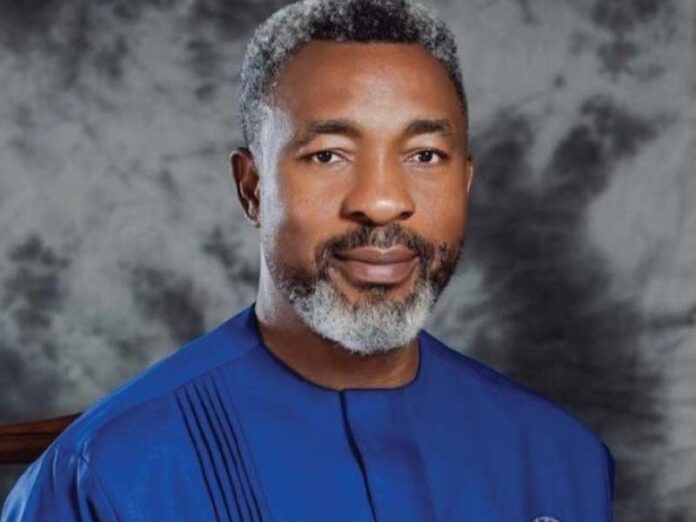

The President and Chairman of Council of the Nigerian Institute of Public Relations (NIPR), Dr. Ike Neliaku, has urged Nigerians to resist attempts by some members of the elite to sow seeds of disunity and exploit ethnic and religious differences as the country moves toward the 2027 general elections.
Addressing journalists during a media interface in Abuja, Neliaku cautioned that ethnic sentiment and religious bigotry had become dangerous tools in the hands of political actors bent on weakening national cohesion.
He stressed that Nigerians must rise above primordial sentiments to safeguard the nation’s future.
“We must never allow our ethnicity to define who we are. We are bigger than where we come from. We are Nigerians first,” he said.
“Divisions along ethnic and religious lines have been deliberately programmed to keep citizens perpetually at odds with one another.”
According to him, Nigeria’s diversity, often portrayed as a challenge, is in fact one of its greatest strengths if properly harnessed.
He cited Rwanda as an example of deliberate nation-building, noting that countries with similar diversity have succeeded by prioritising national identity over sub-national loyalties.
Neliaku also challenged Nigerians to deprogram themselves from negative narratives about the country, insisting that Nigeria is not the worst nation globally but suffers largely from poor narrative management.
“Other countries have serious challenges, but the difference is how they manage their narratives. We must learn to manage ours,” he said.
He emphasised the strategic role of the media in shaping national perception, describing journalists as indispensable partners in reputation-building, consensus-building, and peace-building.
He added that the institute deliberately seeks collaboration with the media to advance national development and enhance journalists’ long-term career prospects.
Neliaku explained that public relations is a lifelong global profession, noting that NIPR members enjoy practice rights in over 126 countries through the Global Alliance for Public Relations and Communication Management.
As part of efforts to strengthen media capacity, he announced that the NIPR Council had approved a “fit-for-purpose” professional training programme for journalists tagged Journalist Workforce of Chance.
He also disclosed plans to unveil Nigeria’s first Perception and Reputation Survey Report, aimed at assessing how the country is viewed locally and internationally.
Looking ahead, Neliaku said Nigeria would host the World Public Relations Forum later in the year, with delegates from over 106 countries expected.
Calling for collective responsibility, he urged Nigerians to reject divisive politics, embrace unity, and work together to rebuild the country’s image.