

By Olayinka Olatunbosun, Ph.D
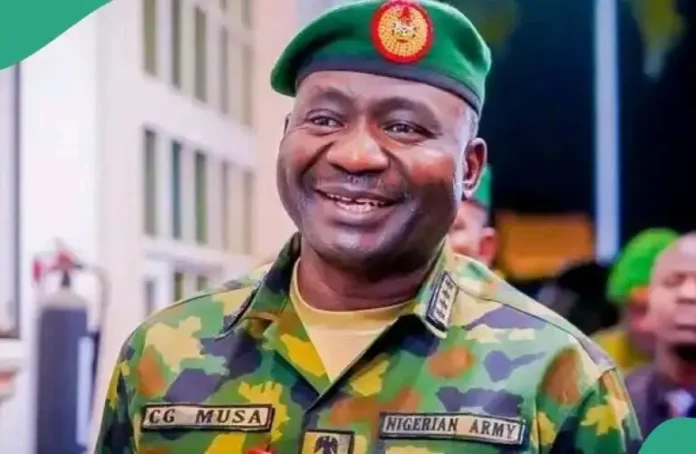
On December 4, 2025, General Christopher Gwabin Musa (rtd.) was sworn in as the new Ministry of Defence of the Federal Republic of Nigeria, in the wake of the resignation of his predecessor Mohammed Badaru Abubakar for health reasons. His arrival marks a critical moment for Nigeria, as the country faces one of its most severe security crises in decades — and the expectations are enormous.
In a statement shortly after assuming office, Musa declared: “the shedding of innocent blood is over.” But turning that commitment into concrete results will require confronting an array of deep-rooted, interlocking challenges. The road ahead is steep and the stakes high. Here is what lies on his desk.
IMMEDIATE SECURITY CHALLENGES: MULTIPLE FRONTS, MULTIPLE THREATS
- A surge in kidnappings and mass abductions: Nigeria has seen a spike in kidnappings, especially of schoolchildren and other civilians. Many of these kidnappings are linked to ransom-driven banditry that has terrorized communities.
- Resurgent jihadist insurgency and banditry: The new minister inherits a security landscape complicated by numerous armed groups — from splinter factions of insurgents such as Boko Haram and Islamic State West Africa Province (ISWAP), to bandits and “separatist” militants in different regions.
- Widespread insecurity across regions: The threats are not limited to the northeast: banditry in the Northwest, communal and separatist violence in other regions, and a fractured security architecture all demand urgent, geographically broad responses.
Analysts note that the country is now confronted with “the toughest task in decades.”
INSTITUTIONAL, STRUCTURAL AND STRATEGIC IMPERATIVES
The scale and complexity of Nigeria’s security challenges mean that brute force alone cannot suffice. For lasting impact, the new minister must pursue deep structural and strategic reforms:
- Reshaping military deployment strategy: During his Senate confirmation, Musa announced a plan to withdraw soldiers from routine road-checkpoints and redeploy them into forests and other insecure zones — placing frontline troops where they matter most.
- Strengthening intelligence-led operations: A shift from reactive, ad-hoc responses to proactive, intelligence-driven, joint operations is vital. Experts have called for integrating local community liaison networks, deploying joint security task forces, and establishing a unified national database to track finances, personnel, and criminal activities.
- Fostering institutional cohesion — Civilian and military agencies alike: Success demands coordination across the full security architecture: military, police, civil-defence, intelligence, and community actors. Analysts warn that overlapping mandates or institutional inertia can undermine operations.
- Rebuilding public trust and legitimacy: The government must overcome public skepticism, perceived impunity, and structural distrust — especially in regions hard-hit by violence. Transparency, accountability, and community engagement must go hand-in-hand with force.
SOCIO-ECONOMIC AND DEVELOPMENTAL DIMENSIONS OF SECURITY
Security in Nigeria cannot be disentangled from socio-economic realities. On this front, the new minister’s mandate must dovetail with broader national policy:
- Protecting agriculture and livelihoods: Unrest has devastated farmland and disrupted food production, especially in regions considered Nigeria’s “food basket.” Ensuring safe access to farmland — and protecting farmers — is now tied directly to national stability.
- Reducing ransom incentives and criminal economies: Kidnapping and ransom payments have become a lucrative, systemic phenomenon — fueling further violence, recruitment, and instability. Musa himself warned against ransom payments, saying they compromise security.
- Embedding “security-development nexus”: Lasting peace will require coupling security operations with community development, local empowerment, and economic opportunity — to address root causes of violence, not just its symptoms.
DEEPER OBSTACLES: SABOTEURS, BUREAUCRACY, PUBLIC EXPECTATION & POLITICAL PRESSURE
Even with a bold plan, success is not guaranteed. Key structural risks and obstacles remain:
- Saboteurs within the system: Some analysts warn that certain actors may be benefiting from the insecurity and therefore resist genuine reforms.
- Institutional inertia and divided responsibilities: The current defence architecture may suffer from overlapping mandates, weak coordination, and a lack of clarity between the ministerial and operational command levels.
- Massive public expectations: Nigerians expect quick results. But even if the new minister makes progress, outcomes may fall short of hopes — leading to frustration and backlash.
- Resource constraints and under-resourced forces: Years of underfunding, limited equipment, and overstretched forces have left the military ill-equipped for a protracted, multi-front campaign.
THE BIGGER PICTURE: DIPLOMACY, PARTNERSHIPS & LONG-TERM STRATEGY
Nigeria’s security problems are not just military challenges — they are national, regional, and even global. The new Defence Minister must also:
- Leverage international support and strategic partnerships: Given the regional dimension of insurgency — especially in the Sahel, border spill-overs and cross-border trafficking — Nigeria must strengthen cooperation with neighbouring states and international partners.
- Promote regional and cross-border security coordination: A coordinated approach across the Sahel, Lake Chad Basin and the Gulf of Guinea is essential to choke supply lines, arms flows and militant mobility.
- Advocate for structural reforms within national institutions and policies: This includes pushing for better funding, modernising security forces, and ensuring investments in infrastructure, surveillance, and rapid response capabilities.
CONCLUSION: EXPECTATIONS, REALITIES – AND A NARROW WINDOW FOR RESULTS
The appointment of General Christopher Musa as Defence Minister could not have come at a more critical time. With insecurity escalating, kidnappings surging, insurgent and bandit activity intensifying, and the social fabric frayed — Nigeria stands at a crossroads. Musa’s promise that “the shedding of innocent blood is over” casts a vision many citizens long to believe in.
But for that vision to become reality, rhetoric must give way to coordinated, clear-headed, resource-backed action. It will require political will, inter-agency unity, community engagement, and sustained commitment — not just to kinetic warfare, but to the structural roots of insecurity.
For millions of Nigerians lying awake at night, hoping for safety, the next months will reveal whether the government — under Musa’s leadership — can truly turn the tide.
Dr. Olatunbosun was the Labour Party Candidate in Ife East Local Government for the Osun State House of Assembly election in 2023.