
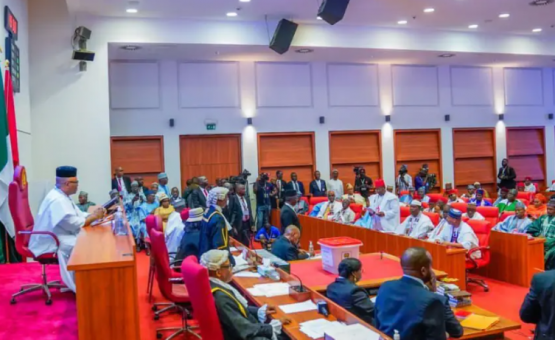

In a move aimed at tackling rising insecurity across Nigeria, the Senate on Tuesday approved the second reading of a bill seeking to establish a single, nationwide toll-free emergency number.
The bill, sponsored by Senator Abdulaziz Musa Yar’adua, proposes the creation of a unified three-digit number—112—to replace the multiple emergency lines currently in use across various states. The measure is designed to improve the country’s emergency response architecture and reduce delays in life-threatening situations.
Leading debate on the bill, Yar’adua emphasized that the legislation would plug a critical gap in Nigeria’s emergency response system while aligning the country with global best practices.
“Emergency numbers are needed in life-threatening situations. The presence of multiple emergency numbers in Nigeria has been identified as an impediment to accelerated emergency response,” Yar’adua said.
He noted that while states such as Lagos and Ogun states, and the Federal Capital Territory (FCT) operate separate toll-free lines for police, ambulance, fire, domestic violence, and child abuse emergencies, the fragmentation often results in delays that can cost lives. Drawing examples from the United Kingdom, United States, and India, he argued that a unified number would improve coordination, enable location tracking, and enhance first-responder efficiency.
“With almost 90 per cent of Nigerians owning mobile phones, a toll-free emergency number will ensure that citizens in distress are just a dial away from relevant emergency institutions,” Yar’adua added.
Support for the bill was strong across party lines. Senate Majority Leader Ali Ndume described the proposal as “timely and very important,” highlighting the current challenges in communication with security agencies during emergencies. He urged the Senate leadership to fast-track the bill to ensure swift implementation.
Senator Mohammed Tahir Monguno also backed the measure, noting that a unified number would enhance public participation in security reporting.
“This bill will give strength and muscular expression to national vigilance by replacing the multiplicity of emergency lines with a single, easily accessible channel for all Nigerians,” Monguno said.
Following Tuesday’s proceedings, the bill was referred to the Senate Committee on Communications for further legislative action. The committee is expected to report back within four weeks, paving the way for Nigeria to adopt a standardised, efficient system for emergency response nationwide.
If passed into law, the initiative is expected to significantly improve response times, coordination among security and emergency agencies, and the overall safety of citizens across the country.