
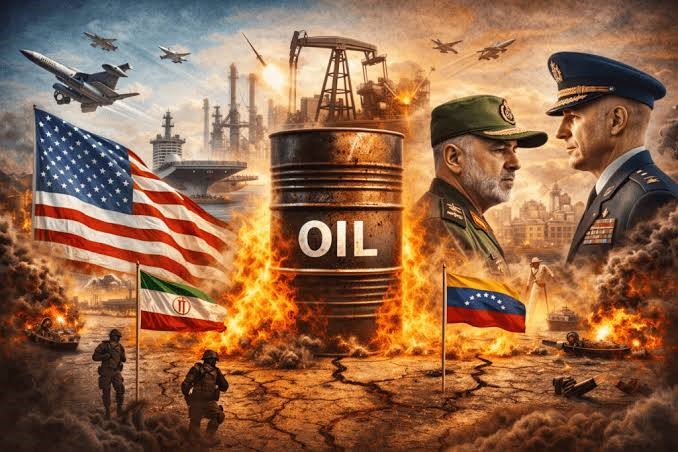

Hopes of a possible drop in fuel prices in Nigeria have been dealt a fresh blow following the collapse of high-stakes negotiations between the United States and Iran, a development that has reignited tensions in the Middle East and sent shockwaves through global oil markets.
The failed talks, which ended without agreement over Iran’s nuclear programme, have heightened fears of prolonged instability around the Strait of Hormuz—a critical maritime corridor through which a significant portion of the world’s crude oil supply passes.Smart Video
Global energy markets reacted swiftly to the diplomatic breakdown, with analysts warning that oil prices are likely to surge again after briefly easing during a short-lived ceasefire.
For millions of Nigerians who had anticipated relief at the pump following recent declines in global crude prices, the renewed tensions signal a reversal of expectations.
Just days before the talks collapsed, there had been cautious optimism that easing tensions between Washington and Tehran could stabilise oil supply and reduce fuel costs globally.
Indeed, crude prices had dipped below recent highs after a temporary truce raised hopes of uninterrupted oil flows through the Strait of Hormuz.
From almost $120 per barrel at the peak of the crisis, the benchmark Brent crude dropped to $92 per barrel before it stabilised at $95 per barrel over the weekend.
However, the breakdown of negotiations may reverse that trend.
With fresh threats of disruptions to shipping routes and increased military posturing in the Gulf, oil traders have begun pricing in new geopolitical risks—often referred to as a “risk premium”—which typically pushes crude prices higher.
The Strait of Hormuz remains a vital chokepoint, handling a substantial share of global oil shipments. Any instability in the region has immediate consequences for supply, prices, and energy security worldwide.
US President Donald Trump had ordered the United States Navy to begin a blockade of the Strait of Hormuz following a breakdown in talks with Iran over its nuclear programme.
In a strongly worded statement released on Sunday, Trump said negotiations had made progress on several issues but failed to resolve what he described as the “only point that really mattered” — Iran’s nuclear ambitions.
“Effective immediately, the United States Navy…will begin the process of blockading any and all ships trying to enter or leave the Strait of Hormuz,” Trump declared, describing the move as a response to what he called “world extortion.”
For Nigeria, Africa’s largest oil producer, rising crude prices present a paradox, according to experts.
On one hand, higher oil prices translate into increased government revenue and improved foreign exchange inflows.
On the other hand, the same development spells trouble for consumers. Despite Nigeria’s recent capacity in local refining with the 650,000 barrels per day Dangote Refinery, Daily Trust reports that Nigerians have been victims of the volatility of the global oil market.
From about N700 per litre at the start of the war, the premium motor spirit (PMS), otherwise known as petroleum, has surged to almost N1,400. Diesel prices are currently around N2000 per litre, while aviation fuel, also known as Jet A1, is inching towards N3,000 per litre.
Energy analysts say the collapse of U.S.-Iran talks has effectively dashed any realistic expectation of cheaper petrol in the near term.
The potential rise in fuel prices carries broader implications for Nigeria’s already fragile economy, according to analysts.
Fuel costs play a central role in determining transportation expenses, food prices, and overall cost of living, and any increase at the pump typically triggers a ripple effect across multiple sectors.
The World Bank in its Nigeria Development Update (NDU) report last week warned that rising fuel costs and persistently high inflation risk squeezing incomes and slowing poverty reduction.
World Bank Nigeria lead economist Fiseha Haile said, “Fuel prices have risen more than 50% during the Iran war, feeding into transport, food and production costs. Nigeria should consider lifting curbs on fuel imports to help ease inflation.”
“Inflation is still elevated and under increasing pressure, and that poses risks to incomes and poverty reduction,” Haile said.
Mathew Verghis, World Bank country director for Nigeria, said Petrol prices have risen sharply, by up to 50% in recent months, and diesel costs have nearly doubled, adding pressure to food and transport.
Verghis identified energy sector reform as the most urgent priority for unlocking growth, warning that gains in off-grid solar will fall short without fixing the country’s on-grid electricity system.
“Without that, Nigeria’s ambition of building a $1 trillion economy could remain out of reach,” Verghis stressed.
Experts warn that renewed geopolitical tensions could worsen inflationary pressures, which have remained persistently high in recent years.
An oil and gas industry analyst, Dr Ayodele Oni, in a chat with our correspondent, said, “With the collapse of talks between Iran and the U.S, there is a potential blockade of the Strait of Hormuz. Where this does happen, Nigeria will find itself at a crucial crossroads as crude oil prices will continue to surge.
“In the end, while the surge in crude oil prices has the potential to bring in much-needed revenue, the implications for inflation, rising costs of living, and the overall economic climate present a challenging landscape.”
Oni advised that policymakers “will need to think strategically, using any financial windfall to stabilise the economy and protect the well-being of Nigerians.”
“As we navigate these turbulent waters, the priority must be ensuring that the gains from oil are felt by all, not just a select few,” he added.