
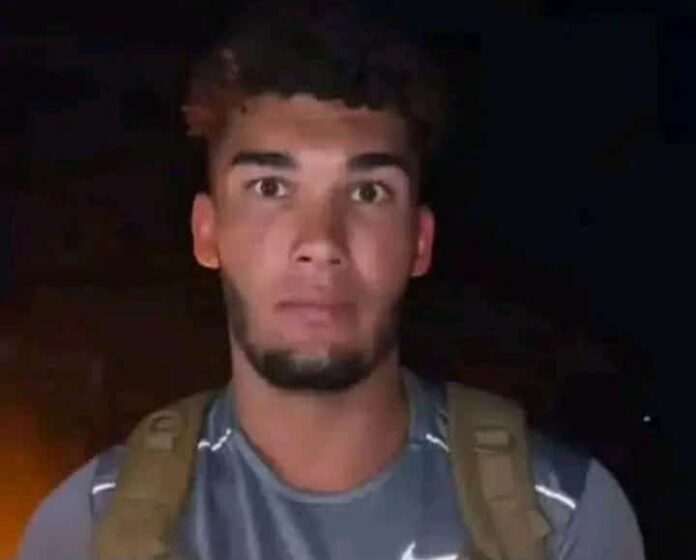

The Federal Government has expelled Alex Barber, an American missionary working in Nigeria’s conflict-affected Middle Belt, accusing him of making statements capable of inciting violence and deepening divisions.
The development was confirmed by Abiodun Essiet, Senior Special Assistant to President Bola Ahmed Tinubu on Community Engagement (North Central), during an interview with TVC News on Monday.
Essiet said Barber’s activities had raised serious concerns about national unity and public safety.
“Yeah, so we’ve realised what Alex Barber has done, so I must inform that Alex Barber is no longer in Nigeria,” she said.
“He has been, we can say, removed and sent out of the country because of the work he’s doing, which is creating division.”
According to Essiet, Barber’s comments during a speech in Jos, Plateau State, allegedly had immediate consequences.
She claimed that violence broke out shortly after the remarks.
“Immediately after he made his speech in Jos, a lot of people didn’t know that two people, two Muslims, were killed immediately after his speech,” she said.
“Because of the impact of this provocative speech, which he has been making, he was sent out of the country and is no longer in Nigeria.”
Barber’s story began far from Nigeria.
Born on August 17, 1997, in Lawrenceville, Georgia, he grew up in Cumming, Georgia, alongside his brother Josh, a physician and U.S. Army Reserve officer.
During his school years, Barber gained recognition as a football kicker at South Forsyth High School.
His talent initially earned him a commitment to Rutgers University, before he later switched to Penn State.
However, his sporting career was cut short after a hip injury that required surgery.
He later transferred to Liberty University, where he turned toward faith-based work while studying at the institution’s College of Osteopathic Medicine.
In 2020, Barber briefly returned to football and gained national attention after kicking a 51-yard game-winning field goal against Virginia Tech, a moment widely reported in American sports media.
Barber’s work in Nigeria was largely carried out through two platforms: Building Zion, his personal initiative, and Equipping the Persecuted (ETP), a United States-based organisation led by filmmaker Judd Saul.
Through these organisations, Barber became involved in reconstruction projects in communities affected by violence in Benue and Plateau states.
In Yelwata, a community devastated by attacks on June 13, 2025, Barber said his team rebuilt dozens of homes and key infrastructure.
Speaking during a project dedication in January 2026, he said: “So far, we have rebuilt 35 housing units. The joy among the people is overwhelming.”
The traditional ruler of Yelwata, Julius Joor, described the effort as unprecedented.
“For the first time, private individuals have come to our aid in such a massive way. You have restored hope and happiness to our people,” he said.
Some residents and diaspora advocates also praised the initiative.
Legal practitioner Franc Utoo said the project addressed urgent needs in the community.
“You have done what both the federal and state governments have failed to do,” he said.
As Barber’s humanitarian work gained attention, his public statements about violence in Nigeria’s Middle Belt also drew scrutiny.
In interviews and social media posts, Barber described the violence as systematic.
Speaking during an interview with News Central Television in April, he said: “This is not just some random criminality. This is a war being waged on people.”
He also questioned official explanations about the crisis.
“If there’s no war in Nigeria, what is happening? In every state, you have security forces deployed. People are being killed, both Christian and Muslim,” he said.
Barber also criticised government institutions, saying he lacked confidence in their ability to manage humanitarian funds.
His comments sparked strong reactions from several Nigerian figures.
Former presidential aide Bashir Ahmad called on security agencies to investigate Barber’s activities, warning that his statements could threaten public peace.
Islamic cleric Ahmad Gumi also criticised the missionary, suggesting that his rhetoric risked deepening religious divisions.
Some Nigerians on social media raised suspicions about Barber’s presence at attack sites.
In a petition addressed to the State Security Services (SSS) in Plateau State, Aliyu Naziru alleged that Barber had been seen at scenes of violence in Jos under unclear circumstances and called for an investigation.
However, there is no public evidence linking Barber to criminal activity.
Supporters argue that he has helped draw global attention to communities affected by violence.
Several religious figures have defended Barber’s work.
Among them is Ezekiel Dachomo, a priest of the Church of Christ in Nations (COCIN), who praised the missionary’s humanitarian efforts.
Dachomo said Barber’s work highlighted the need for accountability and protection for vulnerable communities.
Responding to criticism, Barber pointed to his rebuilding projects.
“They haven’t talked about me rebuilding villages. But when I speak out, then all of a sudden they react,” he said in a video response.
He also emphasised that victims of violence included both Christians and Muslims.
Legal experts note that while freedom of expression is protected in many jurisdictions, Nigeria’s laws impose limits where speech could provoke violence.
Under the Terrorism (Prevention and Prohibition) Act 2022, incitement linked to terrorist activity can attract criminal sanctions.
The Cybercrime Act also addresses online content capable of provoking hatred or public disorder.
Immigration authorities in Nigeria also retain broad powers to deport foreign nationals whose actions are considered contrary to public interest.
Essiet said the government acted to prevent narratives capable of fueling ethnic or religious violence.
She drew parallels with the 1994 Rwandan genocide, warning against allowing divisive rhetoric to spread.
“We don’t want individuals to come and create division,” she said.
“I’ve been to Rwanda a couple of times… As simple as this whole narrative of what Alex Barber was saying is what some foreign actors did in Rwanda, creating a rift between the Hutus and the Tutsis.”
She added that Nigeria must avoid similar dangers. “We must not allow people who do not understand the history of our crises to divide us.”
Barber has rejected claims that his statements contributed to violence.
In a post on his official Facebook page, he denied Essiet’s remarks.
“Let it be known that if Abiodun Essiet made this statement, they are directly lying to the Nigerian and international community,” he wrote.
“I’ve never heard of this person, nor had conversation with them.”