
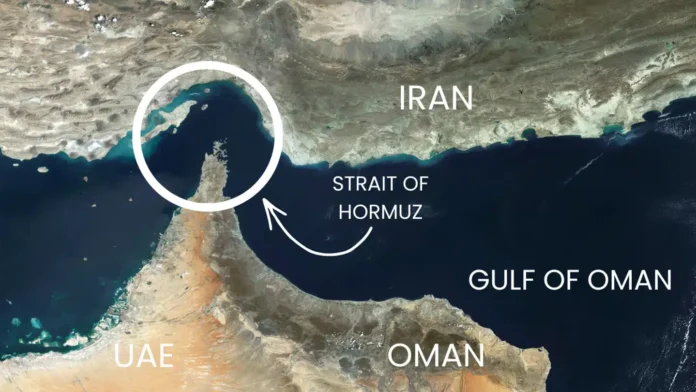

Iran, on Thursday, April 9, announced alternative routes for vessels traveling through the Strait of Hormuz, citing safety concerns over possible sea mines in the main shipping channel.
The development comes as Tehran agreed to temporarily reopen the strategic waterway under a two-week ceasefire arrangement aimed at easing tensions and restoring global oil supply flows.
In a statement issued by the Islamic Revolutionary Guard Corps, ships were advised to avoid the primary transit path and instead use designated alternative routes to minimise risks.
“All ships intending to transit the Strait of Hormuz are hereby notified that in order to comply with the principles of maritime safety and to be protected from possible collisions with sea mines…they should take alternative routes for traffic in the Strait of Hormuz,” the statement read.
The directive also included detailed guidance on alternative entry and exit points within the strait.
The announcement followed a ceasefire agreement between Iran and the United States, reached overnight between Tuesday and Wednesday.
The truce came shortly before a deadline issued by former US President Donald Trump, who had threatened decisive action if Iran failed to comply with demands to reopen the critical oil transit route.
The Strait of Hormuz is one of the world’s most important oil corridors, accounting for nearly one-fifth of global crude shipments.
Tehran had effectively blocked the route since early March, triggering sharp increases in global energy prices and raising fears of supply disruptions.
While the reopening of the strait under the ceasefire is expected to ease pressure on global oil markets, the warning over sea mines highlights lingering security concerns in the region.