
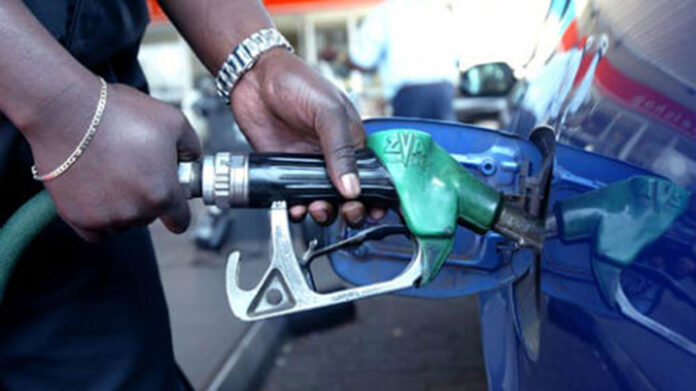

The Federal Government has lifted its ban on the importation of Premium Motor Spirit, commonly known as petrol, granting six new licences to oil marketers following concerns over supply disruptions linked to the ongoing crisis in the Middle East.
The decision marks a reversal of Nigeria’s recent policy aimed at reducing reliance on imported fuel as domestic refining capacity improves.
A report by S&P Global obtained on Wednesday revealed that the Nigerian Midstream and Downstream Petroleum Regulatory Authority issued licences for the importation of about 180,000 metric tonnes of petrol.
The development comes weeks after the regulator maintained that local refining capacity was sufficient to meet the nation’s fuel demand.
According to the report, the licences were issued to local marketers to address a supply gap triggered by geopolitical tensions in the Middle East.
The report reads, “Nigeria has relaxed its gasoline import restrictions for the first time since October by issuing a round of new licences to local marketers.
“The NMDPRA did not issue import licences for gasoline in February on the strength of the improved domestic supply then. But the Middle East crisis came, and we have had a shortfall. So to bridge the gap, import licences were issued.”
Further findings by Punch showed that the companies granted the licences include Bono Energy, Pinnacle, AYM Shafa, Matrix, A.A. Rano, and Nipco.
Each marketer is expected to import about 30,000 metric tonnes of petrol, approximately 40.5 million litres each, bringing the total expected supply to about 243 million litres.
Policy Shift After Earlier Import Pause
On March 11, the NMDPRA announced a suspension of petrol import licences, citing improved domestic production levels.
Industry data at the time indicated that local refineries supplied about 36.5 million litres of petrol daily in February 2026, compared to about three million litres from imports.
Officials had then argued that the country no longer needed to rely heavily on fuel imports.
“It’s correct that we’ve not issued import licences this year. It is obvious that local production has met national requirements. So, there’s no need for importation,” a source at the regulator who spoke with Punch had earlier said.
The Chief Executive Officer of Petroleumprice.ng, Jeremiah Olatide, confirmed that the regulator had begun issuing new import permits.
He explained that although the number of permits remains low, imports are necessary to stabilise the market.
He said, “Yes, it’s true. NMDPRA has begun issuing import permits; the number of permits issued lately is relatively low, which shows local refining still dominates, but we need to stabilise the market through imports.
“Energy insecurity could collapse Nigeria’s economy, so importation is needed for a balance.”
Dangote Refinery Faces Forex Losses
Meanwhile, a senior management official of the Dangote Group disclosed that the Dangote Petroleum Refinery has been experiencing foreign exchange losses linked to the naira-for-crude arrangement.
According to the official, the refinery supplies more refined products to the Nigerian market than the volume of crude it receives under the arrangement.
The source said, “The naira-for-crude deal was conceived by His Excellency, the President. He wanted us to supply the petroleum products in naira to the extent crude is supplied to us in naira.
“But we are ending up supplying much more products than the crude we receive, thus losing forex which we would have gained if we had exported the products.”
The source further stressed that the refinery was seeking improved crude supply in line with the provisions of the Petroleum Industry Act.
The official said, “Under the Petroleum Industry Act, export of crude before meeting the local demand is clearly prohibited.
“So, we are only asking for the supply of crude to meet the primary purpose of the refinery, which is to add value to the raw materials from the country, instead of exporting the raw material.”