
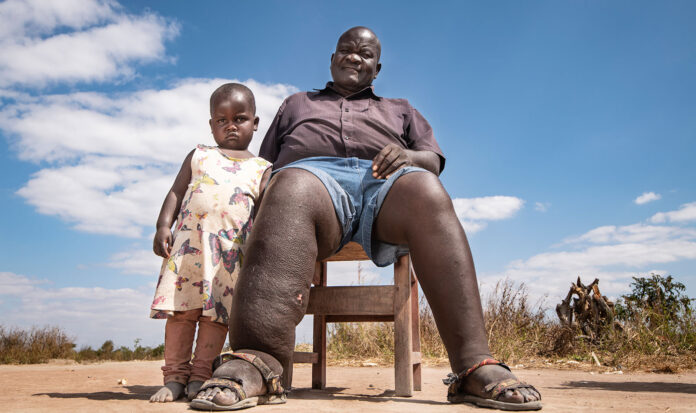

The Minister of State for Health and Social Welfare, Dr. Iziaq Salako, on Thursday hinted that Nigeria has exceeded its disease-control targets for two neglected tropical diseases—elephantiasis and river blindness.
Salako, who spoke in Abuja at the BLON project close-out ceremony, stated that 47.1 million Nigerians no longer require treatment because the country conducted significantly more assessments than originally planned.
According to reports the initiative delivered Nigeria’s largest-ever assessments for Lymphatic Filariasis (elephantiasis) and Onchocerciasis (river blindness), conducted across 13 states.
The project was launched to address a critical gap in Nigeria’s elimination roadmap for the diseases and received $4.9 million in funding support from the Gates Foundation.
Despite decades of mass drug administration, many implementation units had met World Health Organisation (WHO) thresholds for stopping treatment but lacked resources to conduct disease-specific assessments. Previous partner-led efforts were fragmented and costly, creating barriers to nationwide scale-up.
In response, Sightsavers partnered with the Federal Ministry of Health and Social Welfare, alongside non-governmental organisations (NGOs), including Christian Blind Mission International, Helen Keller International, and MITOSATH, to design and implement a coordinated, cost-effective assessment programme.
The initiative aimed to generate evidence to support the cessation of mass drug administration, strengthen health systems, and introduce replicable models to enhance efficiency and sustainability.
The minister said the project, which began in 2022 and concluded in September 2025, was initially designed as a 17-month intervention but was extended at no additional cost to ensure lasting impact.
“Nigeria has been able to deliver beyond the targets, as 31.1 million people no longer require treatment for Lymphatic Filariasis and 16 million people no longer need treatment for Onchocerciasis, against the 27 million people initially targeted.
“We conducted 46 pre-Transmission Assessment Surveys (Pre-TAS), 116 TAS 1 and 3 epidemiological surveys, and one breeding site assessment. By implication, Nigeria hit 148 per cent of LF assessments and 150 per cent of Onchocerciasis assessments.
“This project additionally strengthened our health system by supporting four laboratories (UniOsun, TCC Lab, NIMR Lab, and A.B.U. Lab) through capacity building and facility upgrades (ISO 15189 accreditation); training 65 laboratory technicians on standardised blood collection; training over 300 people as card readers, data recorders, and field sample collectors; supporting the development of sample retention and disposal policies; training FMoH&SW staff and partners on sample transportation models implemented through certified third-party logistics; and holding annual work plan harmonisation meetings and Filariasis Transmission Survey quantification,” he said.
The Country Director for Sightsavers Nigeria, Prof. Joy Shuaibu, noted that one of the programme’s major achievements is its scale of impact on Nigerians affected by neglected tropical diseases, adding that the benefits extend beyond cost savings in healthcare.
“The remarkable achievement of this programme is that 31 million Nigerians will no longer need to take medication to prevent blindness. It not only cuts the cost of funding and investment in healthcare but also allows these people to go on with their lives and engage in more productive activities,” she said.
On the future of the programme, Shuaibu said Sightsavers and its partners are seeking to extend the initiative by securing additional funding.
The National Coordinator for Neglected Tropical Diseases at the Federal Ministry of Health and Social Welfare, Fatai Oyediran, said the project strengthened Nigeria’s health system, particularly in laboratory capacity, data management, and disease assessment.