


By Hosea parah, Abuja
Two reports by the UN Environment Programme (UNEP) have warned that a narrow window of eight years is left to avoid the worst impacts of climate change.
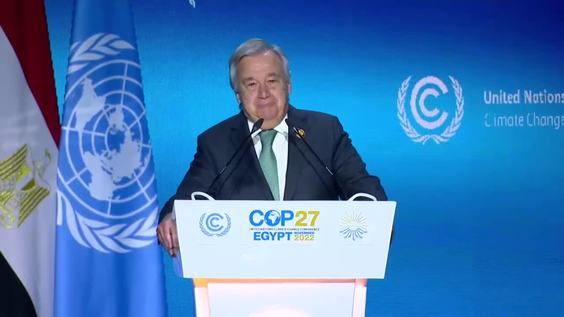
The reports are the Emissions Gap Report and the Adaptation Gap Report, where UNEP says COP27 must be the place and now must be the time for Member States to commit to the necessary ambitious, credible climate action.
The Emission Gap report which is the 13th edition in an annual series that provides an overview of the difference between where greenhouse emissions are predicted to be in 2030 and where they should be to avert the worst impacts of climate change.
The report shows that updated national pledges since COP26 held in 2021 in Glasgow, make a negligible difference to predicted 2030 emissions and that countries of the world are far from the Paris Agreement goal of limiting global warming to well below 2°C, preferably 1.5°C.
Policies currently in place point to a 2.8°C temperature rise by the end of the century. Implementation of the current pledges will only reduce this to a 2.4-2.6°C temperature rise by the end of the century, for conditional and unconditional pledges respectively,” it says.
The report finds that only an urgent system-wide transformation can deliver the enormous cuts needed to limit greenhouse gas emissions by 2030: 45 per cent compared with projections based on policies currently in place to get on track to 1.5°C and 30 per cent for 2°C.
The Adaptation report on the other hand looks at progress in planning, financing and implementing adaptation actions.
According to it “at least 84 per cent of Parties to the UN Framework Convention on Climate Change (UNFCCC) have established adaptation plans, strategies, laws and policies – up 5 per cent from the previous year.
The instruments are getting better at prioritizing disadvantaged groups, such as Indigenous peoples.
“However, financing to turn these plans and strategies into action isn’t following. International adaptation finance flows to developing countries are 5-10 times below estimated needs and the gap is widening. Estimated annual adaptation needs are USD 160-340 billion by 2030 and USD 315-565 billion by 2050.
“Implementation of adaptation actions – concentrated in agriculture, water, ecosystems and cross-cutting sectors – is increasing.
“However, without a step change in support, adaptation actions could be outstripped by accelerating climate risks, which would further widen the adaptation implementation gap.
The report looks at the benefits of prioritizing actions that both reduce greenhouse gas emissions and help communities adapt, such as nature-based solutions, and calls for countries to step up funding and implementation of adaptation actions.
Additionally, the report discusses adaptation effectiveness and looks at adaptation-mitigation linkages and co-benefits.
Both reports provide an in-depth exploration of how to deliver this transformation, looking at the required actions in the electricity supply, industry, transport and buildings sectors, and the food and financial systems.