
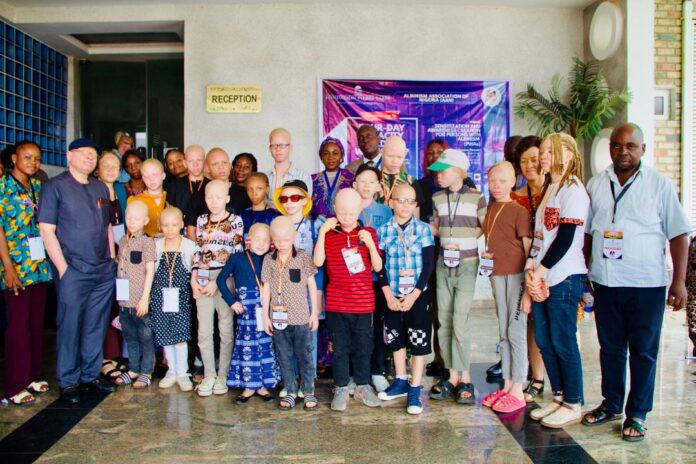

The Albinism Association of Nigeria (AAN), has successfully carried out a large-scale medical outreach and awareness programme for community members with albinism resident within the six Council Areas of Abuja FCT.
The event took place from Feb. 10 to Feb. 13.
The medical mission comes under the White Fire Project funded by Fondation Pierre Fabre and in collaboration with the Big Feline Agency.
The medical mission was aimed at providing essential healthcare services and strengthening advocacy for persons with albinism.
The outreach, which attracted community members, healthcare professionals, volunteers, and beneficiaries, focused on improving access to dermatological and eye care services while promoting public awareness about albinism and social inclusion.
Delivering the welcome remarks on behalf of the Executive Director of AAN, Dr Mrs Bisi Bamishe, the Association’s National General Secretary, Adeiyi Onah Daniel, described the programme as a demonstration of the impact of partnership and community-driven healthcare interventions. He appreciated community leaders and stakeholders for mobilizing beneficiaries and supporting the success of the outreach.
According to Onah, the White Fire Project was funded by Fondation Pierre Fabre and implemented in collaboration with Big Feline Agency.
The initiative combines healthcare delivery with creative advocacy to address both medical and social challenges faced by persons with albinism.
Speaking during the programme orientation, AAN Programme Manager, Joseph Akuse, explained that the project aims to improve health outcomes through targeted medical interventions and preventive health education while also amplifying the voices and lived experiences of persons with albinism through storytelling and media engagement.
During the outreach, beneficiaries received free skin screenings, eye examinations, general medical consultations, health counselling, and ultraviolet (UV) protective materials, including sunscreen and protective clothing.
Individuals requiring further medical attention were referred to specialized healthcare facilities for continued treatment.
The medical team was led by Dr Olanrewaju Falodun, who supervised clinical services and ensured quality healthcare delivery.
Other medical personnel who participated in the outreach included Dr Utane Adama, Dr Rabi Karaye, Dr Ojobo Dorcas, Dr Moses Esuga, and Dr Emeka.
The team was supported by nurses Iji Victoria Erima, Godfrey Ifiokobong F., and Torhemba Atsa Joy, whose dedication contributed significantly to the success of the programme.
Beyond the medical outreach, the event featured awareness and sensitization sessions aimed at educating community members about albinism, correcting misconceptions, and promoting acceptance and equal opportunities for persons with albinism.
As part of the advocacy component of the project, creative storytelling activities, including spoken word performances, interviews, and digital advocacy productions, are expected to further strengthen public awareness and inclusion.
Participants who benefited from the outreach expressed satisfaction with the services provided, particularly the free medical screenings and distribution of protective materials.
Many beneficiaries described the initiative as impactful and life-changing, noting that access to specialized dermatological and eye care services is often limited.
They commended AAN and its partners for the intervention and called for sustained engagement to support persons with albinism.
Community stakeholders also praised the outreach for promoting health awareness and reducing stigma associated with albinism, emphasizing the importance of continued collaboration between healthcare providers, advocacy organizations, and community leaders.
In his closing remarks, Adeiyi Onah Daniel commended the medical team, volunteers, and participants for their commitment and cooperation throughout the outreach.
He also expressed profound gratitude to Fondation Pierre Fabre for supporting the initiative and for recognizing AAN as a credible partner in advancing healthcare and advocacy for persons with albinism.
He reaffirmed the Association’s commitment to promoting healthcare access, protecting the rights of persons with albinism, and building inclusive communities where persons with albinism can live healthy and dignified lives. The White Fire Project is expected to contribute significantly to improved health outcomes, strengthened advocacy, and increased societal awareness about albinism across Nigeria.