

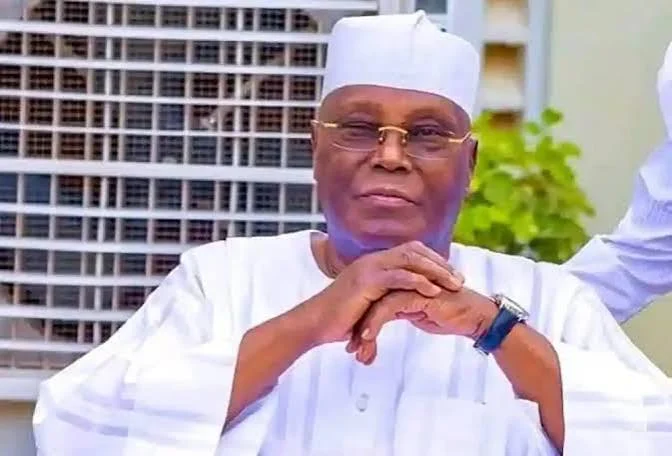

A Response to Atiku Abubakar’s Criticism of President Bola Ahmed Tinubu’s Economic Policies.
By
Chief J.D.Ephraim.
I have read former Vice-President Atiku Abubakar’s address of October 9, 2026, carefully. It is, without doubt, a skilfully written political speech. It is combative, witty and designed to connect with Nigerians who are genuinely experiencing economic hardship. His references to the price of food, transport costs, petrol and the difficulties facing businesses will resonate with millions of Nigerians.
But a presidential campaign speech must be judged by more than its ability to generate applause.
The accuracy of its diagnosis must also judge it, the completeness of its analysis and, above all, the credibility of the alternative being offered.
That is where I believe Atiku’s argument has significant gaps.
I support President Bola Ahmed Tinubu and the APC, and I intend to support the President in the 2027 presidential election. I therefore have no difficulty defending his administration. But I do not believe that the best defence is to pretend that Nigerians are not suffering.
They are.
The hardship is real. The pressure on household incomes is real. Food remains expensive. Transport costs are painful. Businesses continue to struggle with energy and operating costs, while insecurity continues to affect agriculture and commerce in many parts of the country.
A serious defence of Tinubu must begin by acknowledging those realities.
But acknowledging hardship does not automatically establish that the reforms which produced some of that hardship were wrong. Nor does it establish that the alternative proposed by Atiku would produce a better outcome.
That is the central issue.
ATIKU’S STRONGEST POLITICAL POINT IS NOT NECESSARILY HIS STRONGEST ECONOMIC POINT
Atiku has presented a very simple narrative.
Tinubu removed the fuel subsidy. Prices rose. Nigerians suffered. The government asked Nigerians to be patient. Now, with another presidential election approaching, the government has introduced temporary relief.
It is an effective political narrative.
But Nigeria’s economic circumstances are considerably more complicated than that.
The Nigerian economy did not become structurally weak on May 29, 2023. The country entered the Tinubu administration with serious fiscal, monetary, foreign-exchange and energy-sector problems. The subsidy regime had become increasingly difficult to sustain, while government revenue was inadequate relative to the responsibilities placed upon the state.
The foreign-exchange market was heavily distorted. Public debt and debt-service pressures had become major concerns. Infrastructure deficits were enormous, electricity supply remained inadequate, and insecurity was already damaging agricultural production and investment.
These problems did not originate with Tinubu.
But neither can Tinubu govern forever by blaming previous administrations. He is now responsible for the country, and Nigerians are entitled to judge him by what he has done with that responsibility.
That is precisely why the argument must be balanced.
HAS THE ECONOMY “COLLAPSED”?
Atiku’s most sweeping assertion is that “the economy has collapsed under your watch.”
That statement makes good campaign rhetoric, but it is difficult to reconcile with the latest assessments from institutions that are not part of the APC government.
The World Bank reported in October 2026 that Nigeria’s real GDP grew by 4.2 per cent in the first half of 2026, compared with 3.9 per cent during the corresponding period of 2025. It also reported improvements in public finances and the country’s external position, while warning that growth remains insufficient to reduce poverty rapidly enough and that the gains must reach ordinary Nigerians more effectively.
The IMF has similarly acknowledged that the reforms undertaken since 2023 have strengthened macroeconomic stability, reduced fiscal vulnerabilities, rebuilt external buffers and improved the functioning of the foreign-exchange market.
These are not APC campaign slogans.
They are assessments from international economic institutions.
Does that mean that Nigeria is doing wonderfully?
Certainly not.
An economy can record growth while millions of households continue to experience hardship. Macroeconomic stability and household prosperity are related, but they are not the same thing. A country can stabilise its finances while families are still struggling to pay school fees, transport fares and food bills.
That is precisely why the Tinubu administration cannot simply point to GDP growth and declare victory.
But Atiku equally cannot point to hardship and declare that the economy has collapsed.
Both statements are incomplete.
THE REAL QUESTION IS WHETHER THE REFORMS ARE WORKING
This is where the debate should move beyond political slogans.
Tinubu inherited a system that had become increasingly difficult to sustain. He chose to make fundamental changes to it.
Those changes were always going to be painful.
Removing the petrol subsidy was never going to be painless. Exchange-rate reform was never going to be painless. Tightening monetary policy was never going to be painless.
The question is whether the pain was imposed for a purpose and whether the country is now moving towards a more sustainable economic structure.
The evidence suggests that there have been important improvements at the macroeconomic level.
But there is another side of the story, and President Tinubu’s supporters should be honest about it.
The benefits have not yet reached ordinary Nigerians with sufficient speed.
That is the unfinished business of the Tinubu administration.
The President should not be satisfied merely because the economic indicators are improving. The ultimate purpose of economic reform is not to make economists happy. It is to improve the lives of citizens.
A reform that stabilises the exchange rate but leaves the ordinary worker unable to afford food still has work to do.
A reform that improves government revenue but does not translate revenue into roads, electricity, security and jobs is incomplete.
A reform that restores investor confidence but does not create opportunities for young Nigerians has not yet fulfilled its promise.
This is the point at which the administration must now concentrate its energy.
THEN COMES ATIKU’S “PRODUCTION SUBSIDY”
Atiku’s most interesting argument concerns petrol.
He says he had already proposed a targeted production subsidy for petroleum products refined in Nigeria and sold to Nigerians. He says the subsidy should be capped, provided for in the budget, independently audited and restricted to domestically refined products.
On the surface, this is an attractive proposal.
Domestic refining should certainly be encouraged.
Nigeria should be interested in increasing domestic production of petroleum products.
There is also a legitimate argument for temporary and carefully targeted intervention when an international price shock threatens to cause severe hardship.
But that does not end the discussion.
The obvious question is: How much will the policy cost, who will pay for it, and how long will it last?
Putting an expenditure in the budget does not make it free.
It simply makes it an identified expenditure.
The government would still have to find the money.
That money would have to come from revenue, borrowing or the reduction of expenditure elsewhere.
So when Atiku says, “Cap the support. Put it in the budget. Audit it independently,” I do not quarrel with the principles of budgeting and auditing. Those are good principles.
But I would ask him to take the argument one step further.
What is the cap?
What is the annual cost?
What happens when international crude prices rise?
What happens when the naira depreciates?
What happens if domestic refining capacity is temporarily insufficient?
How will the government prevent producers from capturing the benefit intended for consumers?
Most importantly, when does the subsidy end?
These are not hostile questions.
They are the questions any serious presidential candidate should be prepared to answer.
“WHAT HAPPENS ON DAY 31?”
Atiku repeatedly asks what will happen after the government’s 30-day petrol intervention.
It is a fair question.
But there is another question that should be put to Atiku:
What happens on Day One of an Atiku administration?
If he introduces his proposed production subsidy, what will it cost the Federal Government?
How will it be financed?
For how many years?
What safeguards will prevent another subsidy regime from becoming entrenched?
And what is the exit strategy?
These questions matter because Nigeria has been through this experiment before.
The old subsidy system did not merely provide cheap petrol. It created enormous fiscal pressures, distortions and opportunities for abuse. Nigerians should be extremely careful about recreating the same problem under a different name.
If Atiku has a better subsidy mechanism, let him explain it fully.
If it is genuinely temporary, targeted, transparent and fiscally sustainable, Nigerians should examine it.
But he should not expect Nigerians to accept the phrase “production subsidy” as though those two words automatically solve the economic problem.
They do not.
DID TINUBU “COPY” ATIKU?
This is perhaps the most entertaining part of Atiku’s speech, but also one of the least important.
He repeatedly accuses President Tinubu of copying his idea.
He compares the President to a student who copied a classmate’s examination paper.
It is clever.
It will probably produce laughter at campaign rallies.
But Nigerians are not electing a President to win an argument about who first thought of a subsidy.
They are electing a President to manage an economy.
If Atiku has a good idea, Tinubu should use it.
If Tinubu has a good idea, Atiku should support it.
If either man produces a policy capable of reducing the suffering of Nigerians without creating a bigger problem tomorrow, Nigerians should welcome it.
This is not a school examination.
There is no prize for originality if the policy fails.
The question is not who wrote the idea first.
The question is whether the idea works.
THERE IS AN IMPORTANT DIFFERENCE BETWEEN RELIEF AND REFORM
Atiku is right about one thing: temporary relief cannot substitute for permanent economic improvement.
But the reverse is also true.
Structural reform cannot be pursued without mechanisms for protecting citizens from severe short-term hardship.
A responsible government needs both.
It needs reform and relief.
It needs fiscal discipline and social protection.
It needs investment and immediate assistance where necessary.
It needs long-term economic restructuring while protecting the most vulnerable from the consequences of that restructuring.
This is where the Tinubu administration must improve.
The government should not regard every demand for relief as an attack on reform.
Nor should it return to policies that created unsustainable fiscal burdens simply because those policies are politically attractive.
The challenge is to construct a bridge between reform and ordinary life.
THE PRESIDENT MUST NOW MOVE FROM STABILISATION TO PROSPERITY
This is, in my view, the most important message President Tinubu should take into the 2027 election.
The first phase of his administration has been dominated by stabilisation and restructuring.
The next phase must be dominated by prosperity.
Nigerians need to feel the difference.
They need lower food prices.
They need better electricity.
They need safer roads.
They need secure farms.
They need cheaper and more reliable transportation.
They need jobs.
They need stronger purchasing power.
They need businesses that can survive without depending upon generators and expensive credit.
They need a government that can demonstrate clearly where the increased revenue is going.
The administration has a strong argument to make about the progress achieved at the macroeconomic level.
But macroeconomic stability should be treated as a foundation, not as a trophy.
ATIKU CANNOT ESCAPE HIS OWN RECORD
There is another point that should not be forgotten.
Atiku is not a political newcomer.
He served as Vice-President of Nigeria for eight years.
He has been involved in Nigerian politics for decades.
He has participated in presidential contests and has been part of the national governing establishment for a very long time.
That experience gives him authority to criticise.
But it also means he must accept scrutiny.
He knows how difficult it is to govern Nigeria.
He knows that promises made from an opposition platform encounter fiscal realities once they reach the Treasury.
He knows that every naira promised to one sector is a naira that must come from somewhere.
He knows that governments cannot simply wish away international oil prices, exchange rates, security problems, infrastructure deficits and demographic pressures.
Therefore, when he offers an alternative, Nigerians are entitled to ask him for the complete arithmetic.
Not just the benefit.
The cost.
Not just the promise.
The mechanism.
Not just the destination.
The route.
That is how presidential politics should be conducted.
THE “THREE AND A HALF YEARS” ARGUMENT
Atiku repeatedly tells Nigerians that they have suffered for “three and a half years.”
The political calculation is obvious.
He wants Nigerians to forget the inherited condition of the economy and evaluate only the pain experienced since 2023.
But Nigerians should be more sophisticated than that.
The proper question is not simply:
“Are you better off today than you were three years ago?”
It is also:
“Where was the economy heading before the reforms, where is it heading now, and what policy offers the better prospect for the future?”
Economic reform sometimes creates a paradox.
A government may inherit a distorted system in which some prices are artificially low, but the underlying system is becoming progressively less sustainable.
Correcting the distortion may make the problem immediately visible and painful.
That does not automatically mean the correction was wrong.
The important thing is what comes next.
If reform produces nothing beyond hardship, then it deserves to be rejected.
If reform produces stability, investment, production and eventually higher living standards, then the initial pain must be judged in the context of the destination.
The Tinubu administration must therefore make sure Nigerians actually reach that destination.
THE PRESIDENT SHOULD NOT RUN AWAY FROM THE DIFFICULT QUESTIONS
I would advise President Tinubu not to respond to Atiku by becoming defensive.
He should accept the challenge.
Tell Nigerians plainly:
“Yes, the reforms have been painful.
Yes, people are suffering.
Yes, we must do more.
But we have also begun repairing structural problems that could no longer be postponed.”
Then show Nigerians the evidence.
Show them what has happened to government revenues.
Show them what has happened to foreign-exchange reserves.
Show them what has happened to domestic refining.
Show them the investment coming into the country.
Show them the improvements in economic growth.
But above all, show them how those improvements will reach the ordinary citizen.
The President should say, in effect:
“We did not undertake these reforms to make Nigerians poorer. We undertook them to prevent Nigeria from becoming poorer.”
That is a powerful argument if results follow it.
SECURITY MUST BE PART OF THE ECONOMIC ANSWER
Atiku is also right to connect the economy with insecurity.
A farmer cannot produce food if he cannot safely reach his farm.
A trader cannot move goods efficiently if roads are insecure.
An investor will not establish a factory where employees cannot travel safely.
Economic reform and national security are therefore inseparable.
The Federal Government must continue to strengthen the fight against terrorism, banditry and other forms of criminality while state and local authorities improve intelligence, community security and economic opportunities.
There is no economic recovery without security.
And there is no lasting security without economic opportunity.
The two must move together.
THE GOVERNMENT MUST ALSO WATCH THE SOCIAL COST OF REFORM
This is perhaps the fairest criticism that can be made of the administration.
Economic reform cannot be judged exclusively through the eyes of economists.
There is a human dimension to every economic decision.
When the price of food rises, it is not merely an inflation statistic. It is a mother removing meat from the family pot.
When transport fares rise, it is not merely a cost-of-living indicator. It is a worker calculating whether his salary can still take him to work every day.
When a small business shuts down because of electricity and operating costs, it is not simply another business statistic. It means jobs lost and families affected.
Government must therefore make the human consequences of reform central to the next stage of policy.
That is where Tinubu’s administration must do better.
BUT NIGERIA ALSO NEEDS TO BE CAREFUL ABOUT POLITICAL NOSTALGIA
There is always a temptation in opposition politics to suggest that there is a simple alternative to a difficult present.
The message is seductive:
“Things are bad because of Tinubu. Elect us, and things will become affordable.”
But Nigeria has heard this story many times.
There is no magic button.
There is no presidential speech that can instantly lower global oil prices, strengthen the naira, increase agricultural productivity, fix electricity, eliminate insecurity and create millions of jobs.
Whoever becomes President in 2027 will inherit the same structural difficulties.
The real question is who has the more credible strategy for dealing with them.
WHAT SHOULD THE 2027 DEBATE BE ABOUT?
I would like to see a different kind of presidential debate.
Let Atiku present his production subsidy proposal in detail.
Let Tinubu present the government’s economic programme in detail.
Let both candidates state how much their promises will cost.
Let them explain how the promises will be financed.
Let them explain what they will do about electricity.
Let them explain how they will reduce food inflation.
Let them explain their agricultural security strategy.
Let them explain their plans for employment.
Let them explain their tax policies.
Let them explain their borrowing plans.
Let them explain their plans for domestic refining.
Let them explain what happens if oil prices fall.
Then let Nigerians decide.
That would be a much healthier election than exchanging insults over who copied whose idea.
MY POSITION AS AN APC MEMBER
I have no hesitation in saying where I stand.
I support President Bola Ahmed Tinubu.
I support his 2027 presidential candidacy.
I believe that Nigeria needs continuity in the reform programme rather than a return to the economic arrangements that created many of the distortions now being corrected.
But my support is not blind.
I want the government to move faster from stabilisation to prosperity.
I want stronger protection for vulnerable Nigerians.
I want greater transparency.
I want more visible investment in infrastructure.
I want serious action on food production and agricultural security.
I want cheaper and more reliable electricity.
I want domestic refining to flourish.
I want the benefits of increased government revenue to become visible in public services.
Most of all, I want the ordinary Nigerian to begin feeling that the sacrifices being demanded of him are producing something worthwhile.
That is not disloyalty.
It is responsible support.
THE ELECTION WILL NOT BE WON BY SPEECHES ALONE
Atiku’s speech is politically effective.
I concede that.
But Nigeria’s problems are too serious to be solved by political rhetoric.
Calling Tinubu a “dull student” does not make Atiku’s economic proposal sounder.
Calling the government’s intervention “yahoo-yahoo subsidy” does not establish that his own proposal is financially sustainable.
And calling the Nigerian economy “collapsed” does not make it so.
The evidence tells a more complicated story.
Nigeria is experiencing genuine hardship.
But the economy has also recorded measurable improvements in growth, public finances, external resilience and macroeconomic stability.
Both facts can be true at the same time.
That is the honest position.
SO, WHAT IS THE REAL CHOICE?
The choice before Nigerians in 2027 should not be presented as:
Tinubu equals hardship.
Atiku equals relief.
That is too simplistic for a country as complicated as Nigeria.
The real choice is between competing economic philosophies and competing records of governance.
Should Nigeria continue with structural reforms designed to create a more sustainable economy, while correcting the social consequences of those reforms?
Or should it adopt a different approach?
If there is a better approach, let us see the numbers.
Let us examine the assumptions.
Let us test the financing.
Let us compare the alternatives.
That is how serious democracies make important decisions.
CONCLUSION
Atiku Abubakar has done something useful.
He has forced the government to answer difficult questions.
The President should answer them.
But Atiku has not established that Nigeria’s economic reforms have failed simply because they have been painful.
Nor has he established that a production subsidy is automatically superior to the policies now being pursued.
His speech is strongest when he describes the suffering of Nigerians.
It is weakest when it treats that suffering as conclusive proof that every reform was wrong.
The Tinubu administration, for its part, must not hide behind statistics.
It must translate stability into prosperity.
It must translate increased revenue into visible development.
It must translate investment into jobs.
It must translate reform into relief.
That is the real test.
I support Tinubu because I believe Nigeria should complete the economic restructuring that has begun rather than return to an unsustainable past.
But I also believe that the President must now demonstrate, with urgency, that the sacrifice Nigerians have endured is leading somewhere.
The people are entitled to ask:
“When will we begin to feel the benefit?”
That question must not be dismissed.
It must be answered.
And the best answer President Tinubu can give in 2027 will not be another speech.